
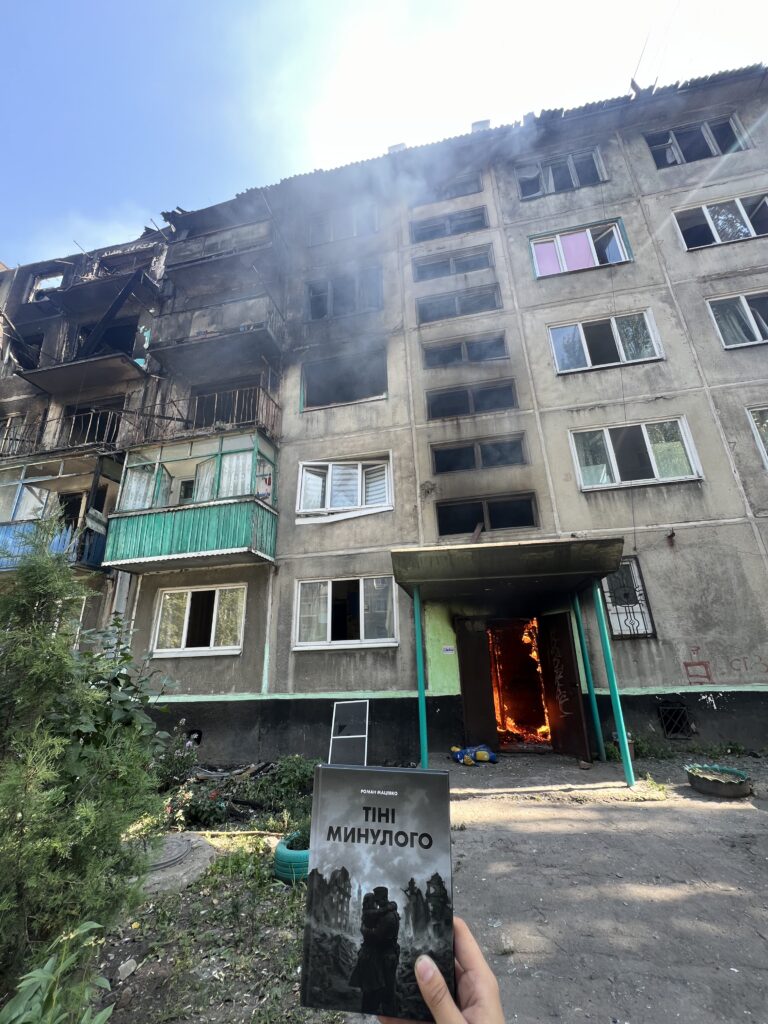
Book title : Shadows of the past
Credit : Varvara
Psychological Trauma and Societal Consequences
Testimony of a Ukrainian Psychology Student
Yourii* is a drone operator. At the bar, he talks about his deployments. « When a bomb explodes too far away, it disappoints me. I prefer when they explode close, » he comments. For Varavara, a psychology student, the addiction to adrenaline is just one of the psychological consequences of the war in Ukraine.
Varavara, 18, is in her second year of psychology at Kharkiv University, but she attends classes remotely from her hometown, Kramatorsk. Thirty kilometres from the front and without significant anti-aircraft defence, Russian activity is practically daily. Explosions occur sporadically throughout the day, and at night, Shahed drones wake the residents. Yet, more than the war, the psychology student fears the readjustment to peace.
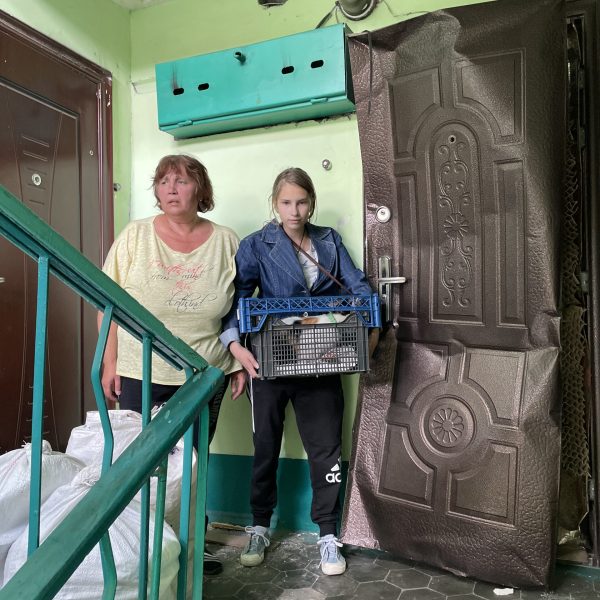
A grand mother and her grand daughter evacuating their appartment home in Bilozerske (less than 10km north of Dobropillia)
Credit : Varvara
Varavara’s vocation for psychological studies stems from a difficult journey as an internaly displaced person. In 2022, at the beginning of high-intensity operations, Varavara had to leave for the west of the country with her mother due to the proximity of the fighting. « When the shell strikes are close to a house, the explosions cover the windows with an orange hue, » explains the student. However, she only remembers being scared at the moment of the strike, « the rest of the time, I wasn’t impressed, » she recalls. Thus, the 15-year-old girl wanted to join her volunteer friends who were helping the soldiers as best they could. The departure was imposed reluctantly.
Her first displacement took her to Trostyanets, a small town of 20,000 inhabitants south of Sumy. There, she joined the family of one of her uncles, mobilized on the front, who were also displaced by the war; relatives she remembers as difficult to live with. She began to experience emotional distance.
When this first uncle died, Varavara remembers learning the news in her room, at the same time as his wife, in the kitchen. While she cognitively found the event atrocious, she could not process it emotionally. It was when she went down to comfort her aunt that she started to cry. Not out of sadness, but out of empathy. « These weren’t my own emotions, I was just expressing those of my aunt, » she recalls.
Varavara and her mother then settled for over a year, at another married uncle, in Ternopil, near Lviv. Without friends and feeling like she was disrupting the couple’s life, the young displaced girl didn’t feel at home and lost confidence in herself. Even today, the student struggles with her autobiographical memory, which helps us determine who we are. Her memories are factual, like in a history book, explains Varavara. They are devoid of senses, emotions, or thoughts.
Encouraged to undergo psychotherapy and having delved deeply into this literature, Varavara entered the Kharkiv University of Psychology in 2023; remotely.
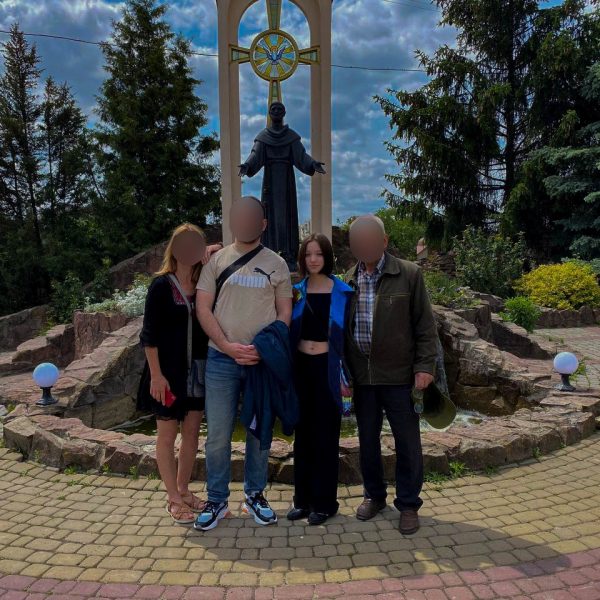
Varvara and her family in western Ukraine.
Credit : Varvara
At the terrace of our café, Varavara jokes about her professional future, « Oh, I won’t be short of work! » According to Varavara, while people have developed coping mechanisms that allow them to endure the ordeal of war, it does not help them deal with the trauma. « People don’t realize it yet, but they are all traumatized. » After the war, Varavara expects psychologists to have to deal with a substantial number of burnouts, adrenaline addictions, depressions, or anxiety disorders.
At the same time, the population will have to readjust and create new patterns for life in peace. The young woman takes the example of the students from the east of the country. Between the war and COVID, she explains that these young Ukrainians haven’t been going to classes to socialize for years. Referring to herself to illustrate her point, Varavara describes the experience as bizarre. « I’m a student, but I don’t go to university, » she jokes. This too will have repercussions, concludes the young woman. Considering the eight oblasts most affected by the war or occupied by Russia, it is some 17.5 million people will have to readjust.
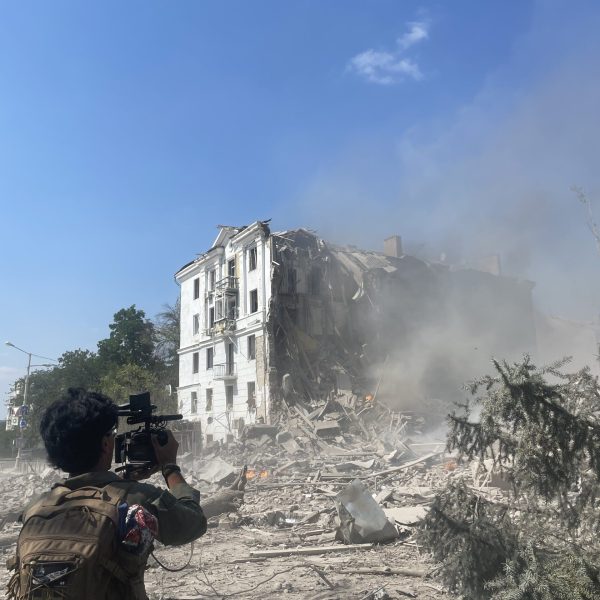
Varavara and a journalist on the strike of site. 15 minutes after the explosion.
Credit : Varvara
Varavara elaborates on the addiction to adrenaline, a subjects source of concerns to her as the entire population is regularly subjected to intense and brutal events. The student explains that during a bombing, the body secretes adrenaline, which in turn activates all systems in the body. The body then secretes other hormones, releases sugar into the blood; it is in a state of hyperactivity. All senses are activated, the individual enters a state of hyper-perceptivity, and emotional intensity is heightened. Despite the danger and discomfort of a situation, explains Varavara, the body likes being in this state, which gives the individual a high. And, just like a drug that requires a larger dose to achieve the same euphoria, adrenaline may require more intense experiences to provide the same high.
« So you didn’t notice the three explosions since the beginning of our interview? » The student widens her eyes and bursts out laughing. « No, I didn’t hear them, you see! » The young woman tempers. Getting used to the bombings remains an adaptation process, and civilians will readjust to life in peace, she concludes. « In 2014-2015, we also had a very intense period (in Donbass). People managed to return to normal afterward. » Ultimately, the need for stimuli will disappear.
For many soldiers, on the contrary, withdrawal will be difficult due to the particular exposure they experience. Varavara takes the example of the drone operator with whom we had shared a coffee the day before. « He spends two days in the positions, then two days in the city. Here, he gets bored, he wants to return to the positions. » The student explains that soldiers will need a substitute, but finding their substitute represents a path strewn with pitfalls like alcohol, drugs, or gambling. « No, not gambling! I don’t wish that. Art is a better medium, » reacts Varavara. The student explains that they will need hobbies to channel their time, emotions, and attention.
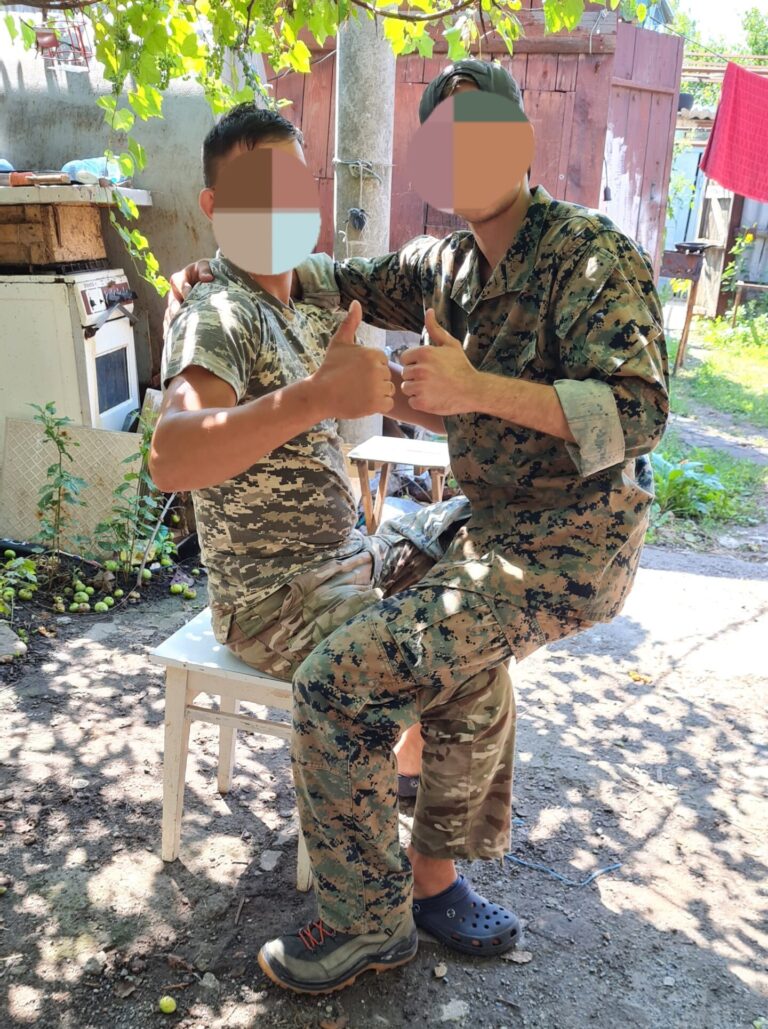
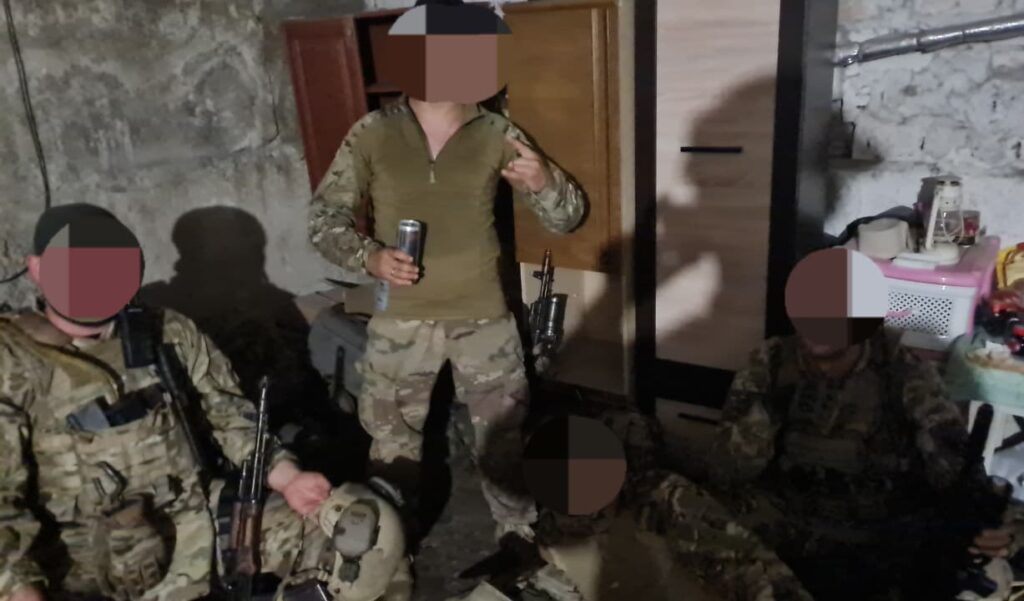
Soldiers spend time together and form strong relationships on the front.
Credit : anonymous soldier
Varavara’s interest in soldiers’ mental health emerged following the intervention of a military psychologist during a lesson, shocked by the lack of resources. This psychologist « told us about a soldier, the sole survivor of his group, who stayed for days buried under the bodies of his comrades. » The psychologist’s job was then « to get the soldier back in shape before he returned to the positions. The psychologist had three days. » The student exclaims: « Fuck! That’s the kind of trauma that takes a lifetime to process and recover from!«
Yet, all these soldiers will have to readjust to civilian life. « Already, they had to join the army. That represents a significant first adjustment, » and they will have to make the same effort in the opposite direction. « In the army, many things are clear: the mission, the position in this society, the salary… » Moreover, in an institution with still Soviet traits, where the individual makes no decisions.
Back in civilian life, these demobilized soldiers will find themselves having to make their own decisions, find a job, and do lesser interesting things. They will have to recreate a social circle and find new comrades who, for many, will not have experienced the same things. « How will these people, who have adapted to a completely different world and without diplomas or other skills than combat, reintegrate into society? » questions Varavara.
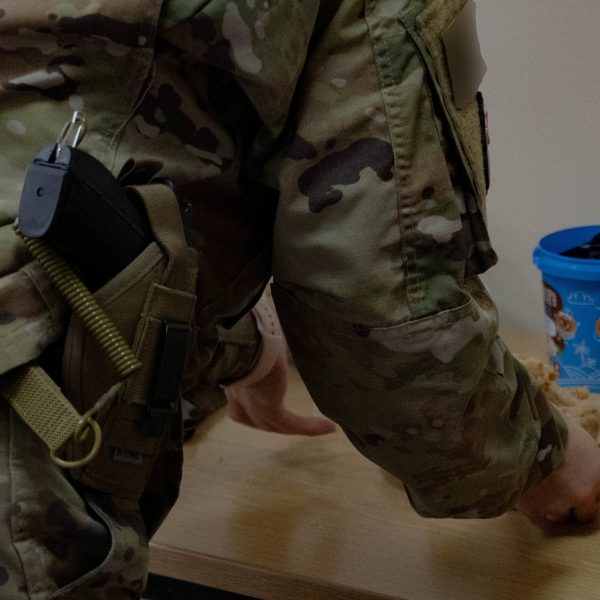
For Varavara, society is not ready to reintegrate all these men, all the while it will be undergoing significant changes after the war. First, the sense of unity provoked by the conflict will fade, « which has already begun, » elaborates the young woman. Individuals will readjust to live in peace, without explosions or fear. They will therefore turn away from the war period. As a result, « the soldier who today holds an important place in society will find himself devalued, perhaps even despised, » fears the student.
Also, it should not be forgotten that « war changes people, » notes Varavara. Soldiers will return from combat with various disorders. Behavioural disorders, anger management problems, or post-traumatic stress disorders. « No one is informed about these subjects, no one is preparing for them, » observes the student. As a result, these demobilized soldiers risk misunderstanding and living out of sync from the rest of society.
Varavara particularly fears a confrontation with the return of the « ukhiliant » (ухилянт), a term that translates to « avoiders / dodgers » in English. This term refers to men who escaped conscription, often by fleeing to European countries.
« All this without forgetting that many soldiers have their own vehicles and their own weapons. » Indeed, it is common to see soldiers, off duty, moving around with a handgun at their hip. For the student, it would be impossible to check the entire population to find the distributed weapons. « All these soldiers, with psychological disorders so easily triggered… » The student fears that the return to peace will lead to misunderstanding, frustration, perhaps to anger and violence. The young woman expects an increase in crime.
« We will need rehabilitation centres, » observes the student, both for physical traumas, such as amputations, and for psychological traumas. « Yes, there is the Superhuman Centre in Lviv, there is also a centre in Kyiv, but there are not enough. » For her, the necessary infrastructure to accommodate the mass of injured is sorely lacking.
Barely two years since she started her psychology studies, Varavara grasps the challenges that await, beyond her profession, her entire nation. Behind the appearance of a smiling and laughing student, Varavara is a young woman concerned about the consequences of the war on herself and her compatriots. Like for many others, peace is both desired and apprehended.
At man’s height, between the lines — Little Frenchy
24/11/2025