
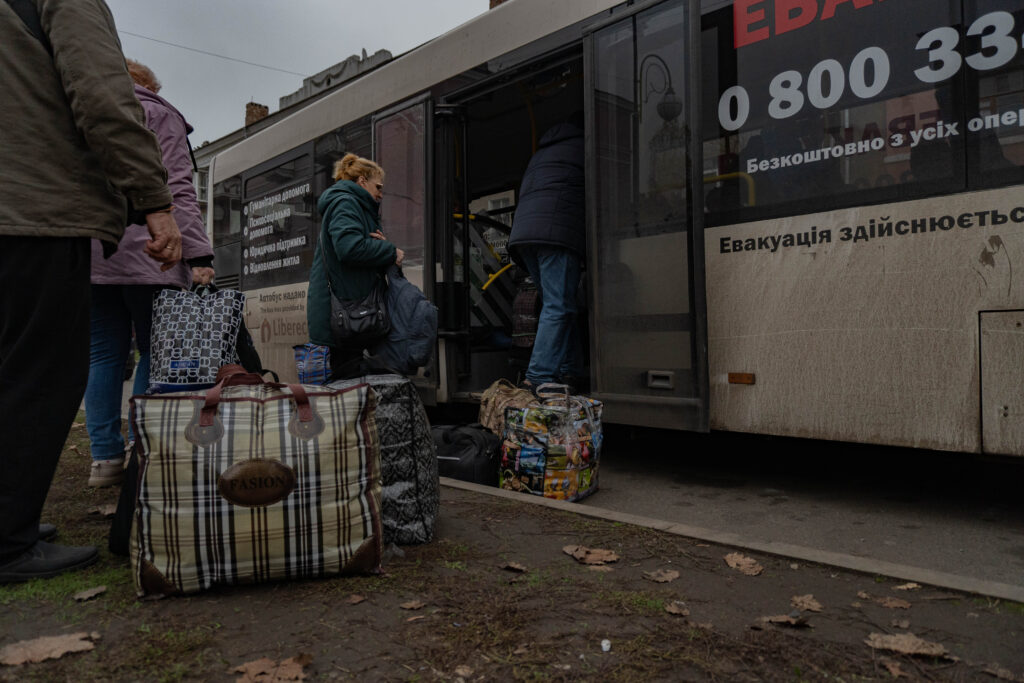
In their baggage, whatever evacuees to bring with them from their previous lives.
Forced Departures
Encounters at the Departure of an Evacuation Bus
In the evening, half the windows in Kramatorsk are dark. The front line is approaching, and the population has already begun to leave the city. Every morning, volunteers organize buses to help residents evacuate.
It’s nine o’clock in the morning on a central street in Kramatorsk. The sky is gray, the alley is quiet, and there are few passersby. Several military vehicles are parked or passing by; a few personnel in fatigues walk calmly along the sidewalk.
In front of a public transport bus, a group of civilians waits. The average age is about 50. At their feet are large bags containing their belongings. Around fifty people have decided to evacuate the city, heading for Lozova, 80 kilometres from the front.
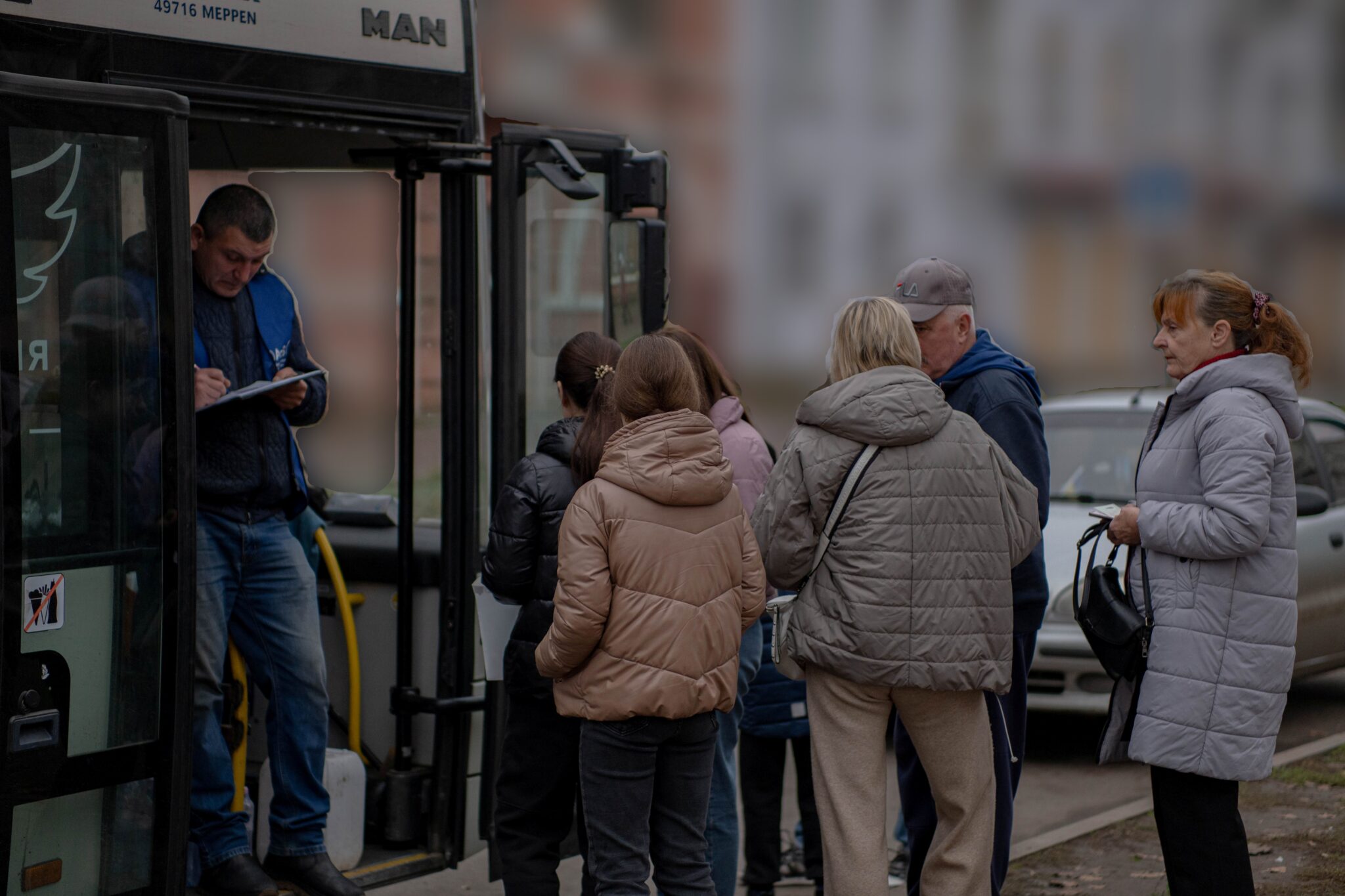
People are queuing to board the bus, waiting for them to register with a volunteer of the organisation in charge of the travel to Lozova.
At the entrance to the bus, evacuees wait their turn to board, while a man in blue fills out a form for each person. Their faces are tense, lips pressed tight; it’s difficult to interview them. Most have always lived in Kramatorsk. By taking this bus, they leave behind their memories and homes, which have often sheltered several generations of the same family.
“I lived in a suburb east of the city,” says an elderly woman. “I’m leaving for Lozova, and after that, I don’t know.” The old woman is leaving with her sister, her daughter, and her granddaughter. “It’s frightening, it’s an unfair situation.”
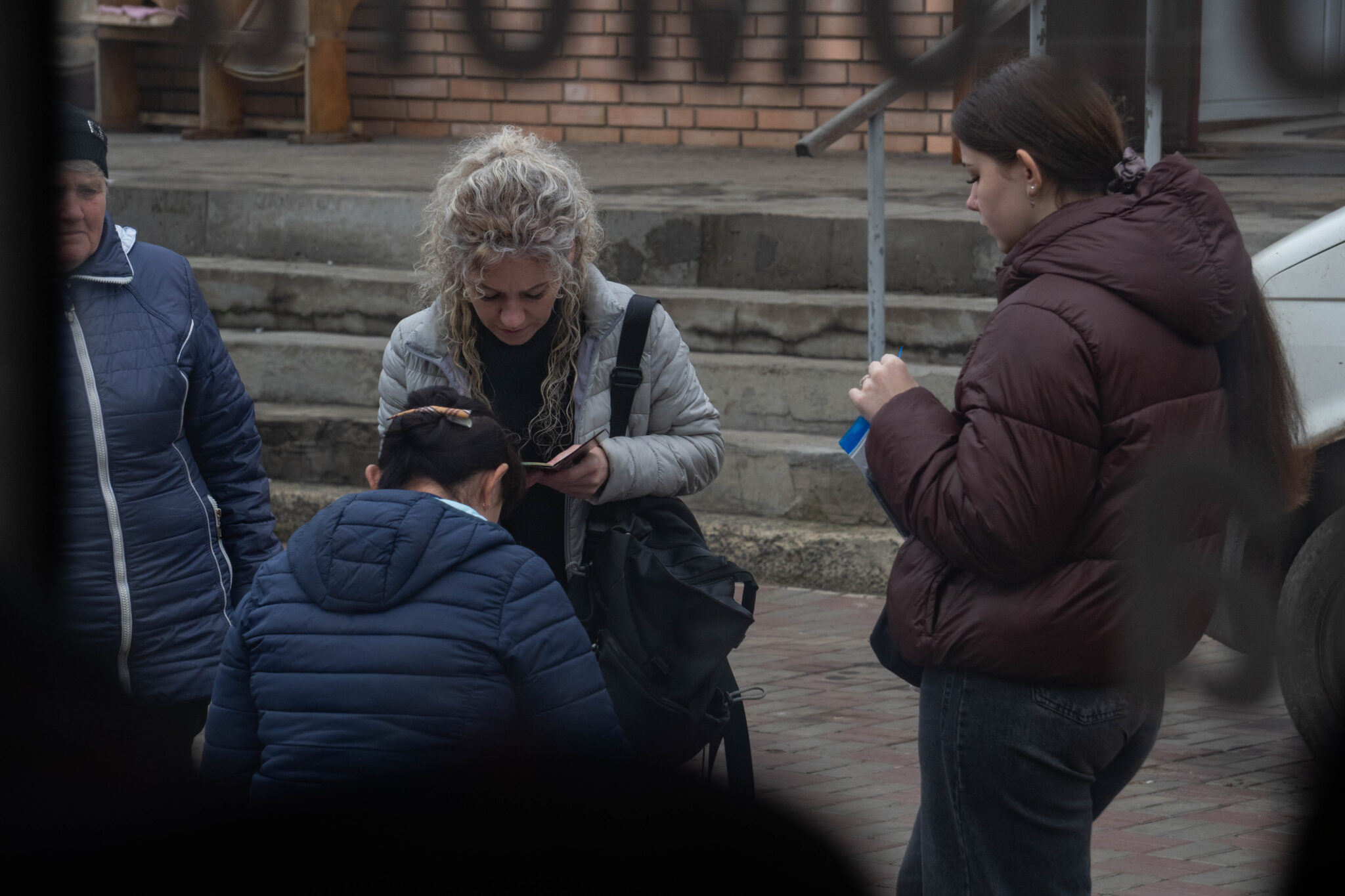
Outside, families are preparing their papers to register and board the bus.
At the back of the line to board the bus, a family waits. “I’m leaving with my two daughters; they’re eight and fourteen. And then there’s my sister and her husband,” explains a woman in a thick black coat. “My husband is a soldier,” she explains, unable to say where he is.
The family is heading to Odessa. It’s been a week since the Kramatorsk railway station was permanently closed. They must first reach Lozova by bus to find a train.
“All my life is in Kramatorsk, my heart is here,” says the mother. “I didn’t want to leave today. Nor earlier. Nor later.” The decision was not planned. If the idea of leaving had been present since 2022, the family still hoped to stay. “We hoped the war would end, but the front came,” the mother concludes. “In the end, it’s better for the children.”
This mother too finds the situation unfair and fears for the future. “We have external pressure, the war. But also, internal pressures, the country is divided.” As a Russian speaker, she worries about her integration into the Ukrainian-speaking west.
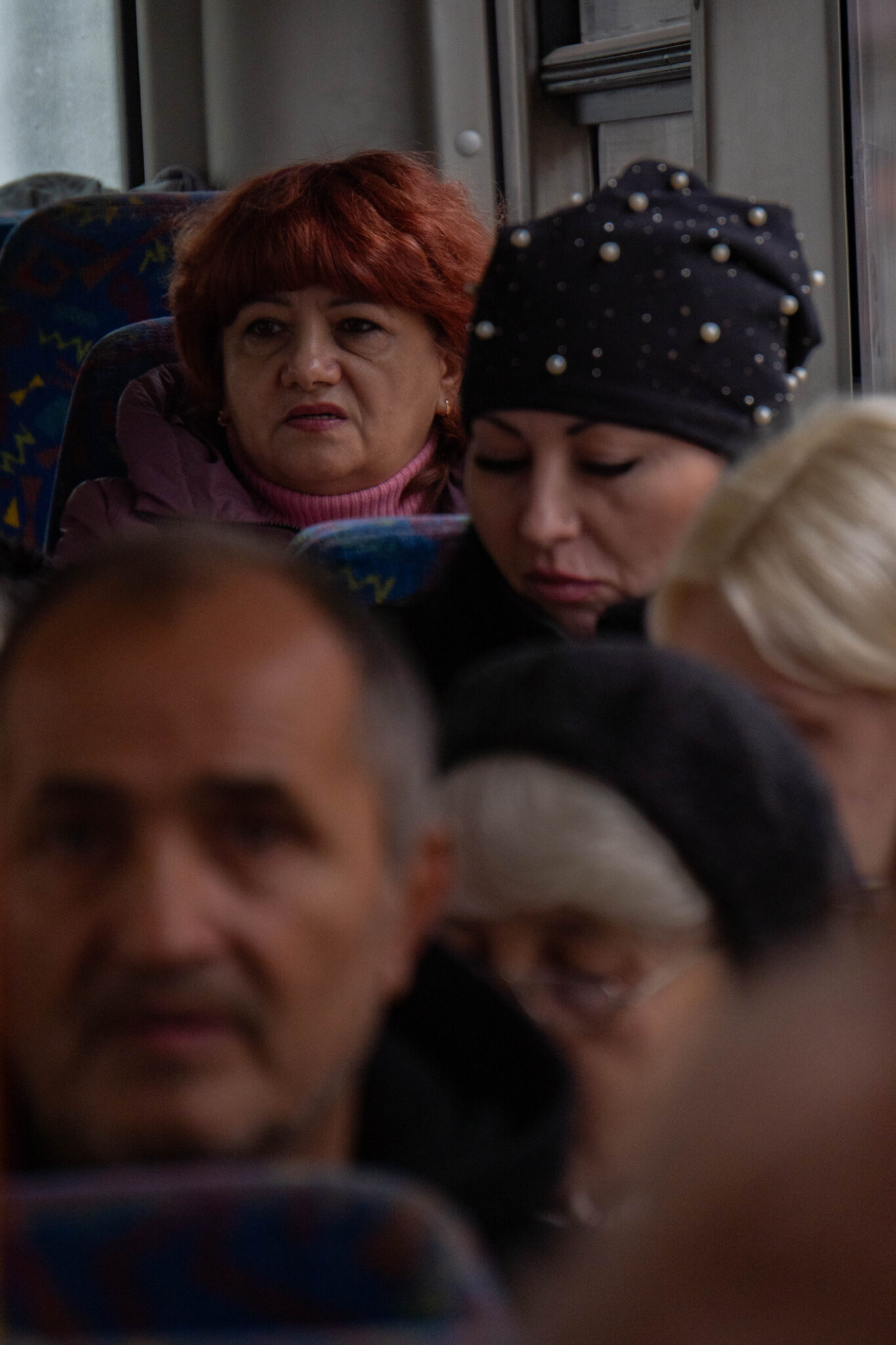
Gradually, evacuees take their place on the bus to Lozova.
Igor, 60, and Katerina, 43, are more comfortable talking about their departure. “We had everything and we have to leave it,” says the couple. Igor is a driver, Katerina is a “beauty master,” working in a manicure salon.
“Horror, horror, horror,” says the husband when asked about the situation in Kramatorsk. Living in the south of the city, their neighbourhood is under Russian artillery rocket fire. “Once, a missile hit 500 meters from our house. It blew off the roof.”
Their son, a soldier, had warned them, “Leave as soon as the first FPV drone arrives, he told us.” It’s been nearly a month since the first fibre-optic drone struck inside the city, and in the meantime, their son found them a house in Kyiv. “There’s no gas or comfort, but at least there are no drones,” the parents explain. “We’re very grateful to him. Thanks to him, we’re less afraid.”
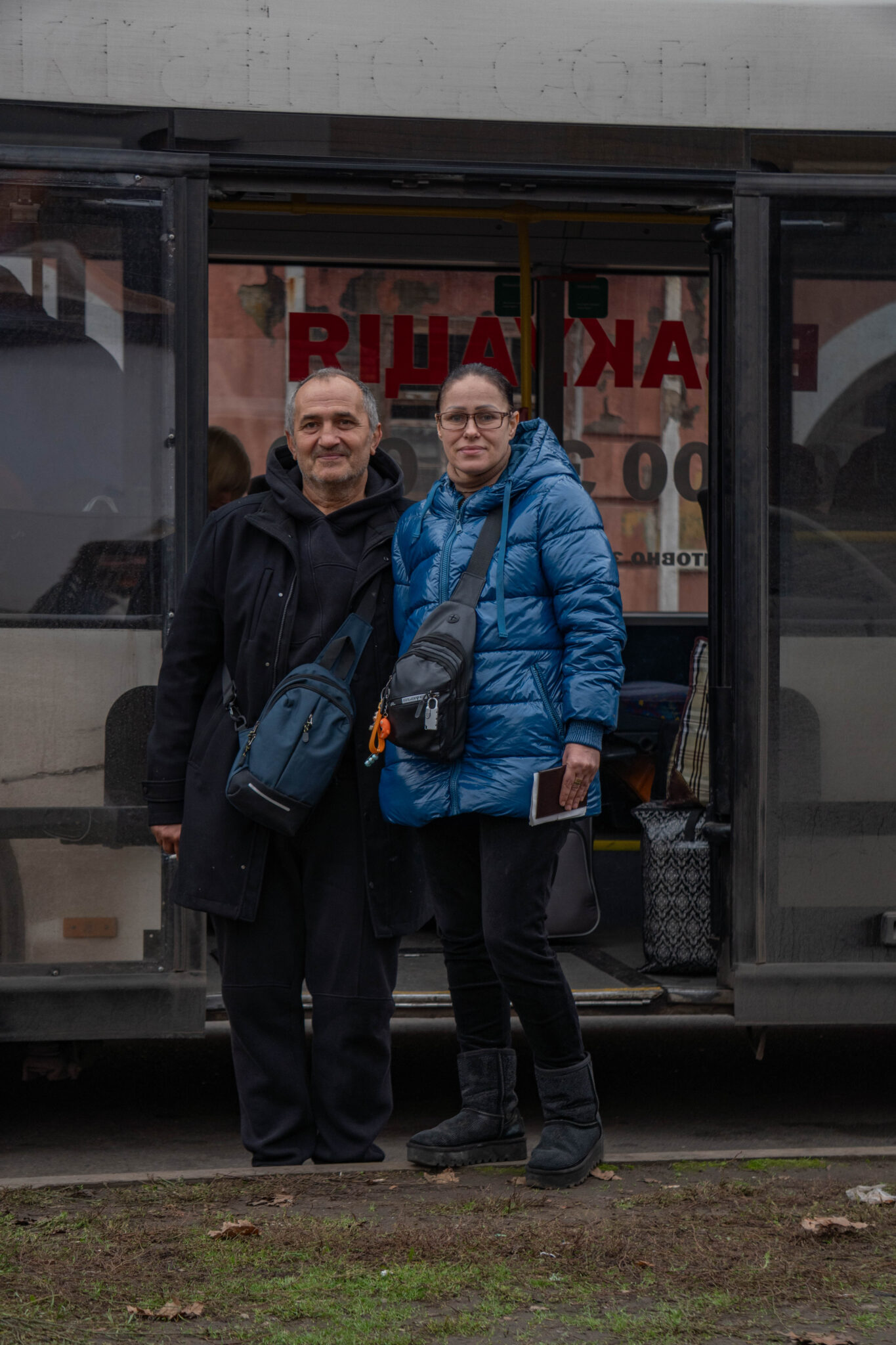
Igor and Katerina are leaving Kramatorsk, a city they have lived in their whole lives.
Apart, on a bench, an elderly woman waits, smoking, for the bus to depart; her bags are already on board. My interpreter struggles to understand her words. “One moment, she says she has no family, the next, she says she lives with her daughter and son-in-law. I don’t understand anything.”
One of the volunteers in charge of the evacuation recognizes the woman. A complicated exchange begins and other volunteers intervene as the initial volunteer steps asside to make a phonecall. Listening, my interpreter signals me to wait aside while trying to understand the situation.
After difficult exchanges, the old woman’s bags are taken off the bus. She’s not leaving anymore. “Okay, I understood what happened. This woman does live in Kramatorsk. And she doesn’t have her full mind anymore, and she’s an alcoholic. Her daughter brought her to the bus to get rid of her. But it turns out this volunteer (on the phone) knows the daughter and called her.”
After a pause, the interpreter shares her opinion. “In a way, I understand this daughter. Who would want to live with that? It makes life impossible! On the other hand, this old woman is a human being. She needs care, not abandonment. That’s not the way to do it!”
The engine has been running for a while. The driver takes their seat and, slowly, the vehicle leaves its parking spot, pulling onto the road after a military SUV passes. The pistons cough abruptly as the loaded bus picks up speed. Like every morning, the driver makes his round trip to Lozova, 90 kilometres away.
At man’s height, between the lines — Little Frenchy
Article's gallery
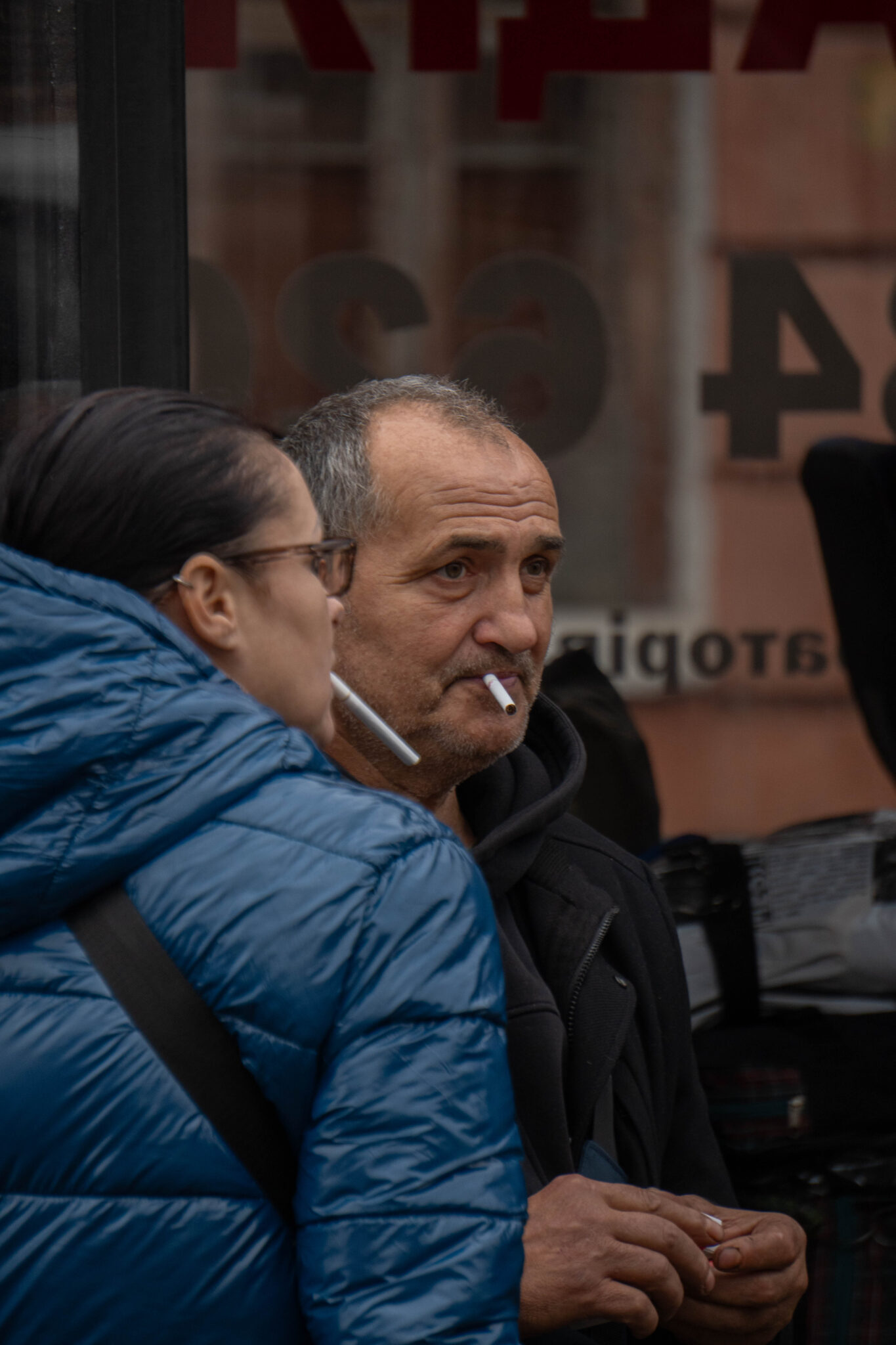
“Horror, horror, horror,” says the husband when asked about the situation in Kramatorsk.
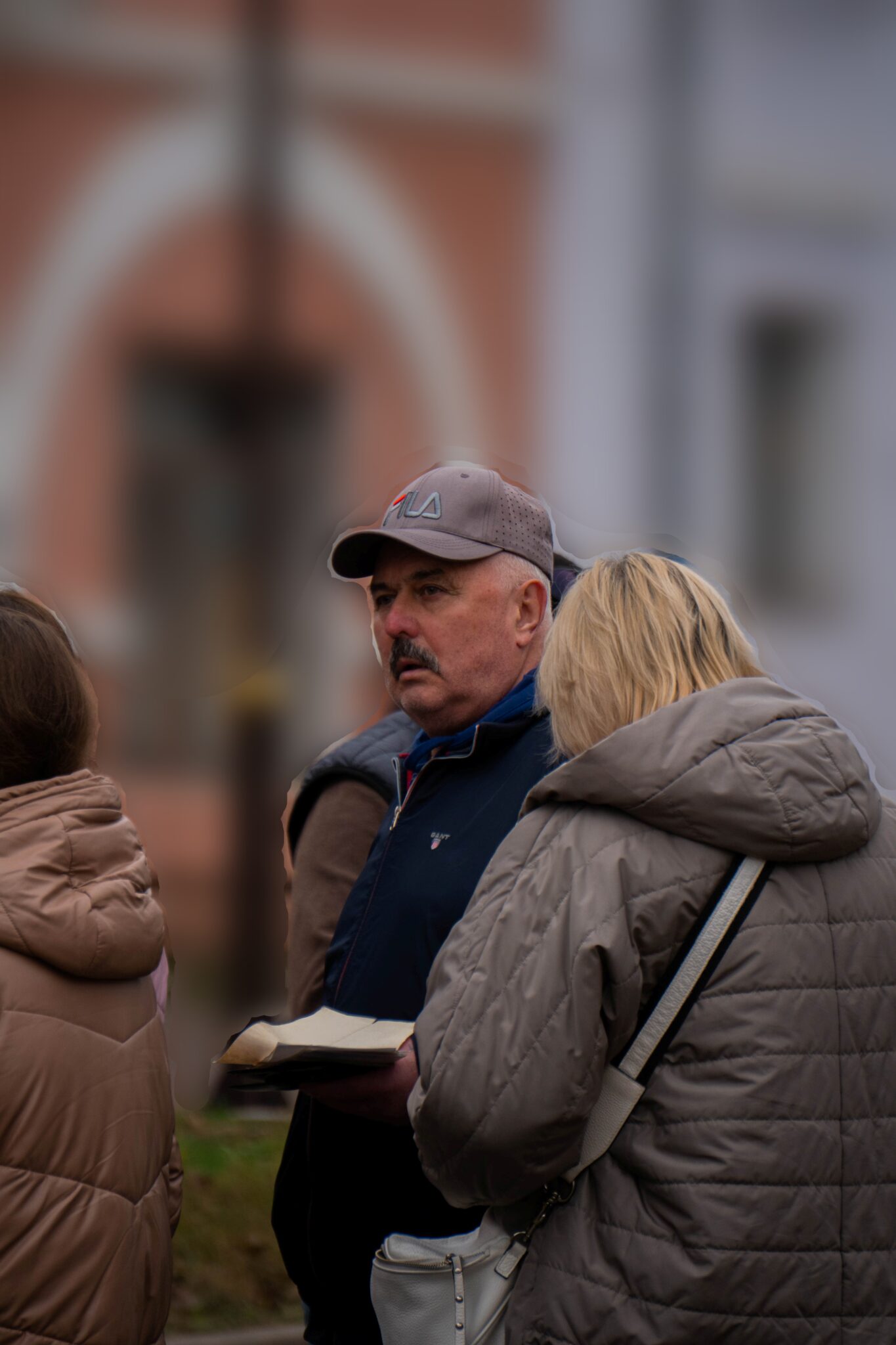
Beyond leaving their past life behind, most likely never to return again, it is the uncertainty of their future that escapees must face.
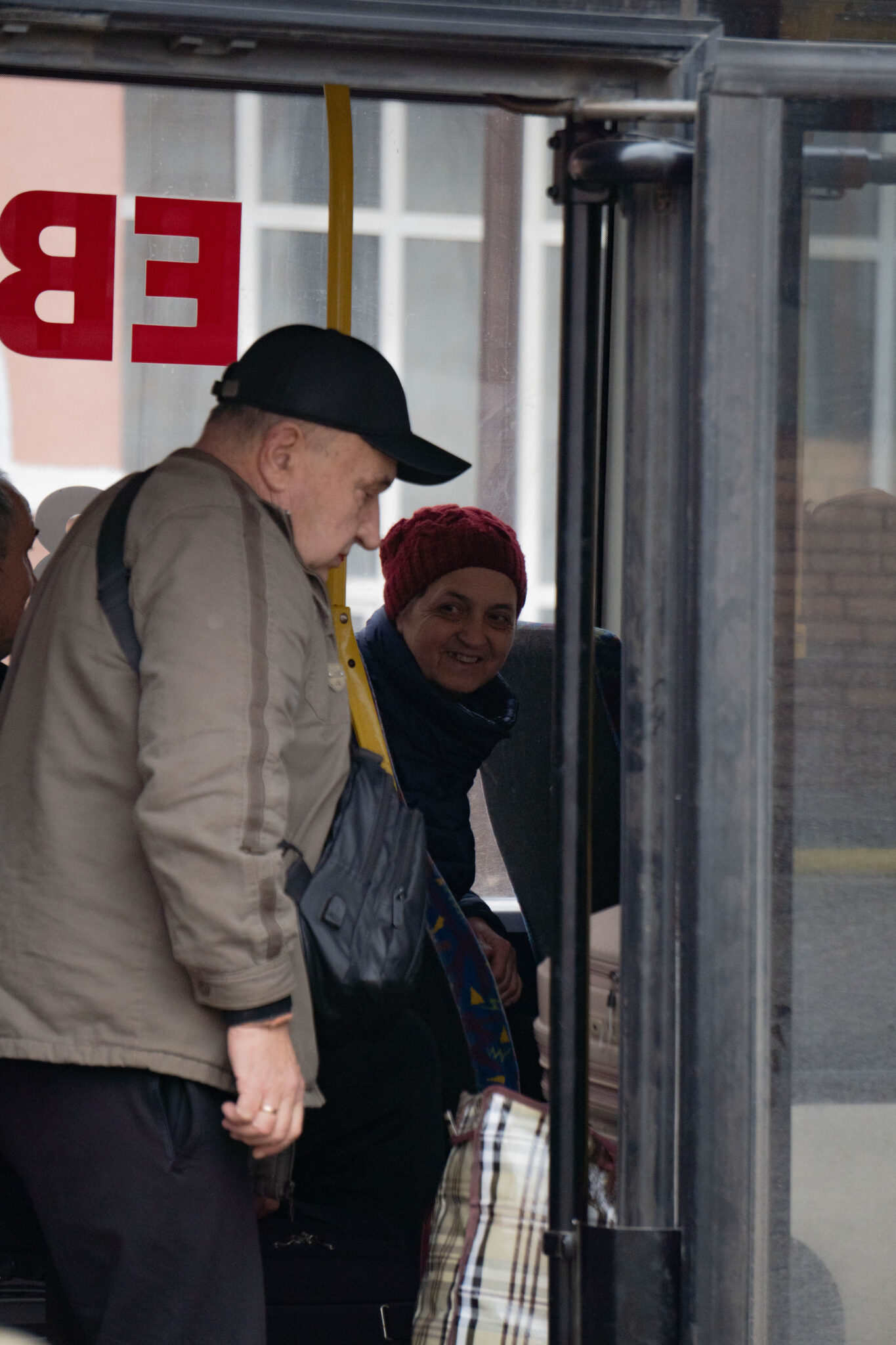
A smile or a joke, amidst the pain.
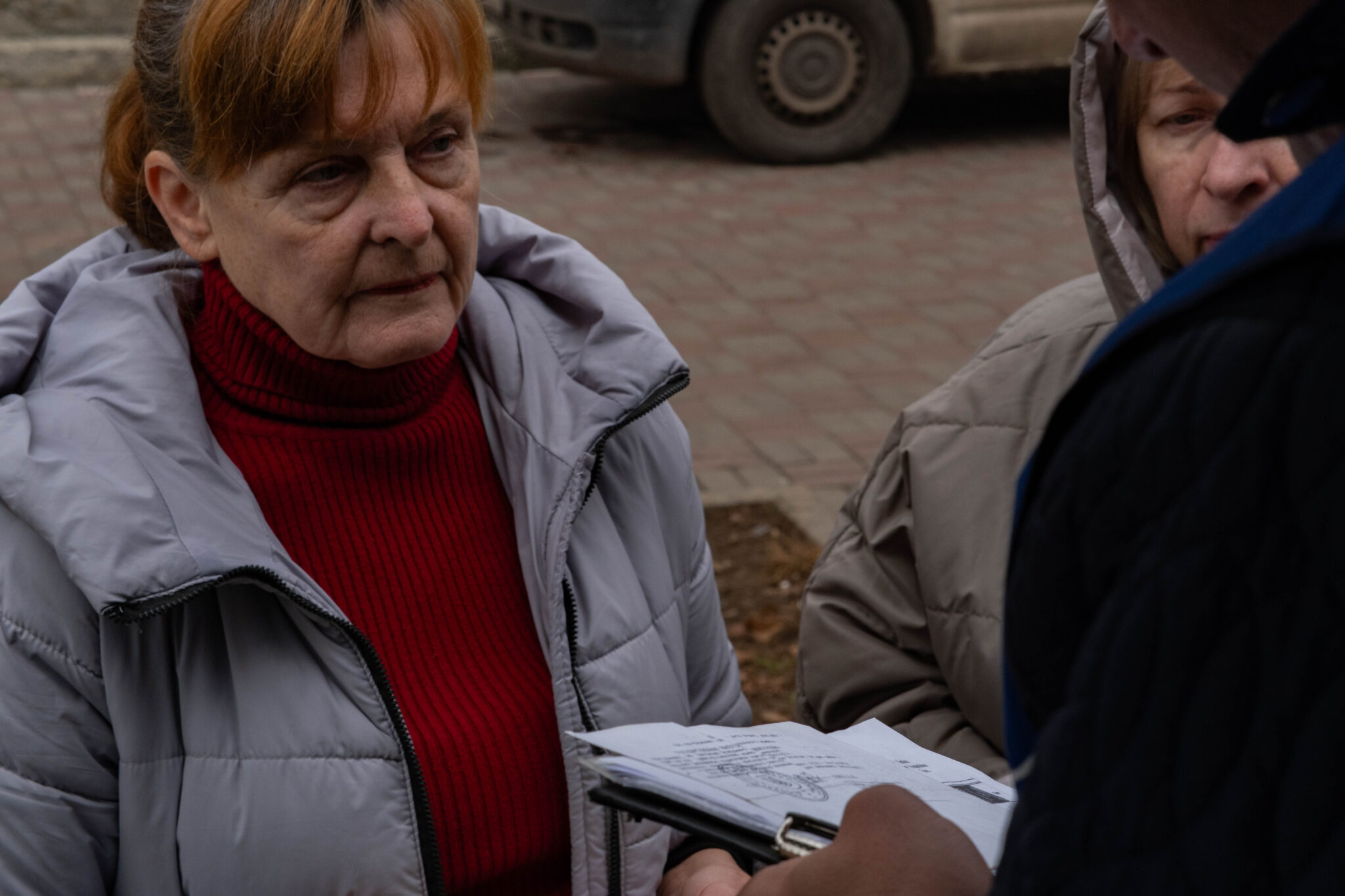
Before entering the bust, evacuees must register to a local volunteer.
At man’s height, between the lines — Little Frenchy
21/06/2026