
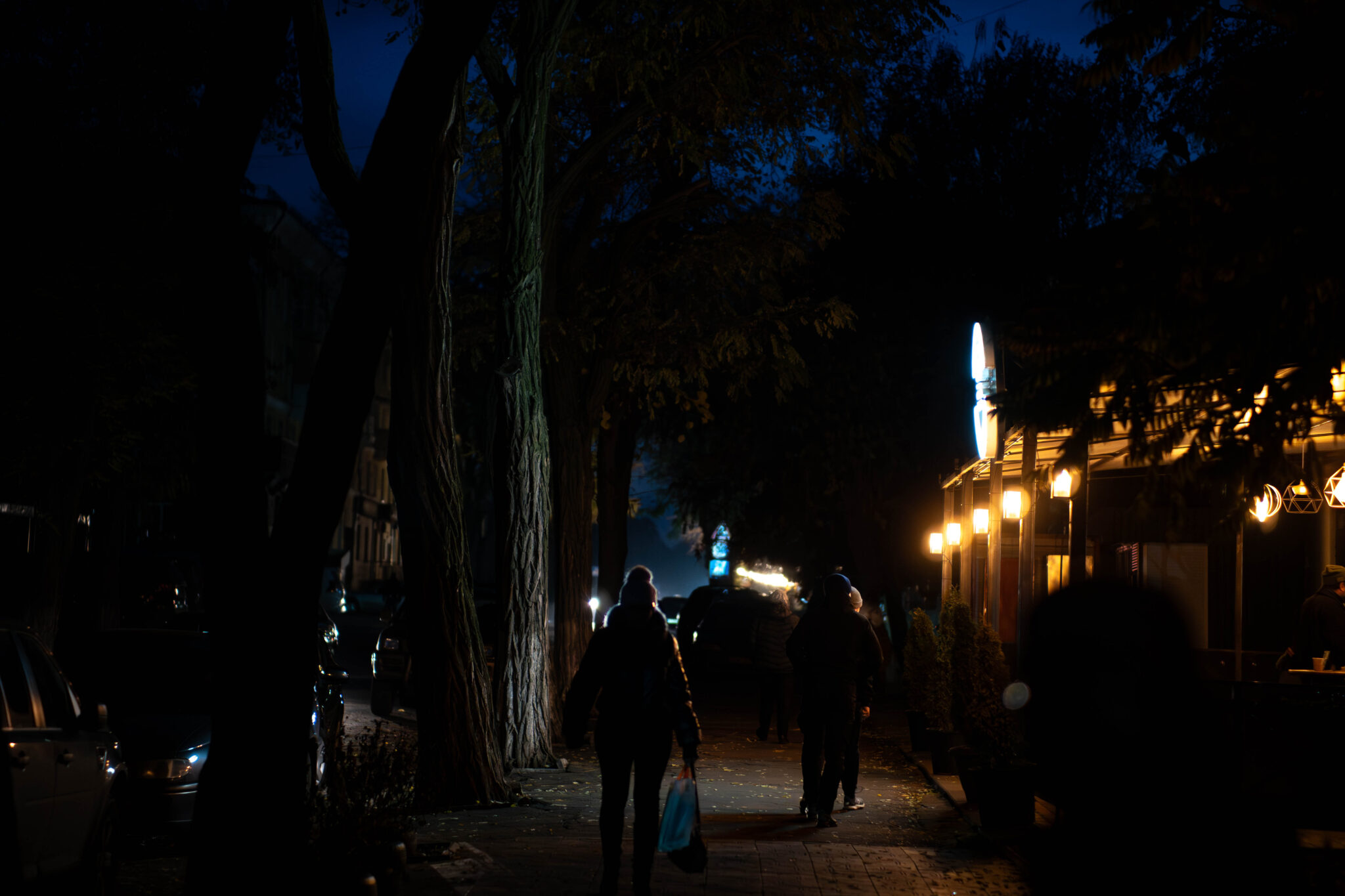
Depestrian walking by a restaurant, keeping its light on with a generator
Plunged into Darkness
Forty-eight Hours of Blackout in Kramatorsk
As winter approaches, Russian forces strike Ukraine’s energy infrastructure. In Kramatorsk, despite the population’s resilience, these attacks remain a source of pain that residents endure with restraint.
The city alternates between periods of calm and of intensified strikes. The background rumble fades, sometimes disappearing for a few days, only to return in cycles; punctuated by the ominous buzz of Shahed UAVs over the rooftops. It is early winter, and Russian forces regularly target energy infrastructure.
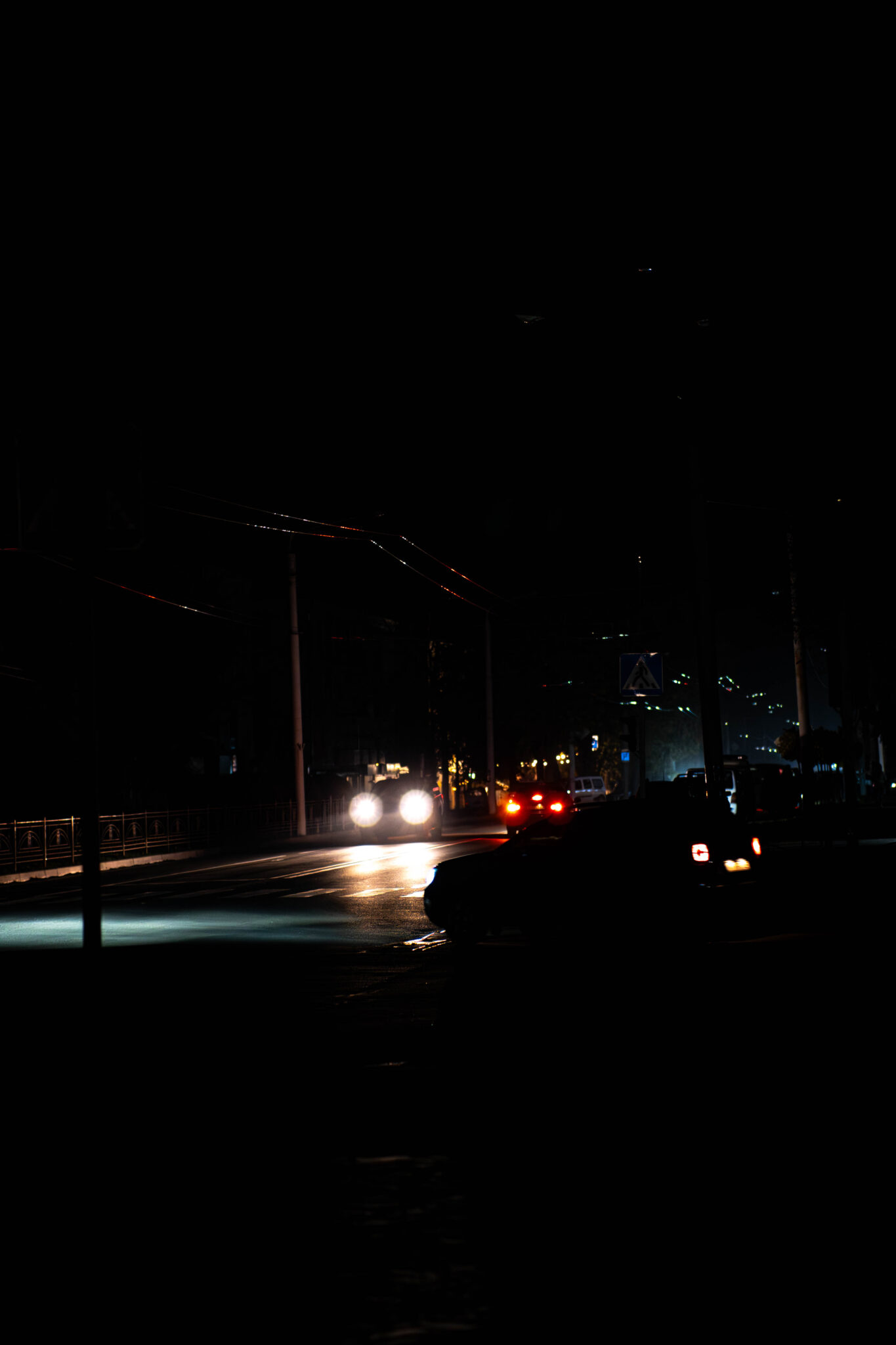
On the main streets of Kramatorsk, public lighting is shut down.
This time, drones flew over the city early in the evening, well before the 9 p.m. curfew. With night falling by late afternoon, only the long cry of their engines reveals the linear paths they carve in the dark sky. In Kramatorsk, there are no douchkas, no anti-aircraft machine guns, the drones seem to follow their routes unhindered.
On the central square, some residents are startled by the approaching piston engine noise. They stop walking and take shelter under the large trees scattered across the square. Careful not to step out from the trees’ shadows, they lean forward, trying to spot the drone’s silhouette in the black sky. In vain—only the piercing, rising whine of the loitering munition marks its passage overhead. Its run ends with a sharp, abrupt detonation echoing through the streets.
The next morning, the roar of diesel engines fills Kramatorsk’s streets. In apartments, light switches are useless and the heating is off. For residents, it’s the start of a long energy marathon. Phones and headlamps must last as long as possible. The return of electricity can take up to several days.
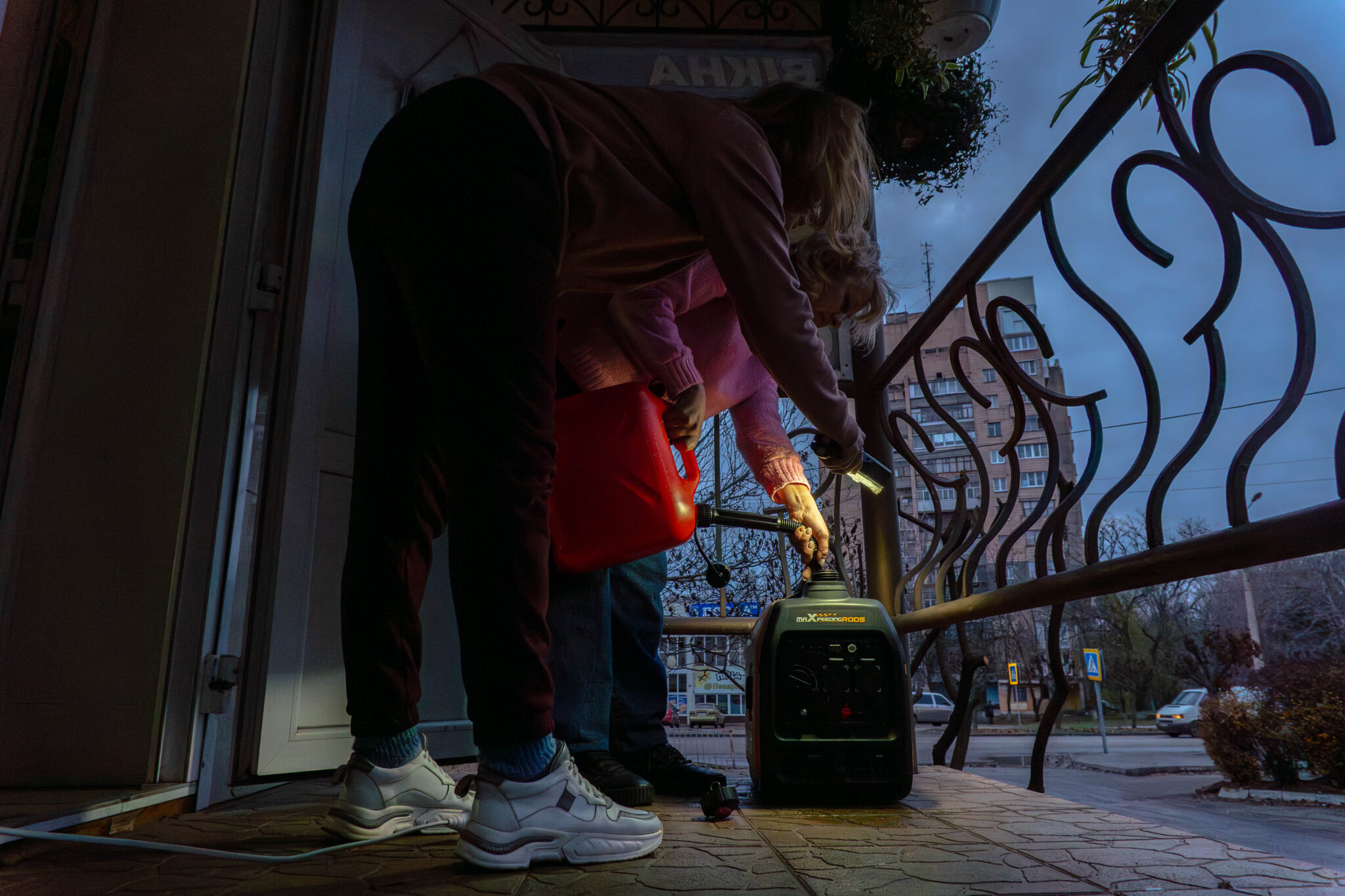
Shopkeepers are filling their generator to keep their lights on.
During the day, most downtown shops operate. After four years of war, diesel generators are as integral to businesses as any other equipment. At places, their droning makes it hard to hear one another in the streets. Across the city, restaurants are packed. It’s hard to find a seat with a power outlet to charge your phone or batteries.
Shopping centres also see heavy crowds. The Tchudo supermarket chain offers dining areas with outlets in all its locations. Here, every seat with a socket is taken, and every power point is in use.
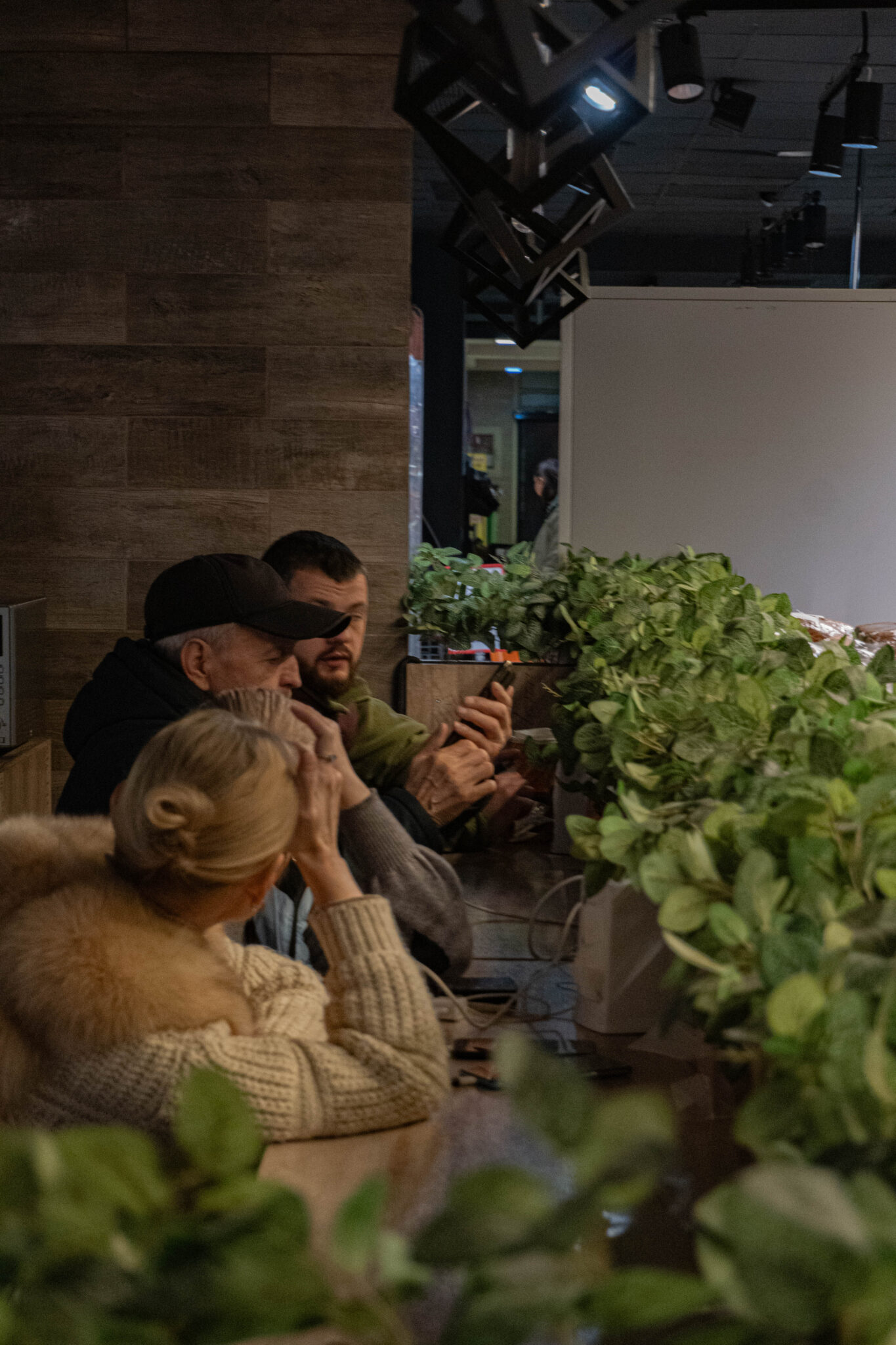
The dining counter of the Tchudo deli, all outlets are used to charge phones and batteries.
Ludmilla, in her forties, sits with her mother, Alona, at the dining counter. Naturally, both sockets at their place are used to charge family phones. “It’s hard without light. We survive by going to the shops,” says the retiree.
“We’re from Kostiantynivka,” Ludmilla explains—a city 25 kilometres south of Kramatorsk, where Russian infantry has taken positions in some neighbourhoods. “We just arrived and are temporarily staying in Kramatorsk” with her husband and child. Despite their evacuation, both women keep smiling during the conversation.
Cut off from electricity and heating, family bonds become vital. “Warmth is family. (The blackout) It’s something you go through together,” says the retiree.
Without heating, warm clothes are kept on even indoors. “We wear layers,” Alona describes, with a hint of sarcasm. “We’re more dressed inside than outside”.
At home, everything gets harder: cooking by headlamp, eating in the dark. “I made lamb, it still tasted good,” Ludmilla assures. “And we have romantic dinners,” her mother adds with a smile. “We eat by candlelight”.
Through strikes on the city’s energy infrastructure, Russia imposes an endurance test on Kramatorsk’s residents. “You have to be patient,” Alona says, slowly. “It’s a trial to get through with hope. You have to keep a positive light, despite the tears. You have to stay united,” concludes the elderly woman.
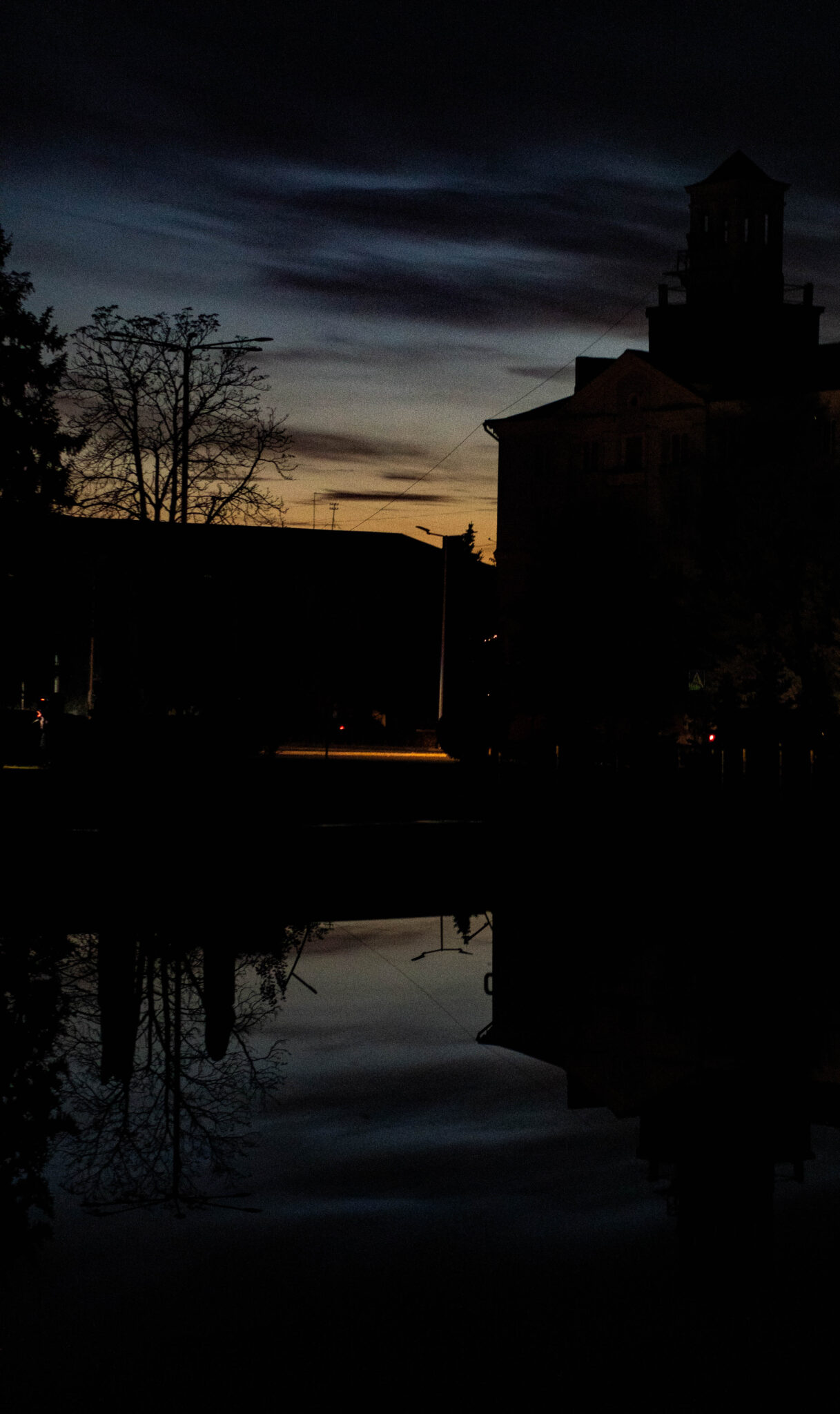
Dusk settles over a blacked out Kramatorsk.
Elsewhere in the city, unlike Alona and her daughter, residents hardly talk about the situation. When asked, the manager of a small grocery store refused to comment. “Understand, it’s not that I don’t want to. It’s just too hard (to talk about),” a reaction that hints at the hardship hidden behind Ludmilla and her mother’s smiles.
At the end of the day, back at the apartment where several volunteers are staying, James, the host, lets out a cry of relief: “Oh cool, power is back on! We won’t need head lamps for cooking anymore!”
This time, the power cut lasted more than 48 hours. As night falls, windows in the buildings light up one by one, as households rediscover electricity. Everyone enjoys their home again—until the next attack.
At man’s height, between the lines — Little Frenchy
Article's gallery
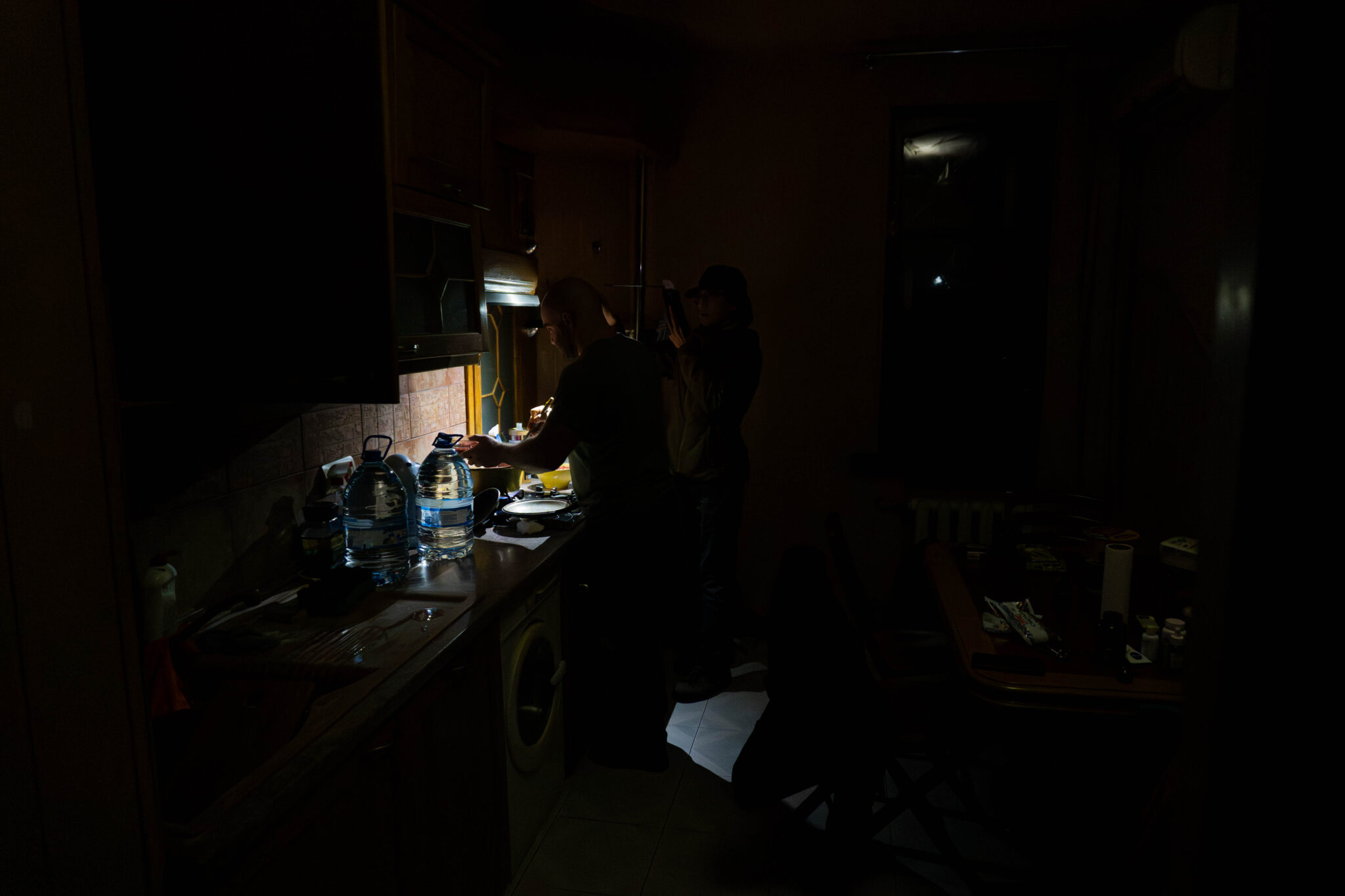
James, a foreign volunteer, cooking in his kitchen. Frank, a photojournalist housed by James, provides lighting.
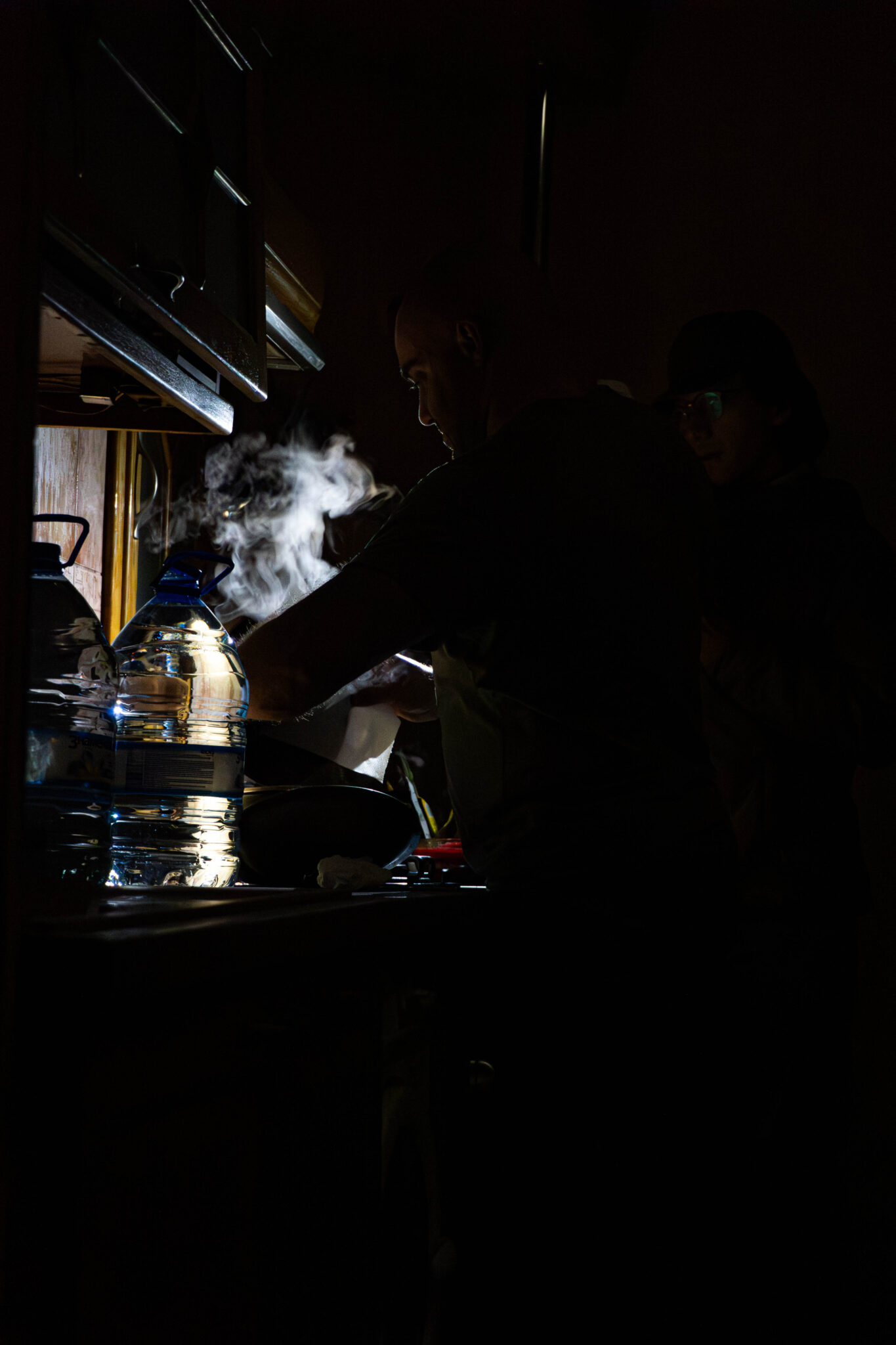
James is preparing a home-made borscht.
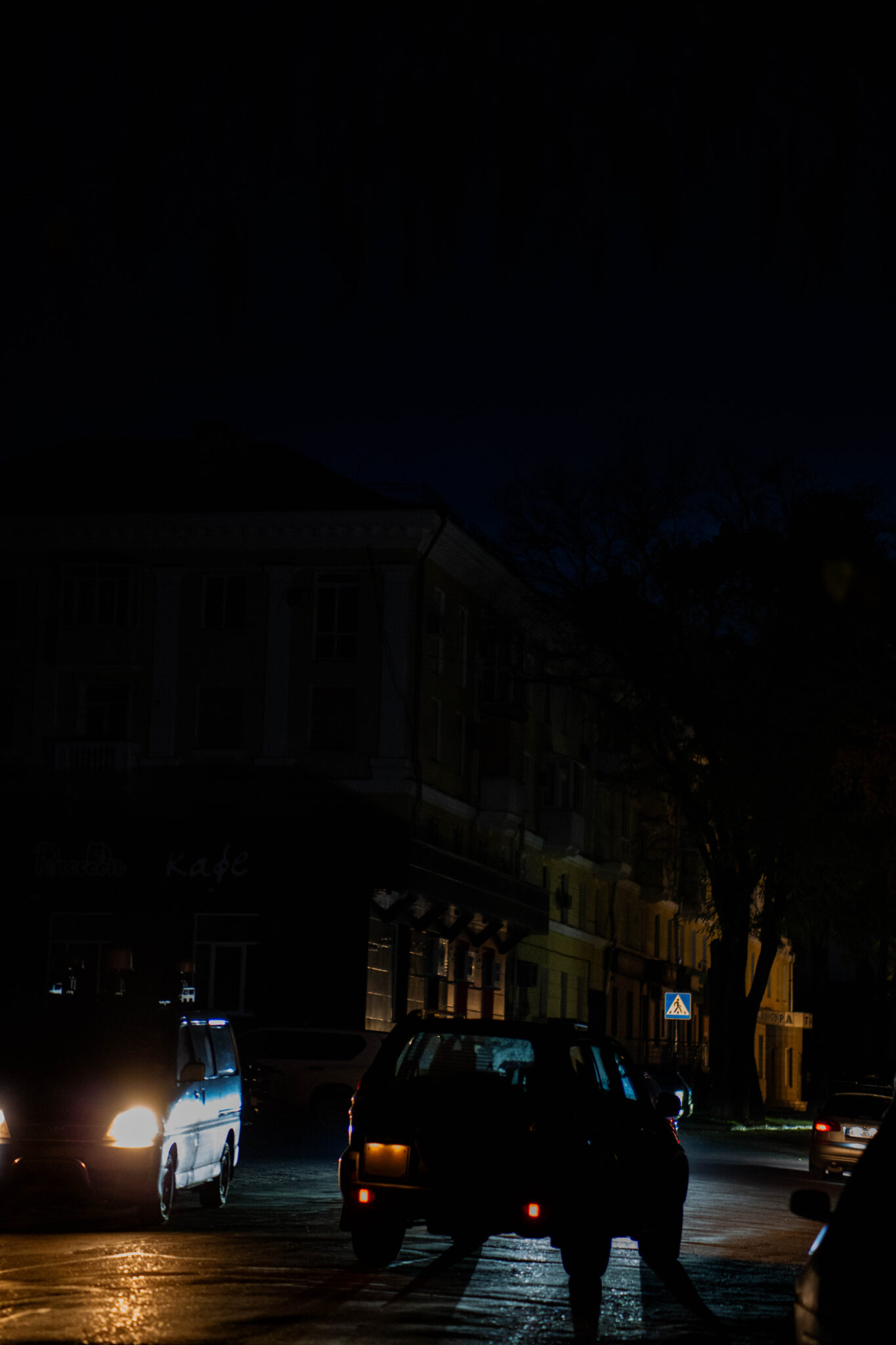
Cars navigating the dark streets of the inner city.
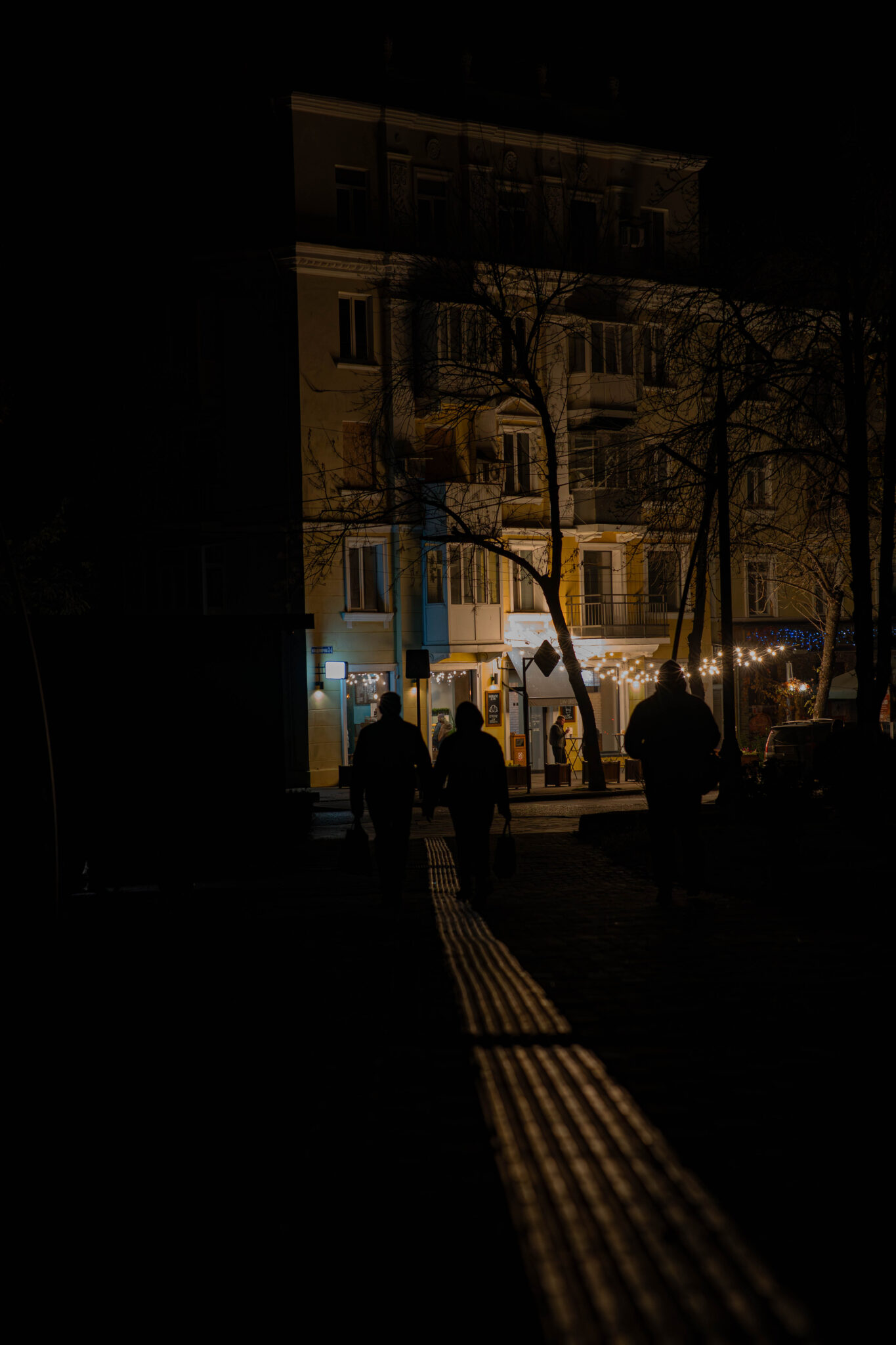
Couple walking towards a shop.
At man’s height, between the lines — Little Frenchy
04/04/2026