
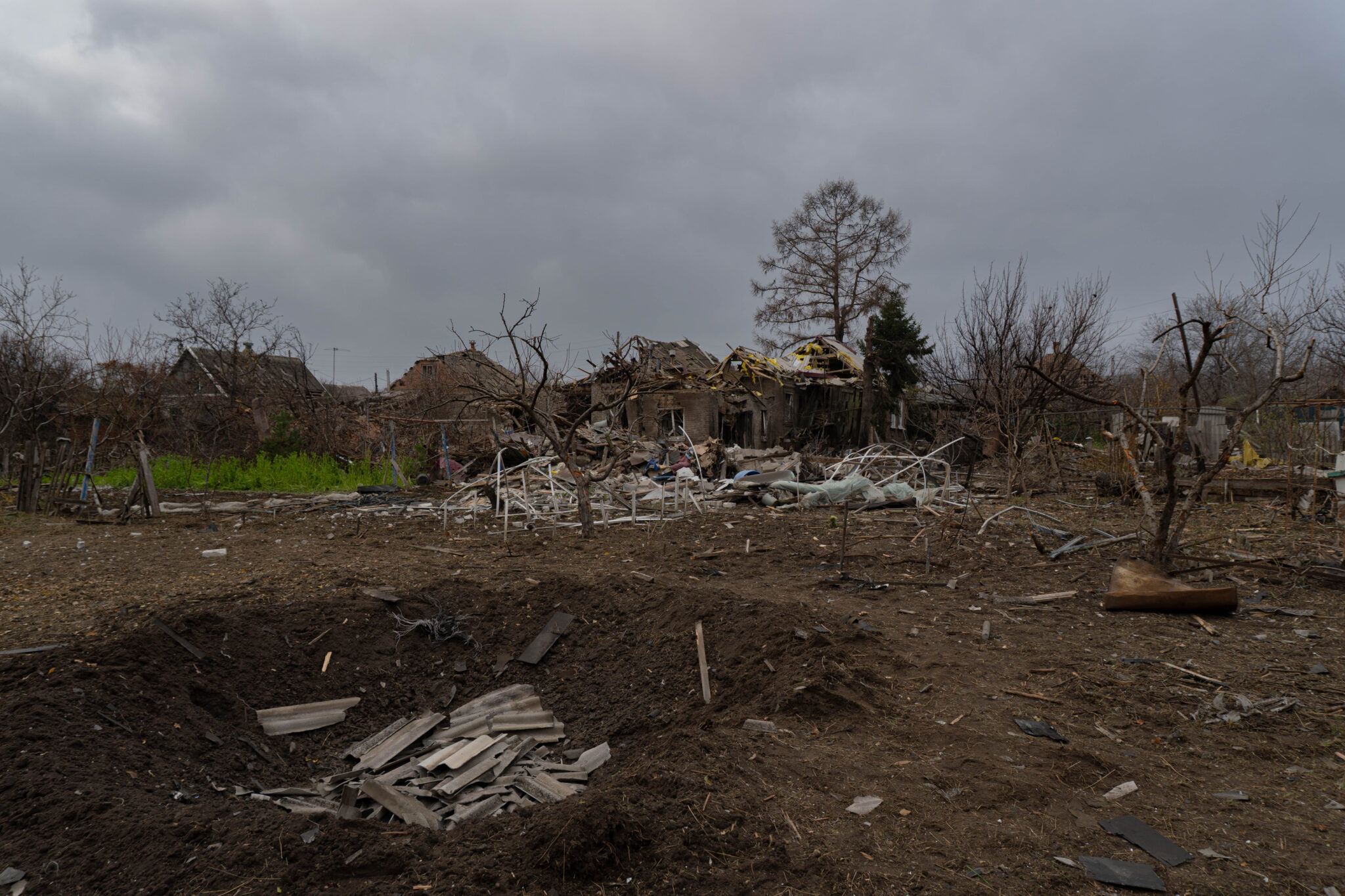
Crater of a Shahed drone in a residential area.
A morning after strikes
When Russian drones shatter a residential area
“There was a strike last night in my street,” my translator writes to me in the morning. A message, above all, of relief, though hardly surprising. “Come, I will show you now,” she decides when we meet later that morning.
Ekaterina* is one of the translators I work with in Kramatorsk. Educated during the Soviet era, she speaks an academic English, marked by a Slavic accent. In the car, she recounts her night. “I was at home, and we had two drones strike in our street. But don’t worry, I will show you. I know everyone in my street!” Ekaterina drives me to a peripheral neighbourhood in the south‑west of the city. There are no Soviet apartment blocks here; this is a block of small houses, each with its own little plot ; all cultivated.
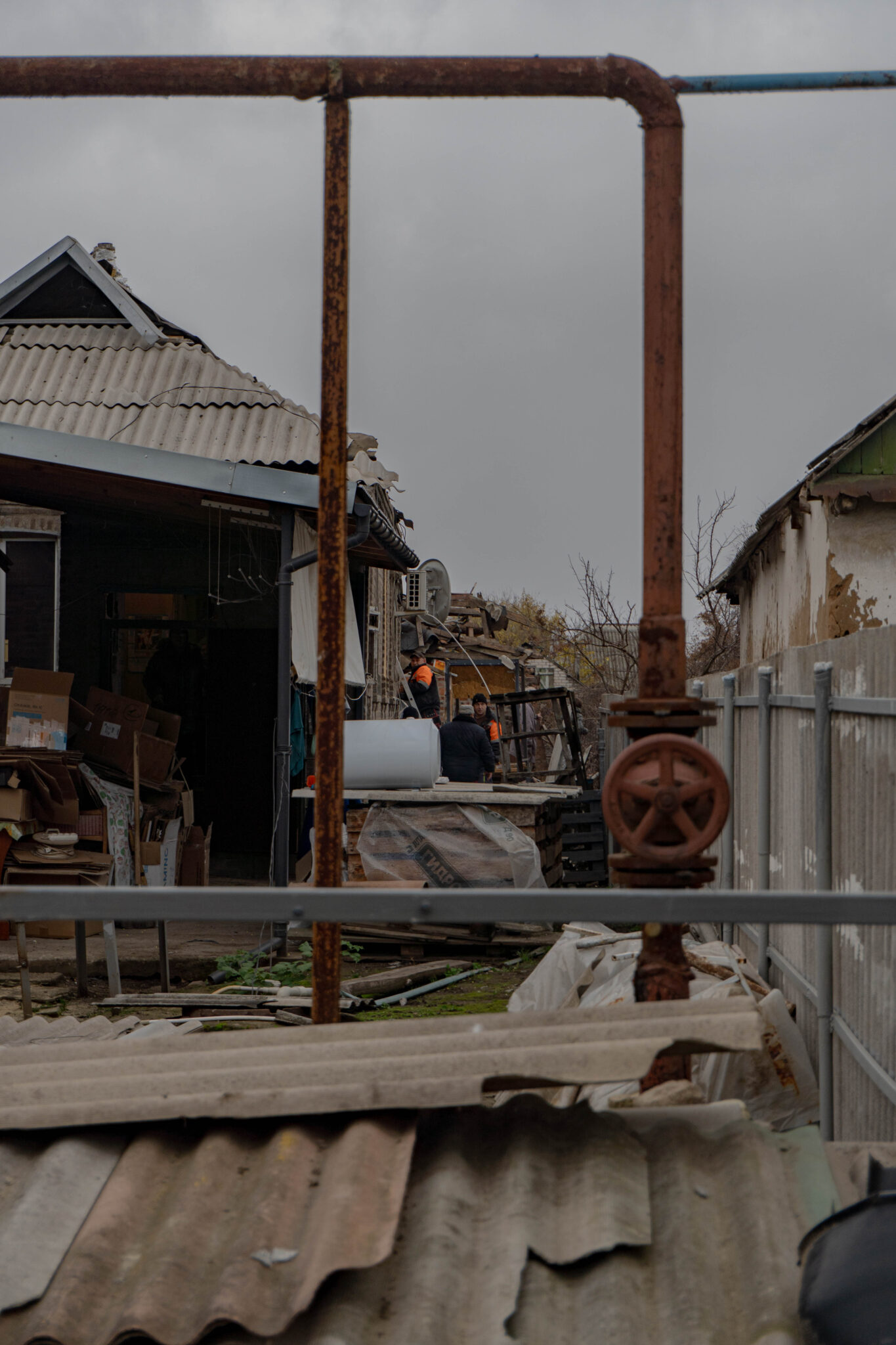
Residents are moving the debris out of the interior of their homes.
We arrive at the first house. Ekaterina calls out to the residents, who are busy clearing debris and sealing the windows with wooden boards; the house is partially damaged. A woman opens the gate and steps out into the street. She is short and stout, her gestures shaped by the harshness of life. Embarrassed, she refuses to show her house in such a state.
“It was horrible,” Ekaterina translates. “We heard two drones.” The housewife describes a daily life punctuated by the screams of Shahed drones. “Normally, they fly in straight lines and move away.” This time, the sound was different and alerted the father. “He took the family and led us into the basement. We kept the doors closed, and the explosion blew the doors open,” the mother explains. The first drone exploded just a few meters from the house; the windows were blown out and the roof partially damaged. It was 8:30 p.m.
While the resident recounts a scene of panic, the strikes of the previous night confront her family with an uncertain future: should they consider leaving the city? In Kramatorsk, the situation is deteriorating and drones are becoming more numerous. Yet, the woman is unsure about leaving. “We already evacuated our house in 2019. What is the point of evacuating again? Wherever we go, the front line will come here too,” the resigned mother notes. She would have liked to leave the country, but fear of conscription at the border for her husband keeps the family on Ukrainian territory.
Lorem ipsum dolor sit amet, consectetur adipiscing elit. Ut elit tellus, luctus nec ullamcorper mattis, pulvinar dapibus leo.
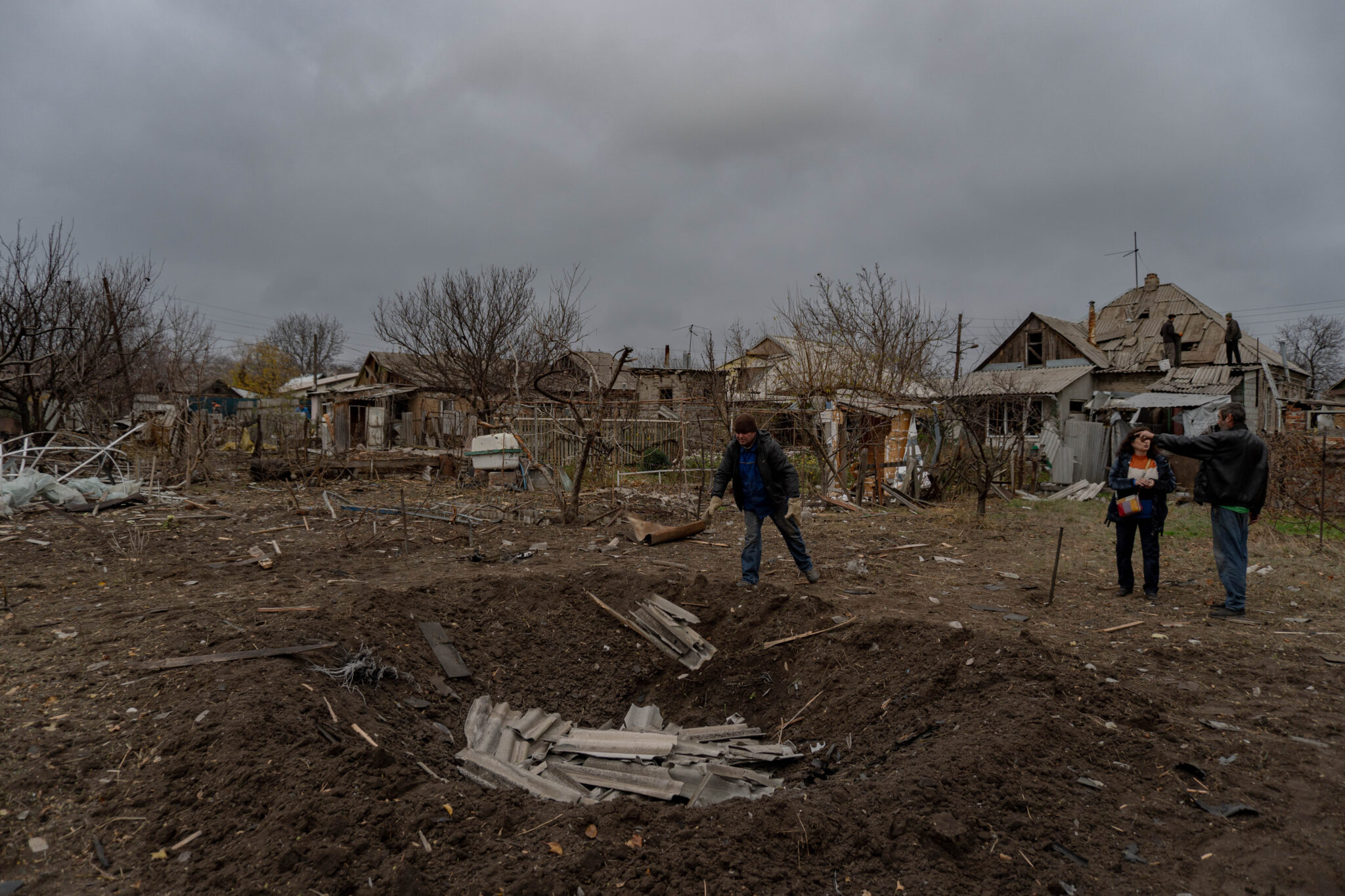
Neighbours exchange information and dispose of the debris from the blast in the crater.
Through the neighbouring house, residents allow us to enter the gardens. They are separated from the street by the surrounding houses and their low walls. At the centre of this enclosed space, residents’ plots are divided by small fences.
In the middle of one plot, a gaping crater has opened in the ground; all around, the earth has been overturned by the force of the impact, and the ground is littered with scattered debris. The munitions are no longer there; Ukrainian services recovered them within the hours after the impact, in accordance with procedure.
A few dozen meters away, a house is partially destroyed; the roof has been completely blown off. Ekaterina speaks with one of her neighbours, who points toward the gutted building. Anatolii was in his kitchen when the second drone struck his home. Only his wife had time to escape. For the rest of the night, fire and smoke made it impossible to recover his body before early morning. Ekaterina learns of her neighbour’s death at the same time as she explains it to me, her throat tightened.
“Come now, we will go see other people to talk to,” urges Ekaterina, resigned. The family refuses to speak, preferring to preserve the dignity of their mourning.
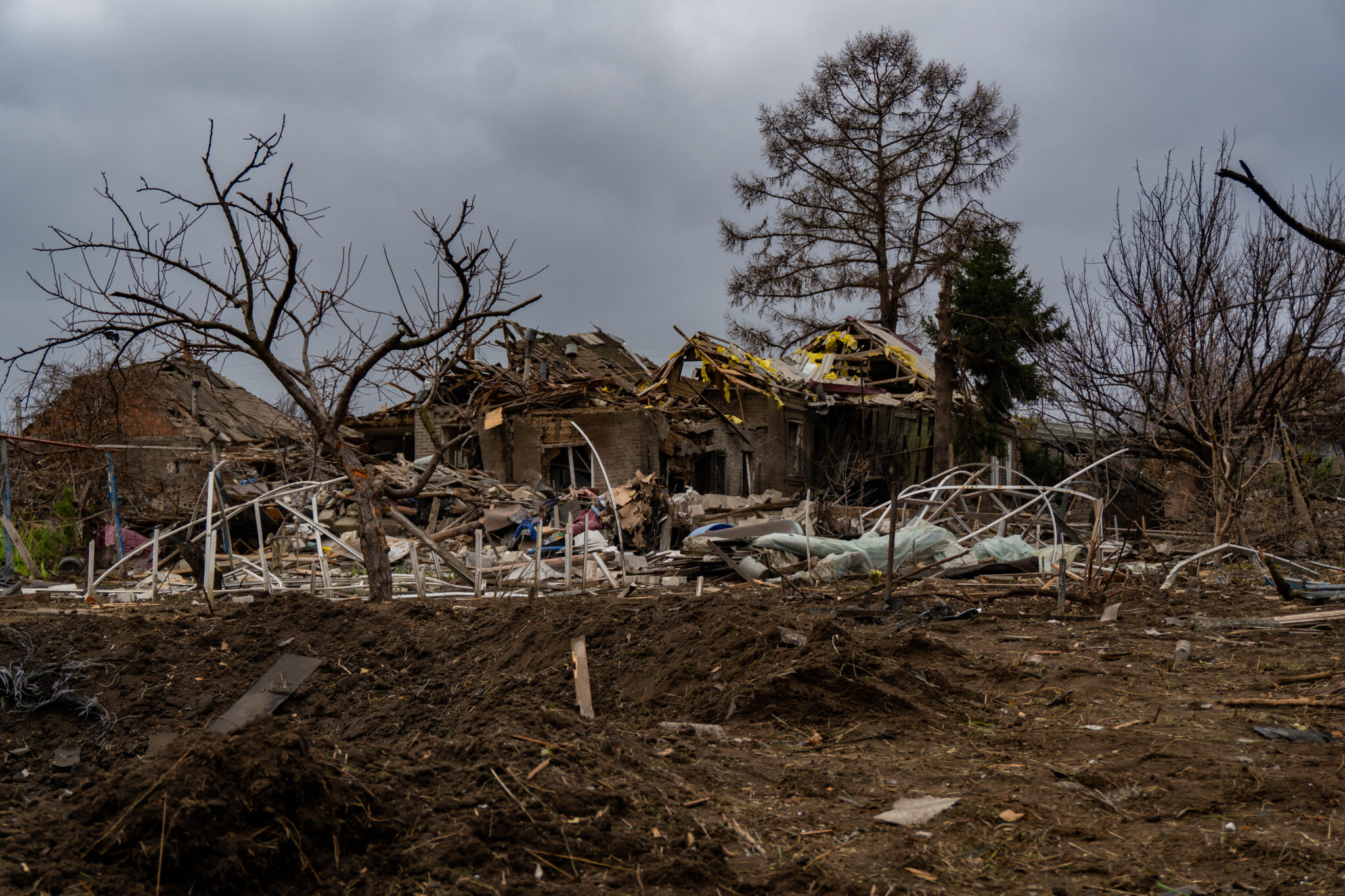
Anatolii was in his kitchen when the second drone struck his home. Only his wife had time to escape.
Alina, an eighteen‑year‑old young woman, lives alone in the house next to Anatolii’s. Pale, her face contrasts with her black hair; her gaze is vacant, her answers slow. She is still in shock as she discovers her home.
“She says she was in the street, coming home from work when she heard the drone losing altitude,” Ekaterina translates. At the first explosion, the young woman threw herself to the ground and a man shielded her. After the second detonation, deemed too close, she decided to flee.
Once calm was confirmed, Alina retraced her steps to return home. She remembers little, except for the smell of gas; the explosion had caused a leak. Those around her then called the gas distribution service to report it, and firefighters arrived within 15 minutes.
Having gone to sleep at a relative’s home, the young woman walks through her shattered house. “The most important thing is that I am alive, and my dog too,” she concludes.
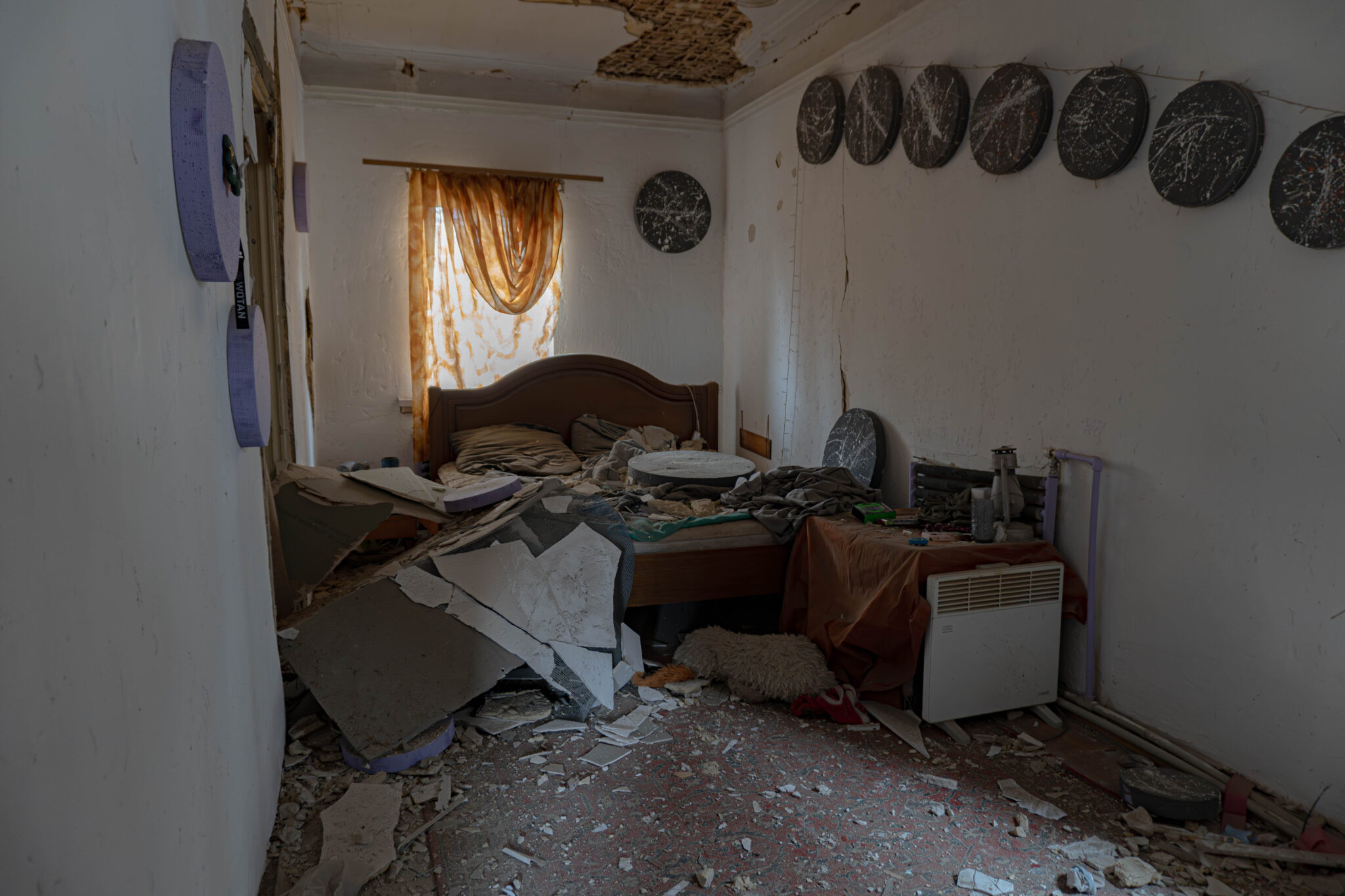
The shockwave from the blasts shattered the interior of Alina’s home.
Inside, the house is filled with debris; furniture is overturned and objects lie scattered on the floor. The attic is open to the sky; half of the roof has been blown off or has collapsed. Between beams and dust, fragments of everyday life emerge. A pair of ice skates hints at the young woman’s hobbies.
In her bedroom, multiple paintings hanging on the wall talk of Alin’s taste for arts. Beyond the destruction, it is an entire intimate life has been violently shaken—and partly destroyed—by the explosions of the previous night.
At man’s height, between the lines — Little Frenchy
Article's gallery
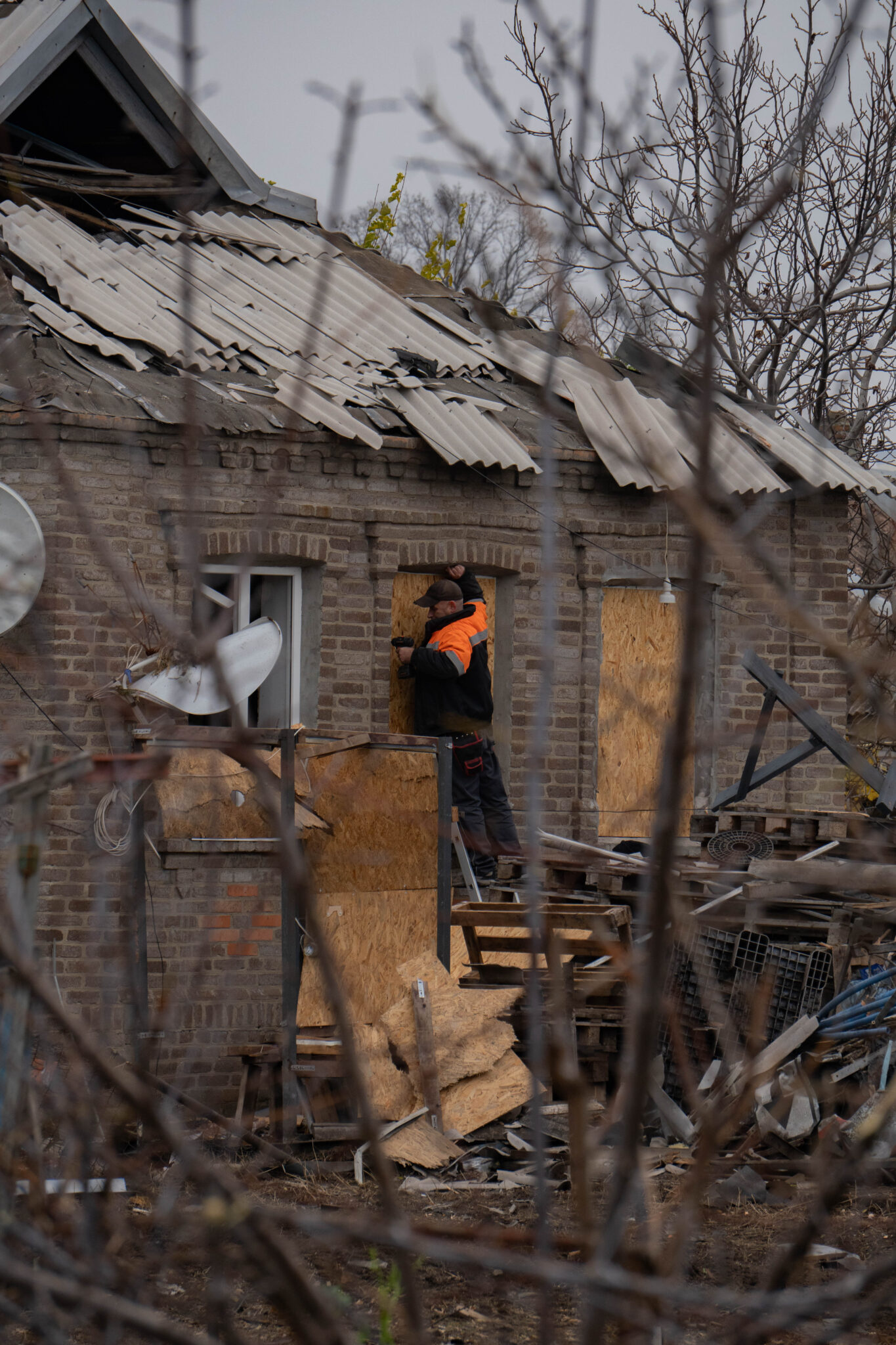
Residents are sealing their blasted windows with wooden boards.
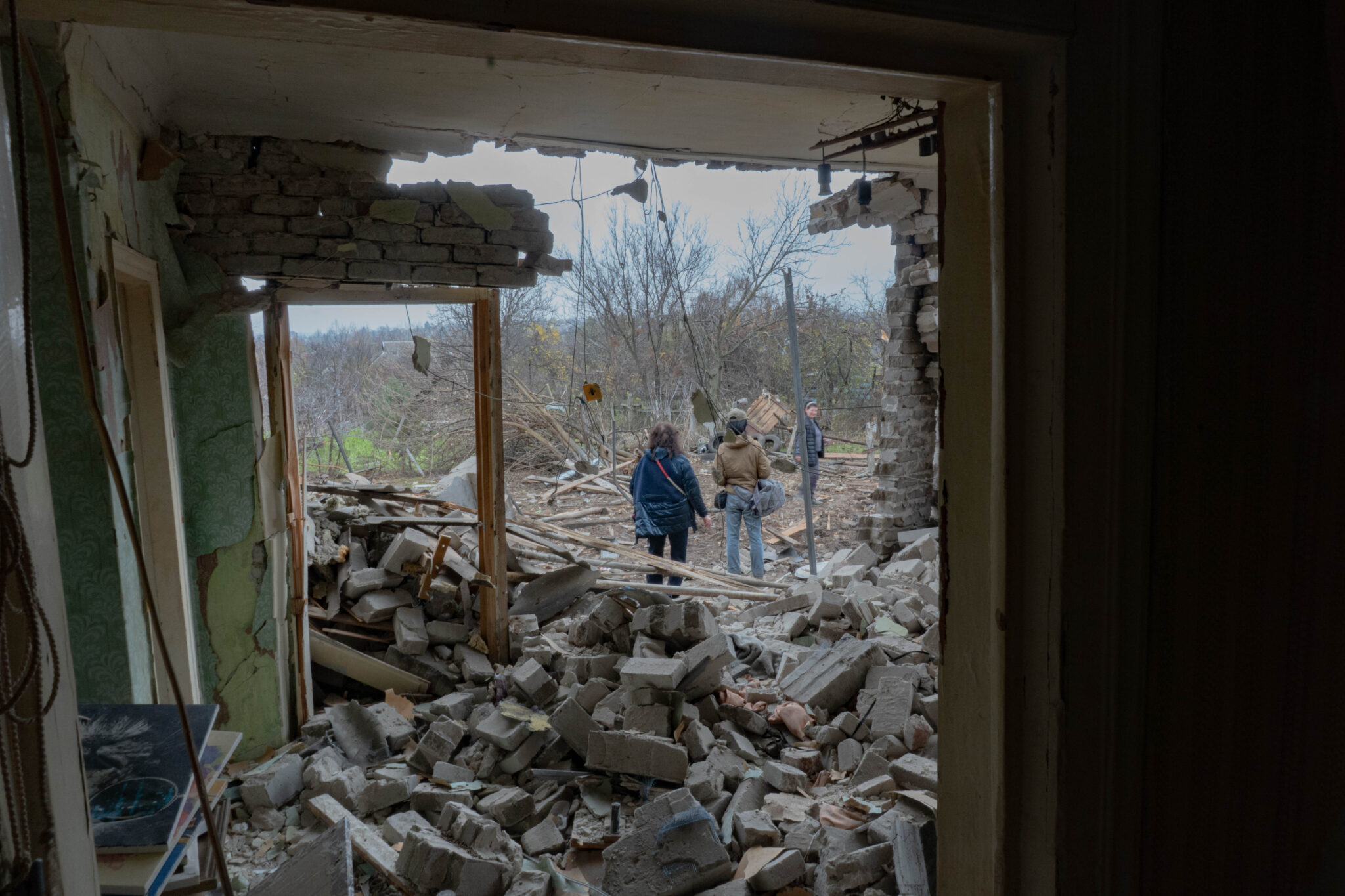
The entrance of Alina’s home collapsed under the force of the nearby explosion.
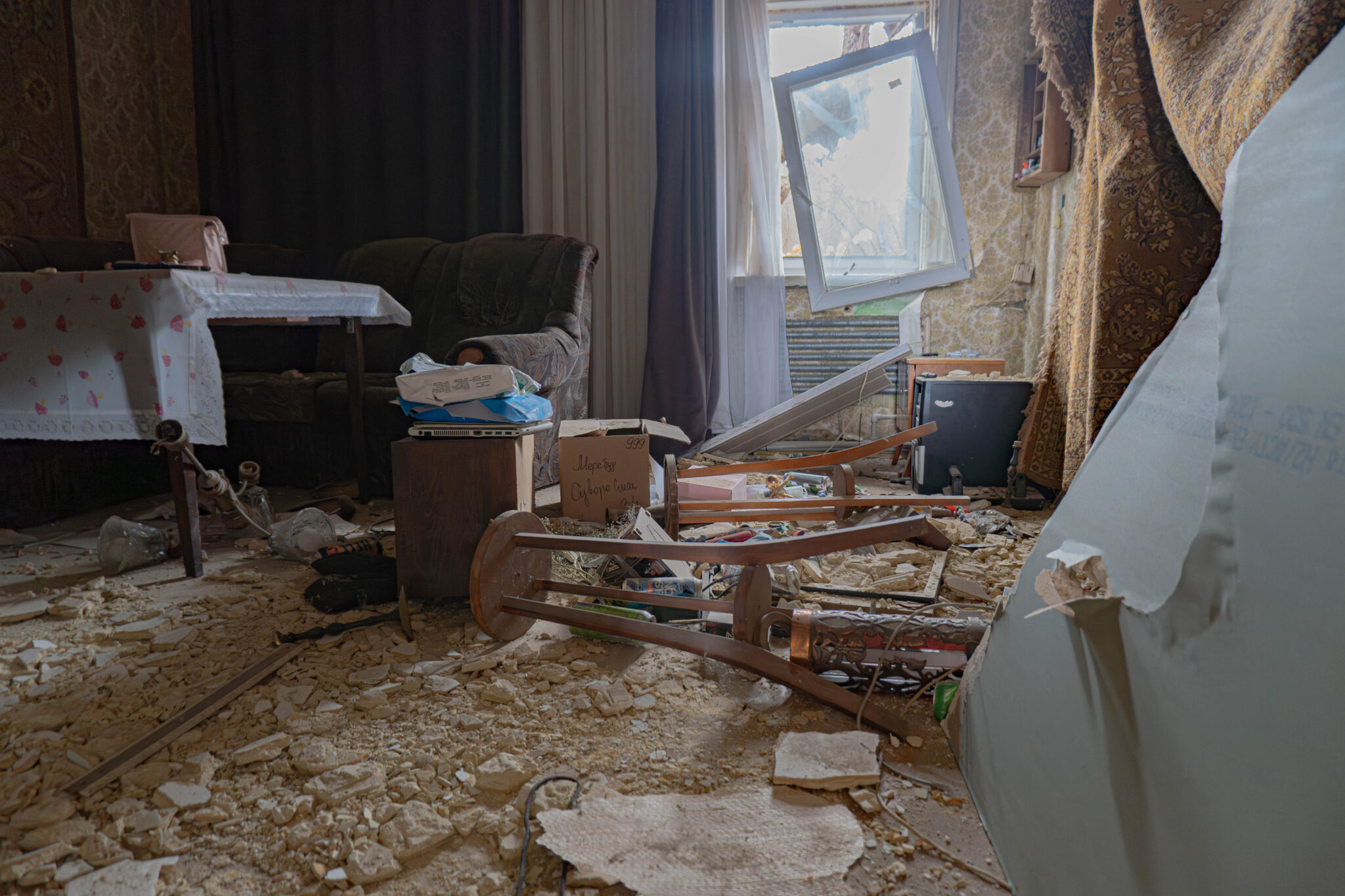
Inside Alina’s home, her whole intimate life has been overturned.
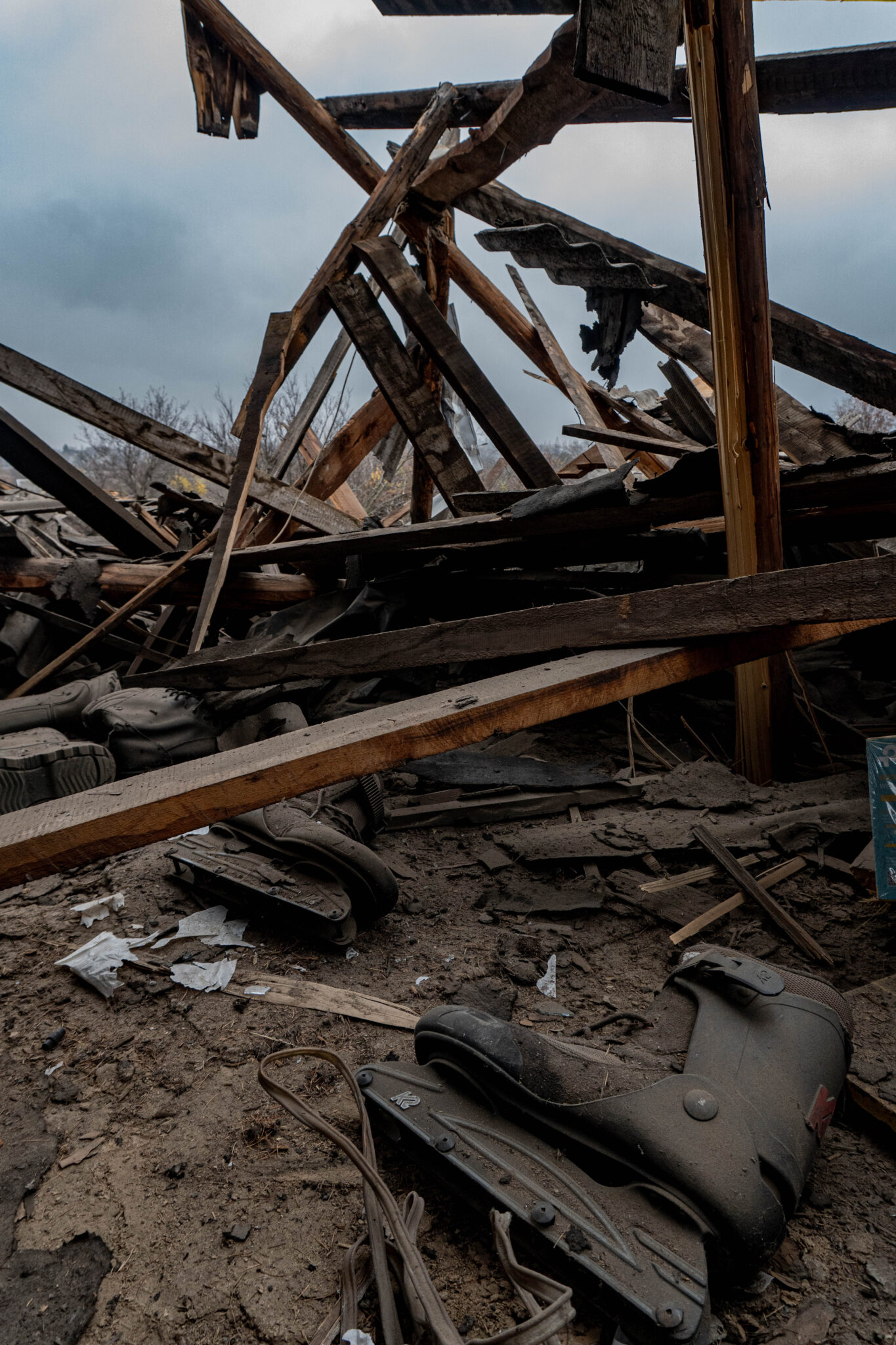
Amongst the debris, objects speak of people’s private lives.
At man’s height, between the lines — Little Frenchy
16/03/2026