
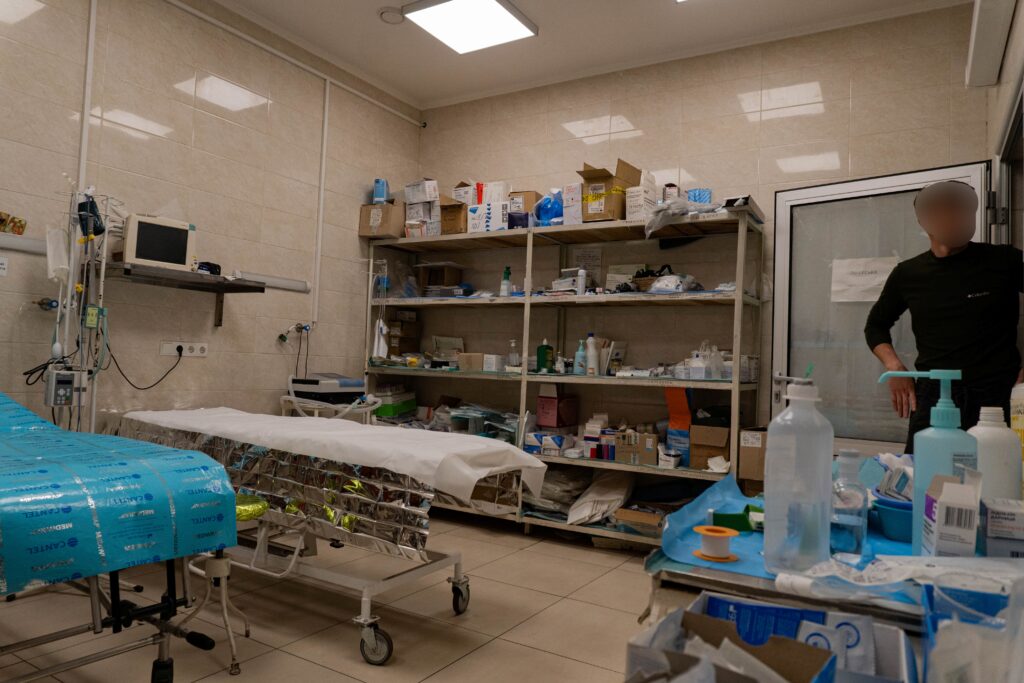
Hospital ward in Krmatorsk
Taken by War
How Civilian Medicine Adapts to the Realities of the Front
Sofiia* is a civilian anesthesiologist. Initially, nothing destined her to treat war casualties. Since 2022, she has had to adapt her practice to the realities of a front that draws ever closer.
Four square lights flood the room with harsh white light from the ceiling. The floor and walls are tiled, flat, without relief. Shelves, storage units, and worktables made of metal, their surfaces protected by light green sterile sheets, are filled with medical equipment: syringes, compresses, gauze, and respiratory support machines.
Three empty stretchers occupy the room, each with its own wall shelf and IV stand. Between two shelves, a row of golden Orthodox icons seems to watch over the room. We are in a Ukrainian hospital.
Sofiia is an anaesthesiologist, less than 20 kilometres from the front. As a civilian in a country at war, she works sometimes with civilian patients, sometimes with wounded soldiers.
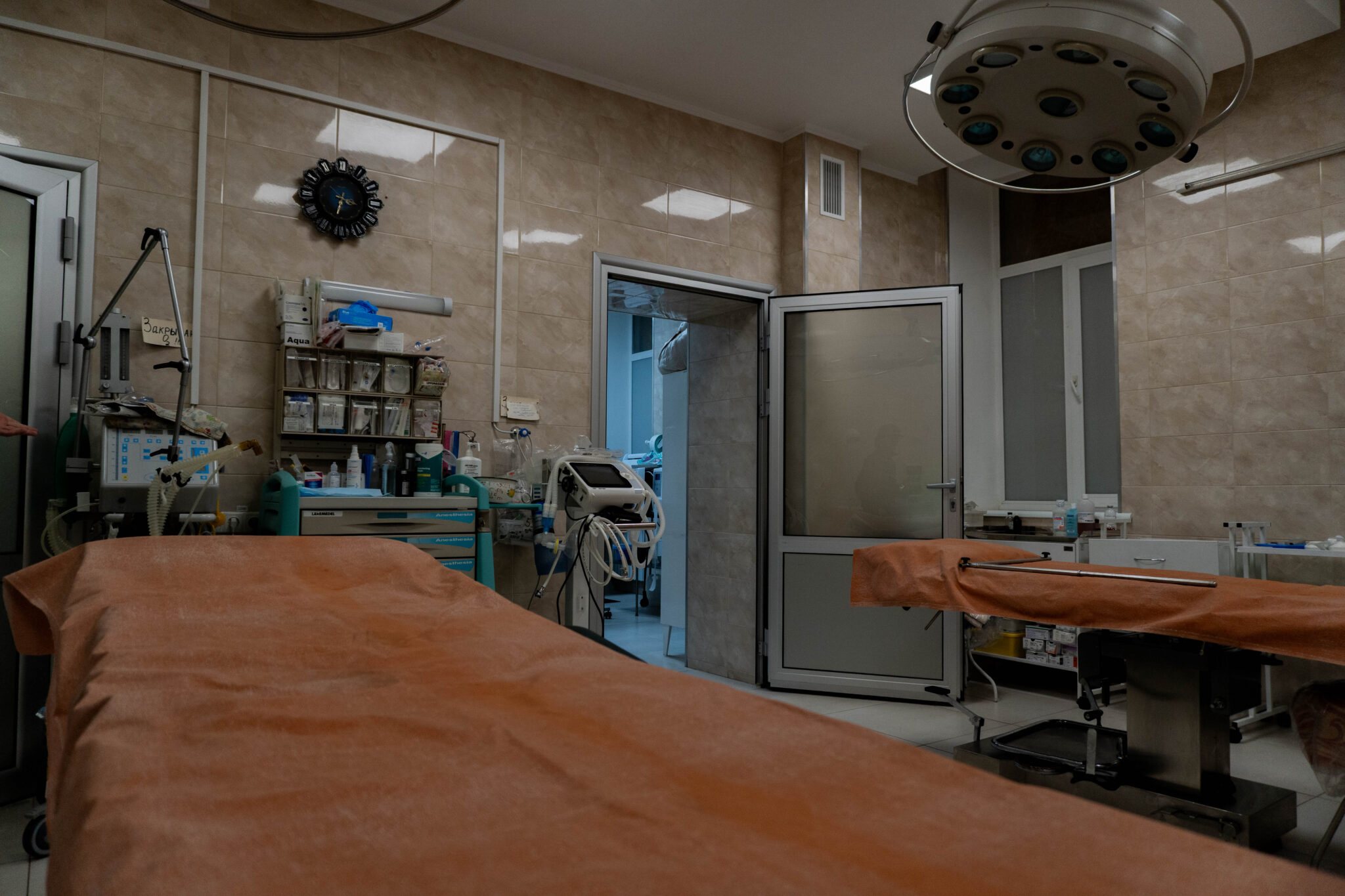
Sofiia’s workspace, the surgery room.
Sofiia finished her studies in 2017 and immediately joined one of the hospitals in Kramatorsk. Since then, she has worked in intensive care. As an anaesthesiologist, she prepares patients for all surgical interventions: trauma, burns, ENT, cardiac, neurological… At the crossroads of surgical specialties, and as the first to intervene with patients, her position gives her an overview.
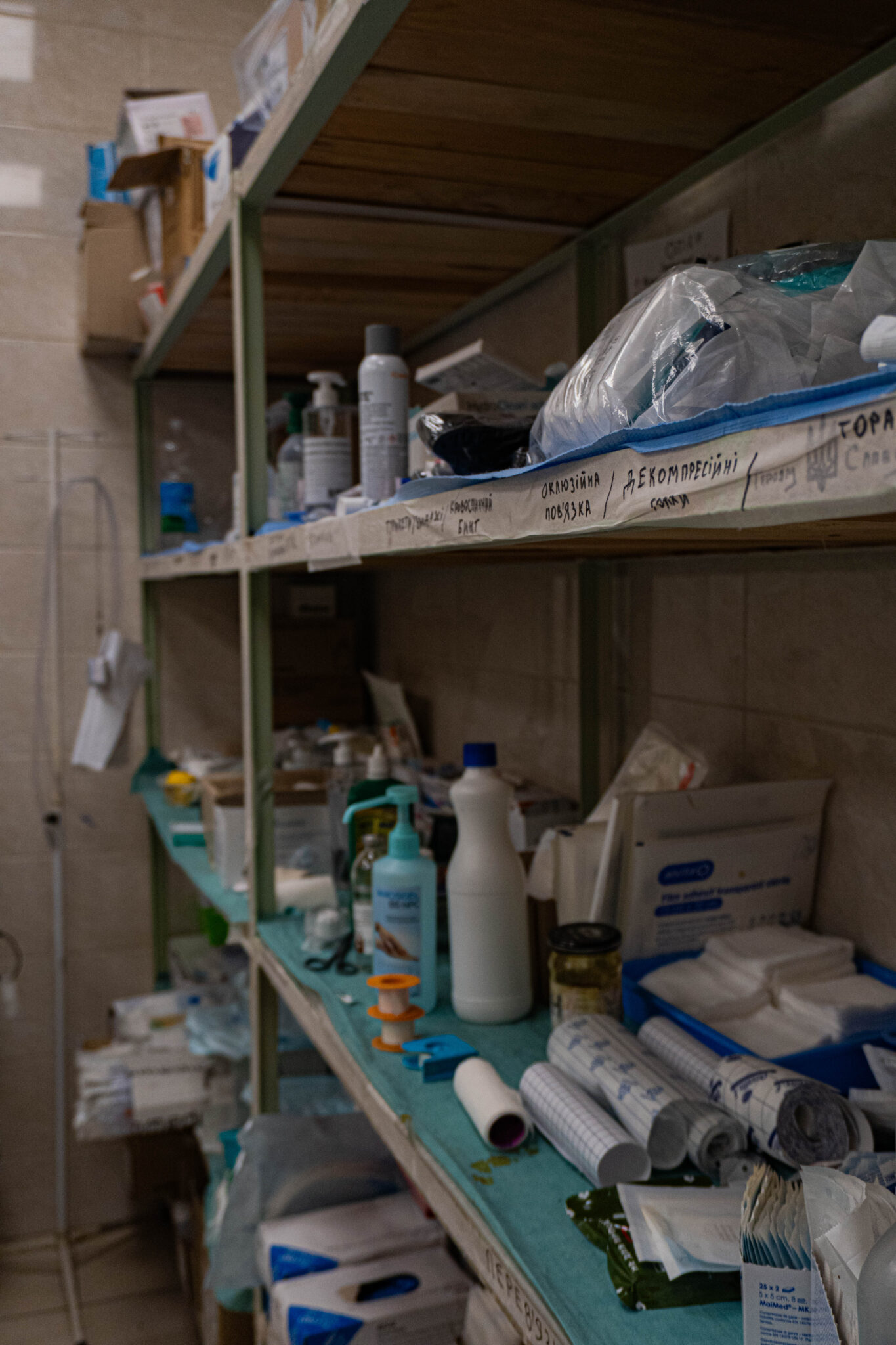
Medical equipment, at the disposition of the hospital’s staff.
Before 2022, Sofiia explains that she hardly ever received military personnel in her hospital, the war in Donbass was calmer.
« The army took care of its wounded entirely. There was no need to call on civilian resources, » she recalls.
However, on 24 February 2024, the Russian Federation intensified its war in Ukraine, launching high-intensity operations across the territory. For Sofiia, this completely changed her professional life.
« At first, there were many patients. Of course, it shook us. So, we tried to remain a haven of stability for patients and the wounded, » the anaesthesiologist remembers.
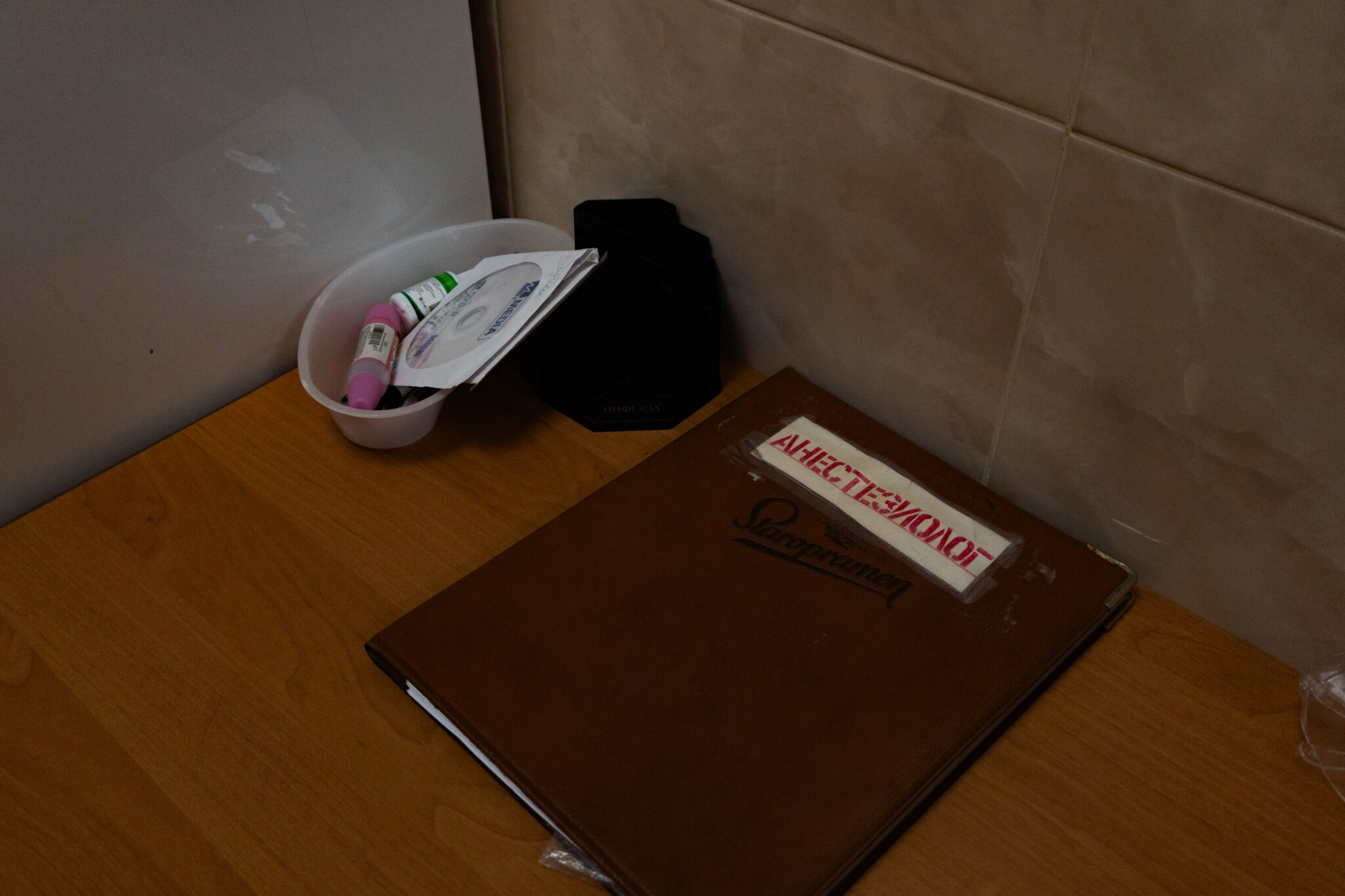
The anesthesiologist’s logbook.
The hospital has been partially requisitioned by the armed forces. In addition to civilian patients, she regularly treats soldiers from the front, preparing them for military surgeons.
« We are always under tension. The number of patients is high, and their conditions are more difficult to manage, » Sofiia describes. « I deal with many more battle traumas and complex patients. »
Because of war injuries, vital signs are much less stable than for a normal patient. The anaesthesiologist lists: « Patients are hemodynamic, their respiratory rate unstable, tracheotomies must be performed because airways are burned… Alas. »
Sofiia explains that while her patients require more careful attention, she does not have more time. « I had to adapt, learn new skills, work faster, » she says.
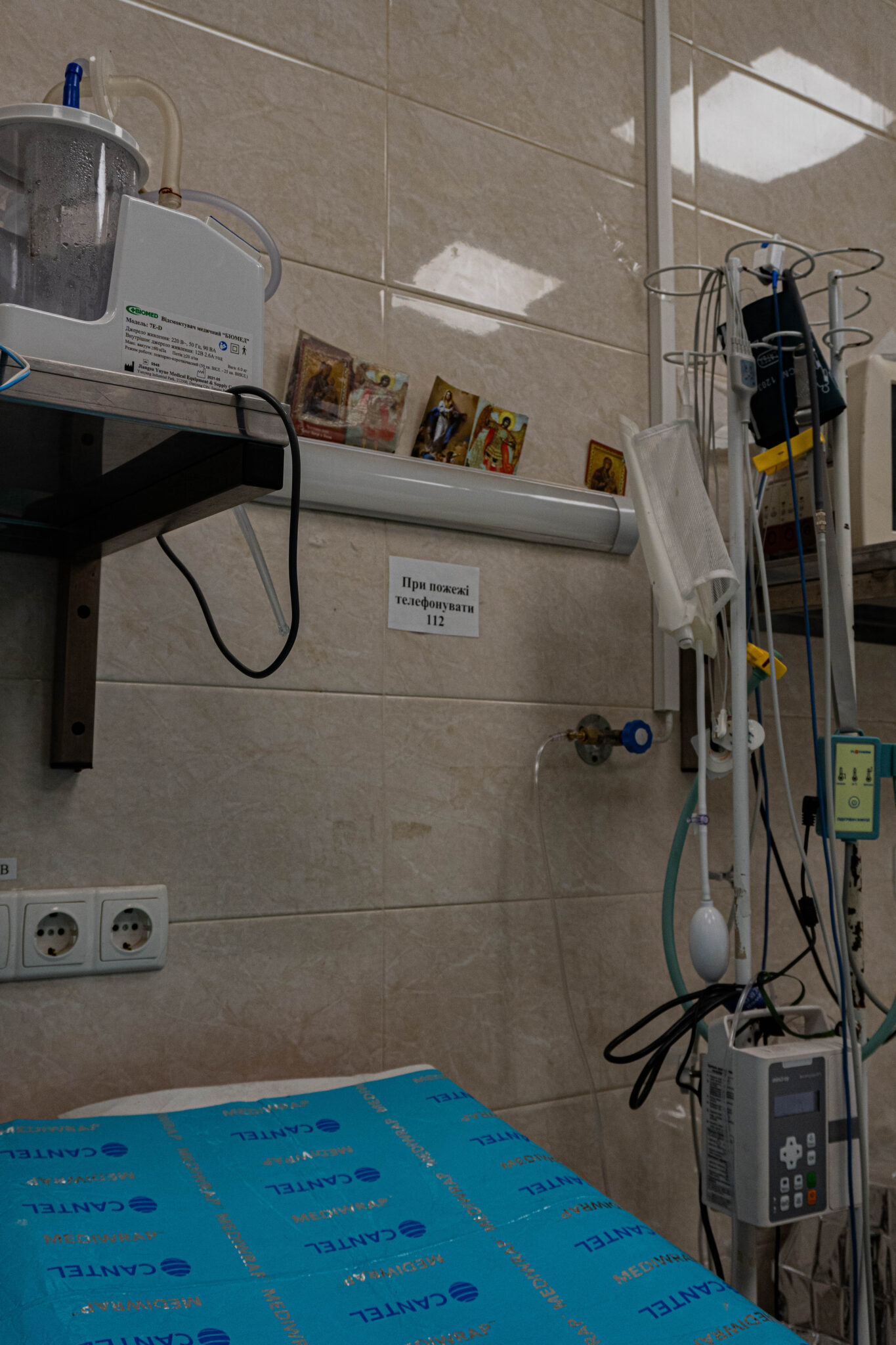
A series of orthodox icons, watching over the ward.
Despite this, Sofiia describes, with nonchalance, a professional life both impacted by war and yet continuing as usual. « Things remain pretty normal, all in all, » the anaesthesiologist explains. « It’s a bit like civilian life, except the cases are more complex. »
Sofiia recounts a civilian life that seems, on the surface, quite normal. « Off duty, you see friends, have hobbies… Go get a haircut or go to a restaurant! » All these little things, Sofiia explains, serve as psychological anchors; they help to cope with the war and bombardments of the city.
These anchors are necessary, because in addition to the shelling, her professional life affects her emotional state. « Days are unpredictable. One day, not much happens. Another, the department is put to the test. » Going to work, Sofiia cannot estimate the intensity of the coming day, nor the effort that will be required.
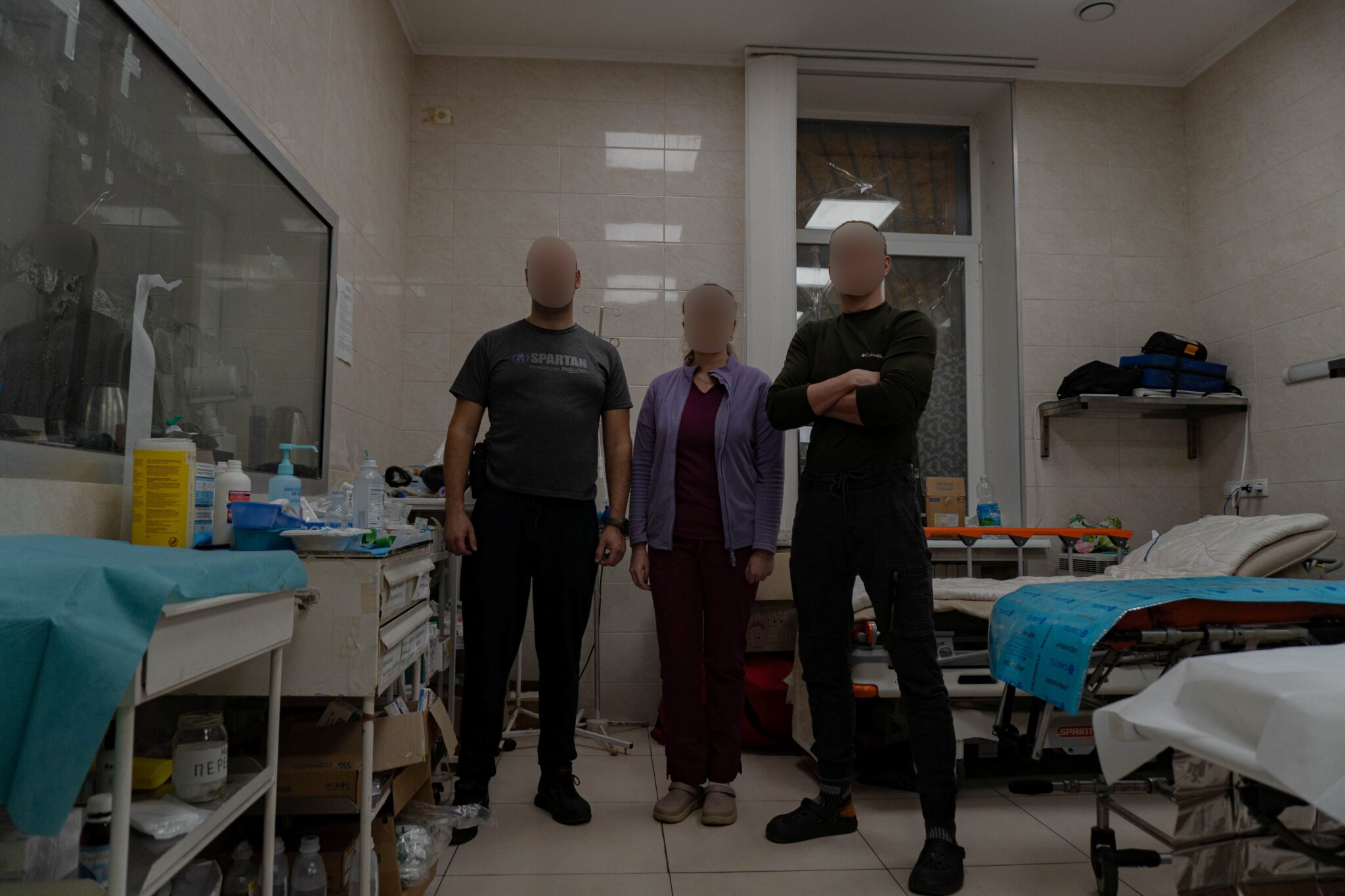
Sofia, posing with two surgeons from her department.
Today, Sofiia acknowledges that fatigue is felt among hospital staff, « we have no choice. It’s like in all front-line cities. » Despite the unpredictability of daily life, the constant state of alert, « you tell yourself that everything is fine, » the anaesthesiologist explains. « After four years of war, all this becomes second nature, » she concludes.
At man’s height, between the lines — Little Frenchy
02/02/2026