
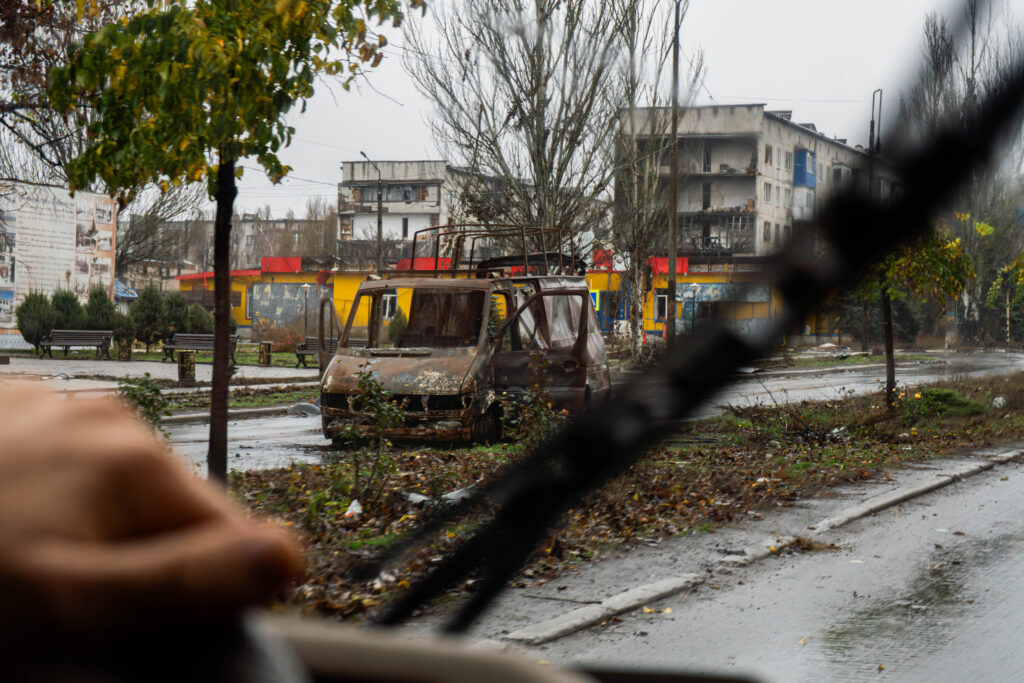
Vehicle carcass in Dobropilia, four months later.
Evacuating Under the Drones
What Field Experience Reveals About Kramatorsk’s Trajectory
Varvara is originally from Kramatorsk. As a volunteer in a civilian evacuation organization, her experience gives her insight into what awaits her hometown.
“I joined the volunteer organization at the end of June. It’s been four months now,” explains Varvara, 19, with evident commitment. Joining the local NGO has profoundly impacted her life. “Our daily routine is shaped by evacuations—it’s structuring,” she describes. Starts at at 8 a.m., but the return to base depends on how the day unfolds.
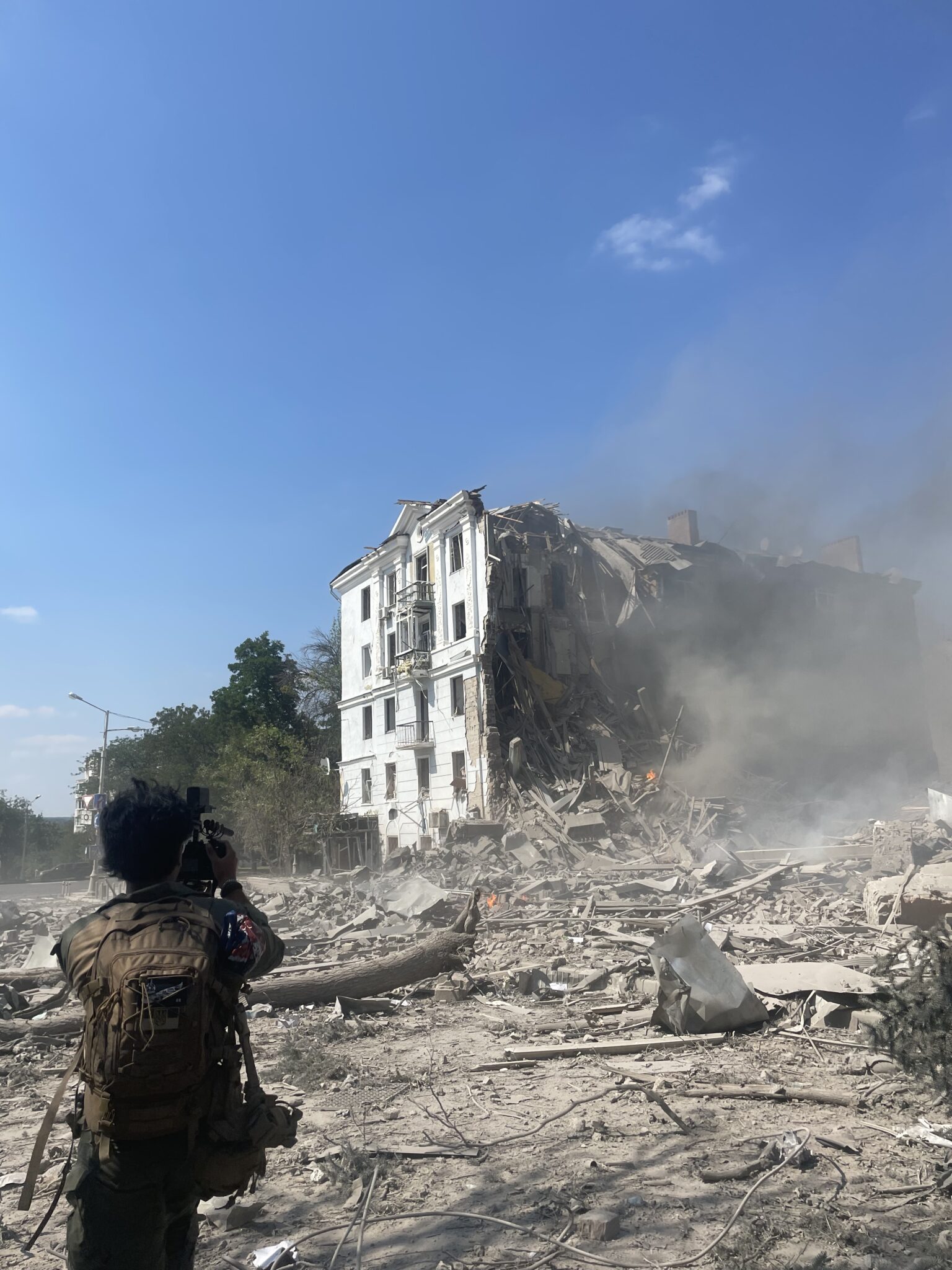
Varvara arrives at a recent strike site with a photojournalist – photo from Varvara.
Becoming part of a serious evacuation organization requires a whole learning process. “For starters, we work with an armoured vehicle,” Varya begins. Although it’s a civilian vehicle, it still requires adaptation.
Once on board, one must navigate a terrain contested by Russian drone operators. “You have to learn to scan the sky. You know, mhm, it’s not easy. Because if you see the drone, it’s already too late.” Instead, volunteers learn to spot dots in the sky—an intense exercise that demands experience.
As a result, Varvara became familiar with drone jammers and sensors—when and how to use them. “And then, you have to know how to react. The situations depend on the types of drones. That’s the driver’s responsibility. But you have to know how to react” to their whistle.
Finally comes the management of the evacuation itself. Volunteers designate an evacuation or transfer point considered out of reach of Russian armed forces. There, a non-armoured vehicle picks up evacuees to take them to an IDP shelter. From this rendezvous point, the armoured vehicle shuttles back and forth into the danger zone to extract civilians.
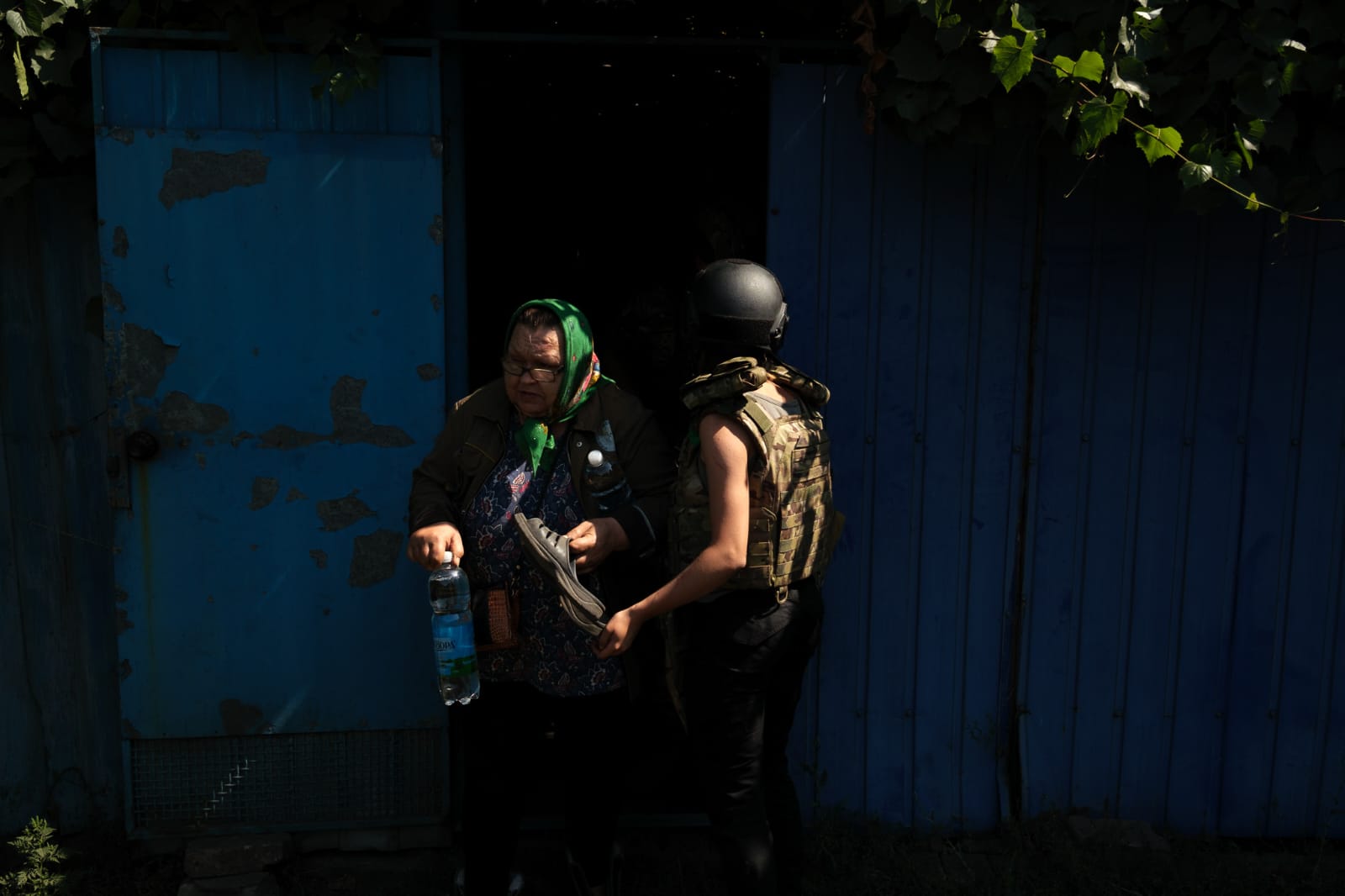
Helping an elderly evacuate from her home – photo from Varvara.
Varvara had to learn all this in a crash course, she explains. “I joined just as the Russians made a breakthrough near Dobropilia. So, there was a high demand for evacuations from the city.”
With her team, Varya spent long days in the armoured vehicle: “From ten in the morning to five in the evening, we made trip after trip through the city to get civilians out.” That meant about ten extractions for around thirty people per day. “There are buildings that, because we went there so often, I know we’re the ones who emptied them!”
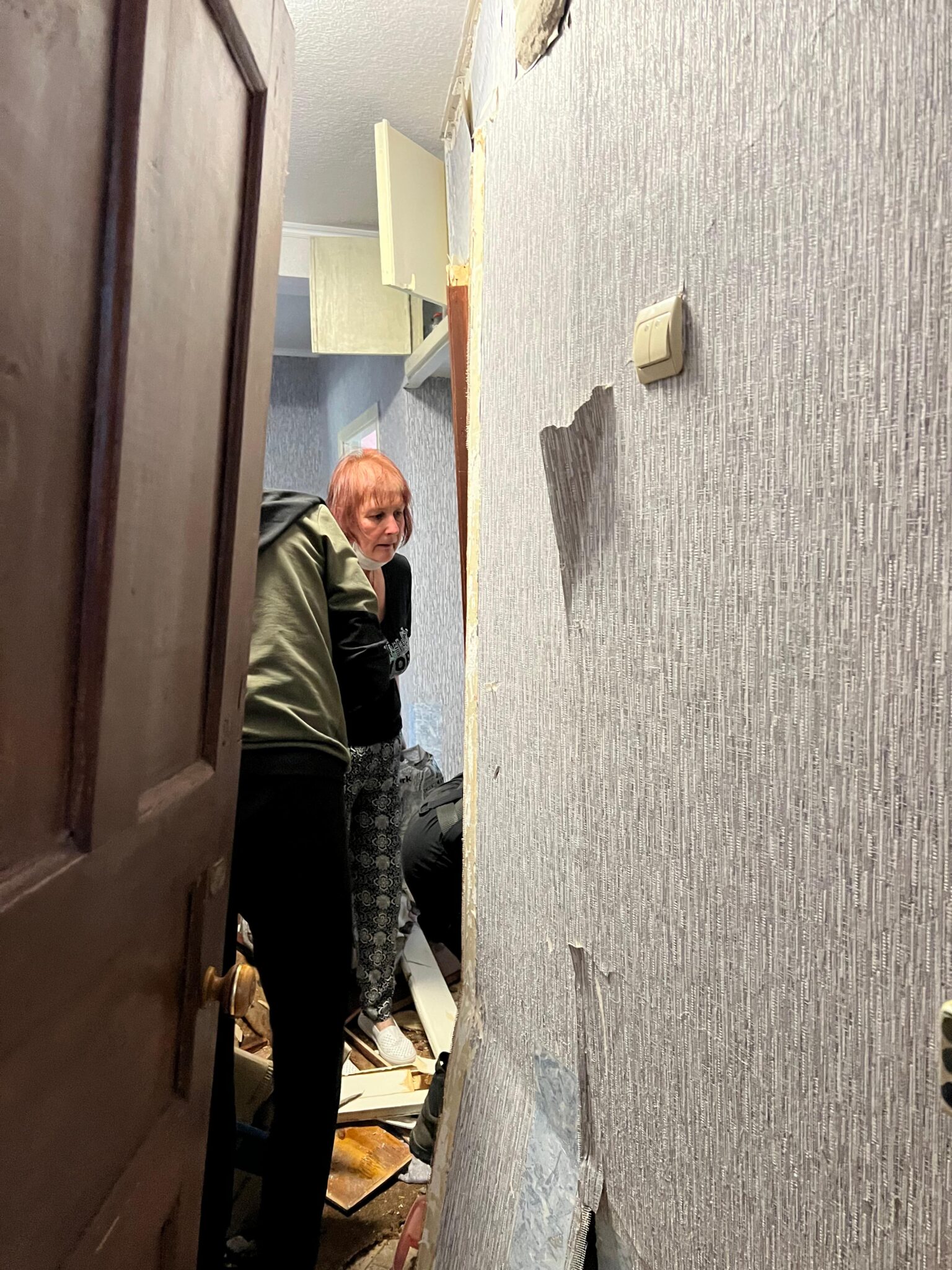
Residents leave behind damaged homes and buildings – photo from Varvara.
Through these evacuations in Dobropilia, the young woman witnessed the destruction of the city. “Things started off pretty chill—we didn’t even wear bulletproof vests!” Varya emphasizes, “the evacuation point itself was inside Dobropilia.”
The situation then intensified. Volunteers began wearing bulletproof vests and helmets. “But still, it was calm. We weren’t too scared,” the volunteer puts into perspective. “There were still civilians and cars moving around; cafés and restaurants were still open.”
Gradually, the volunteers moved their transfer points outside the city, then further north, into another town. “Our point was targeted one day. The FPV drone struck as we were returning (with the armoured vehicle) to drop off evacuees,” the young woman specifies.
“In the end, we ended up being the only vehicle in the city.” Varvara describes a deserted town that demanded her full attention. “The risk of FPV drone or drone ambush was very high,” she explains. “We constantly intercepted drone transmissions on the sensor.”
Finally, the last phase of civilian life in a city is marked by “human safaris”: “That’s when Russian drone operators amuse themselves by targeting civilians,” Varvara explains.
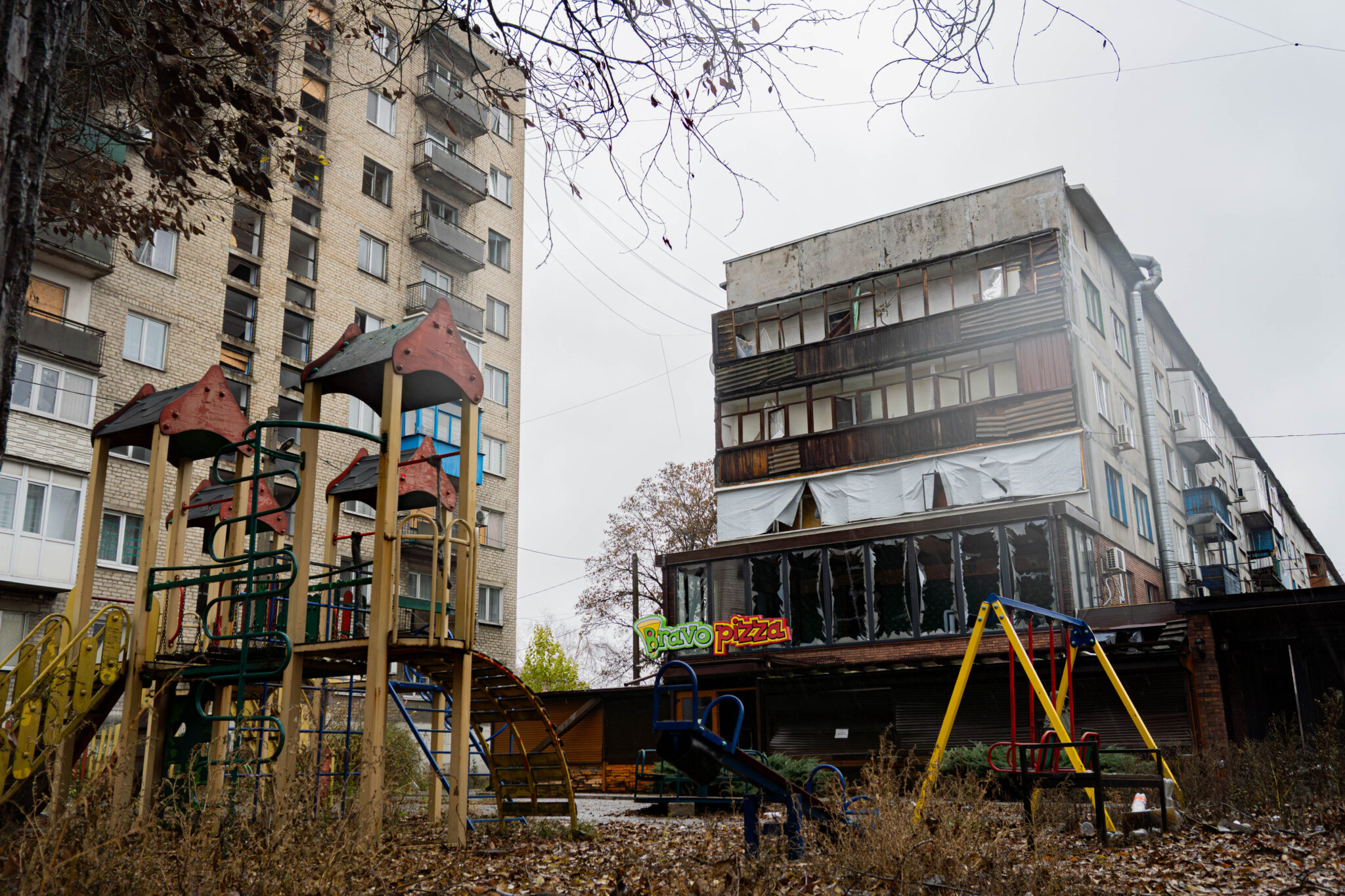
Dobropilia – four months after mass evacuations.
Through her evacuation experiences, Varvara fears for the future of her hometown. She illustrates her point: “In Dobropilia, between the first fibre-optic FPV drone and the situation going to hell, it took a month.”
Twenty-five kilometres south of Kramatorsk, the city of Kostiantynivka is the scene of violent clashes. “There, the safaris have started. And the phenomenon is moving closer to Druzhkivka,” just fifteen kilometres from Kramatorsk. Videos—often in TikTok format—are regularly published on social networks, showing civilians disappearing in a burst of fire and smoke.
For Varvara, “a shitty situation is when people can no longer live their daily lives. Restaurants and cafés can’t open anymore. It’s when the FPV threat is constant, when you have to take it into account every time you get in the car.”
In Kramatorsk, the first fibre-optic FPV drone struck on Sunday, October 5th. Since then, a countdown has started in Varvara’s mind. “It’s been more than a month now. Maybe it’ll take three months in total. Or two. I just know the clock is ticking.”
According to Varya, the situation in Kramatorsk is deteriorating rapidly. In this part of the front, “the soldiers have only been retreating (for months),” which affects their morale. “After Pokrovk, Kostiantynivka, and Dobropilia, everyone hoped Kramatorsk would hold,” the volunteer explains.
For the young woman, “the question is no longer if I will leave the city, but when.”
For now, life in Kramatorsk goes on, accompanied by intermittent rumblings in the background. “For now, the first KAB hasn’t yet hit the city centre, people come and go. This threat is like a fog hanging over the city.” Tomorrow, Varvara will return to evacuation missions, fully aware of the sword of Damocles which started looming over her hometown.
At man’s height, between the lines — Little Frenchy
Article's gallery
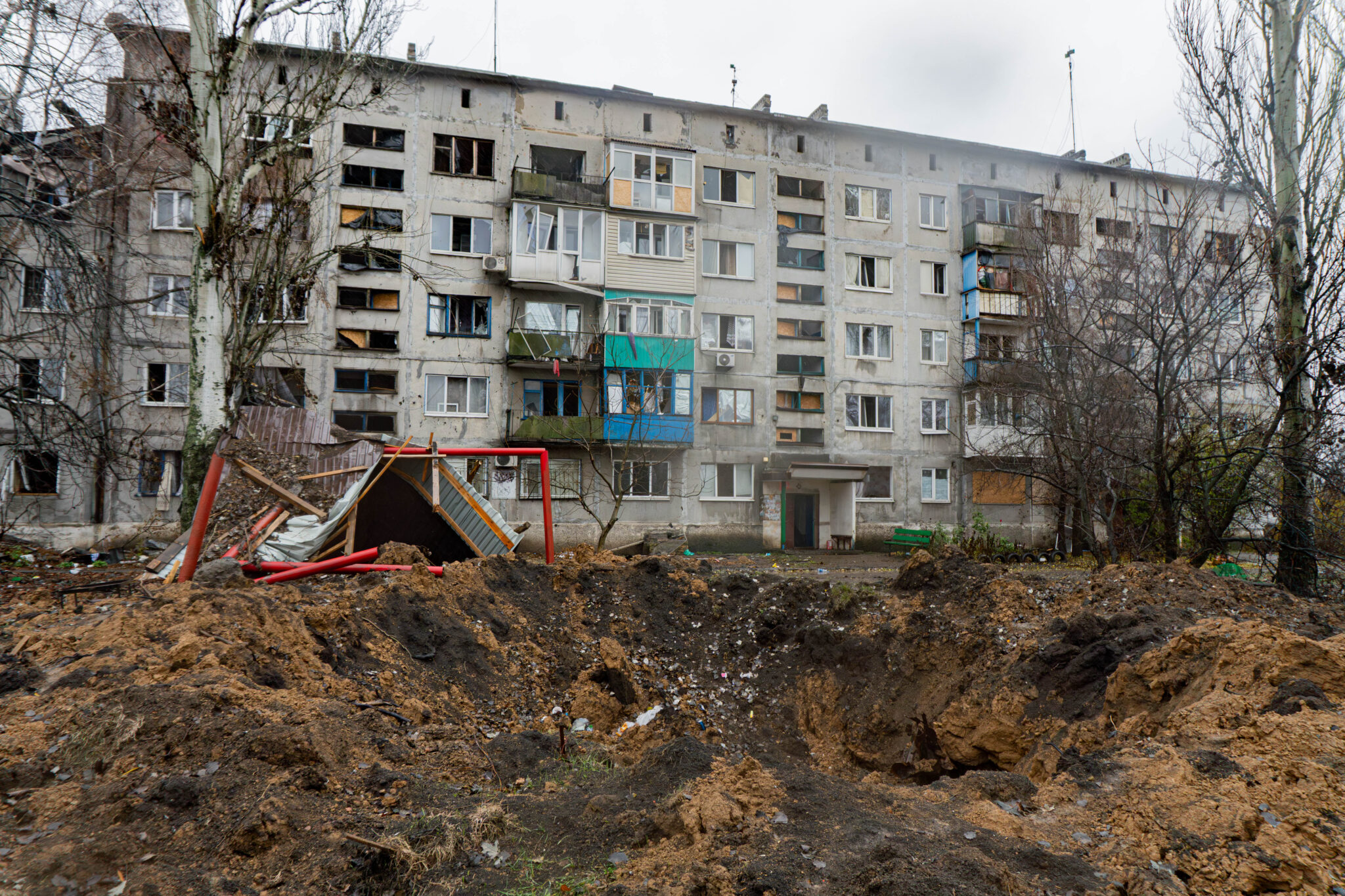
Cratter from a strike, likely a FAB 500 munition – Dobropilia.
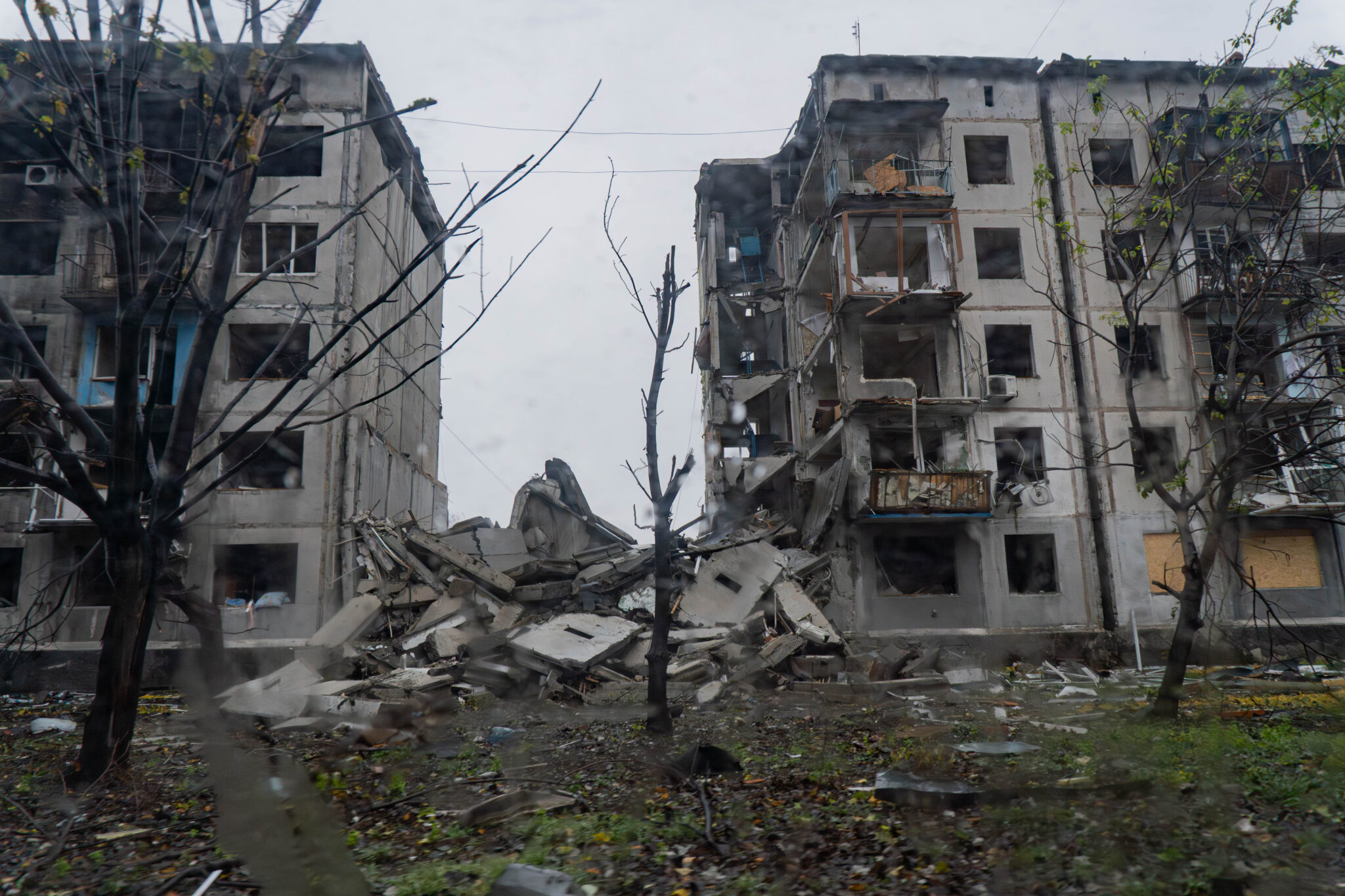
Apartment building torn open by a missile strike in Bilozerske, another city where Varvara has worked.
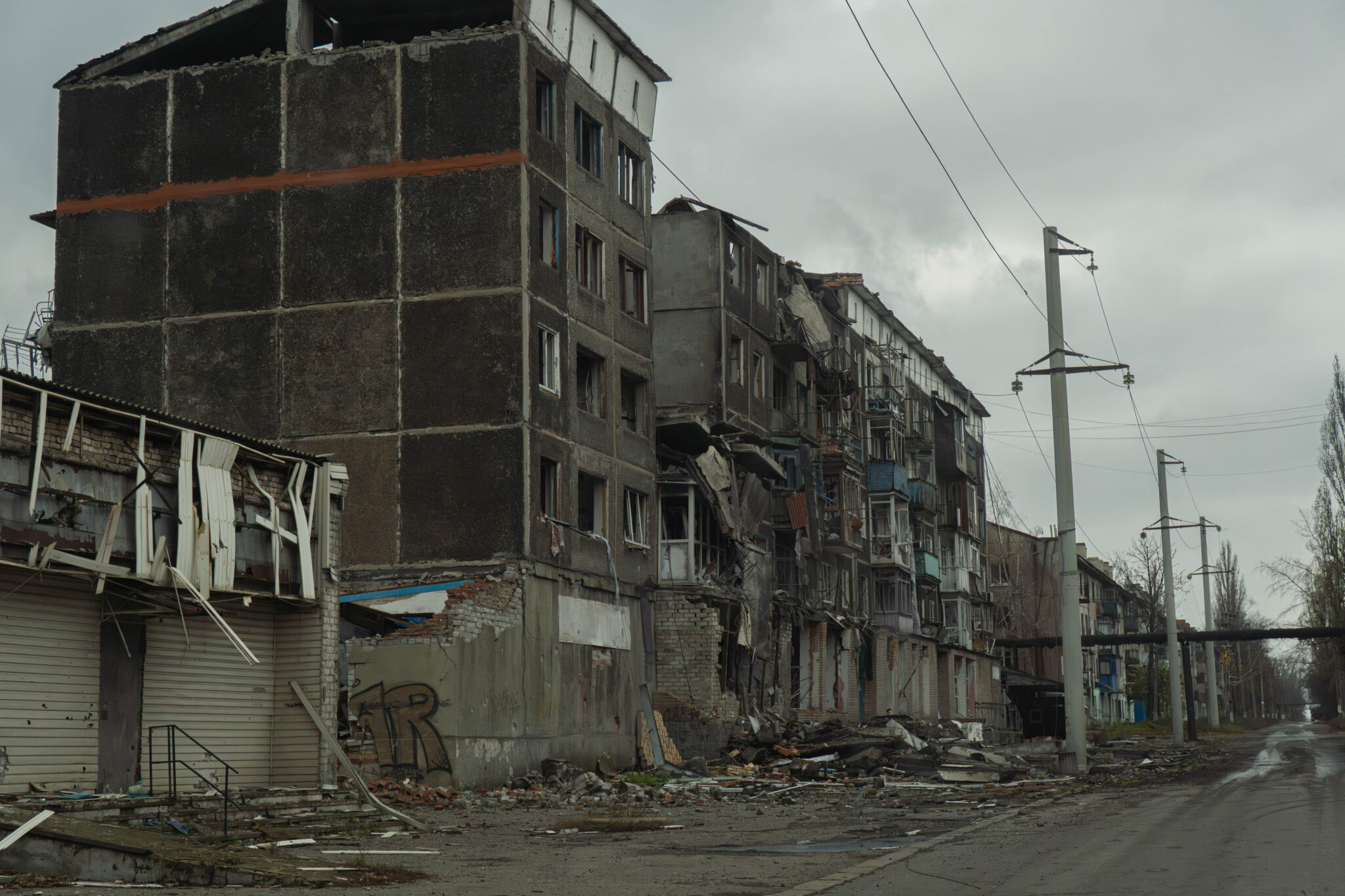
Deserted street from Bilozerske.
At man’s height, between the lines — Little Frenchy
21/06/2026