
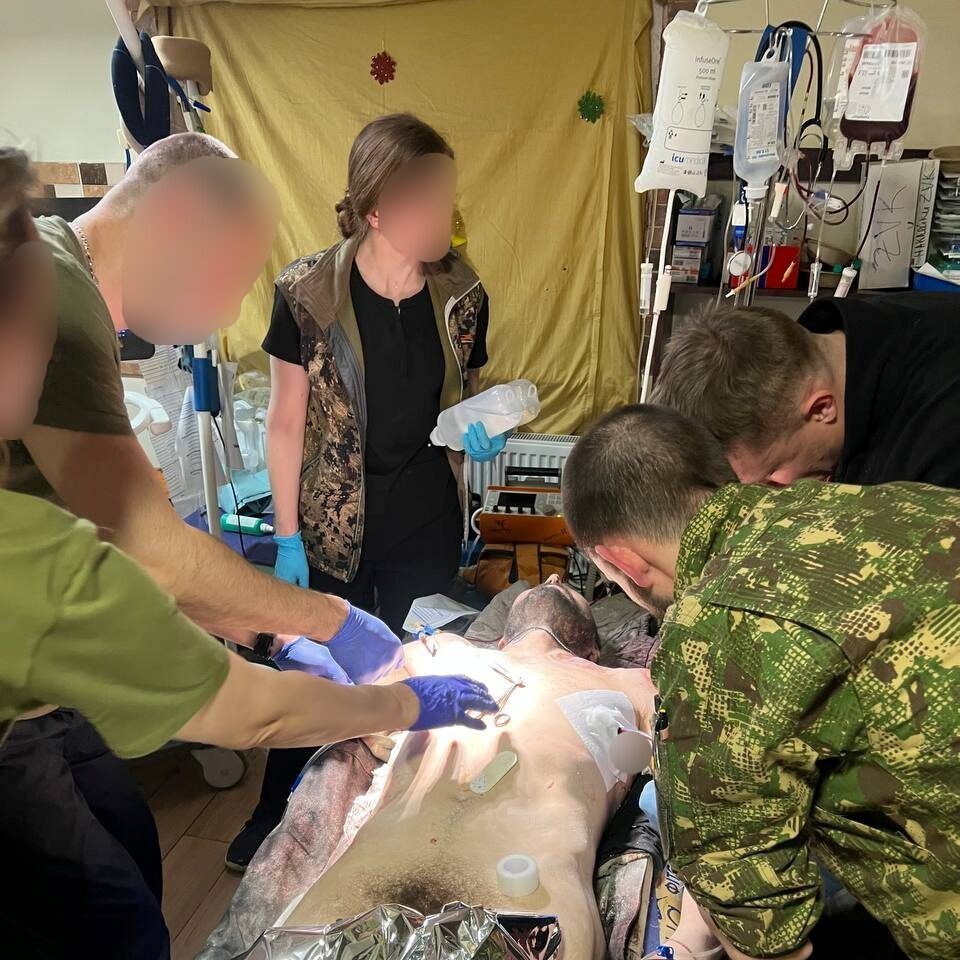
Military surgical team operating at a stabilisation point, close to the front.
Picture from a local volunteer
Operating Under the Bombs
Testimony from Military Surgeons 20 km from the Front
This letter contains photos taken during surgery
Near the front lines, Russia does not hesitate to target and destroy hospital infrastructure. Despite the heavy influx of wounded, military surgeons adapt and persist; here is their testimony.
Entry to the hospital corridor is through the ambulance access—a wide, covered area where an ambulance waits. Inside, tiled walls and floors reflect the ceiling lights. No detail escapes notice; the space is bare, sterile. The corridor carries a faint, sharp, chemical scent—it is the smell of the operating rooms of the trauma emergency department.
In a dimly lit room, who’s only window is boarded up, Vitalii* and Viktor* sit on an office chair and a worn-out small bed. Both are in their twenties and don the green uniform; they are military surgeons.
Vitalii, tall and athletic, is a traumatologist and orthopedist. Viktor, bald and broad-shouldered, is a neurologist. The young surgeons have agreed to share their daily life, less than 20 kilometres from the zero line.
“We’re in a civilian hospital, partially requisitioned for the army,” the surgeons explain. For security reasons, no further information is provided.
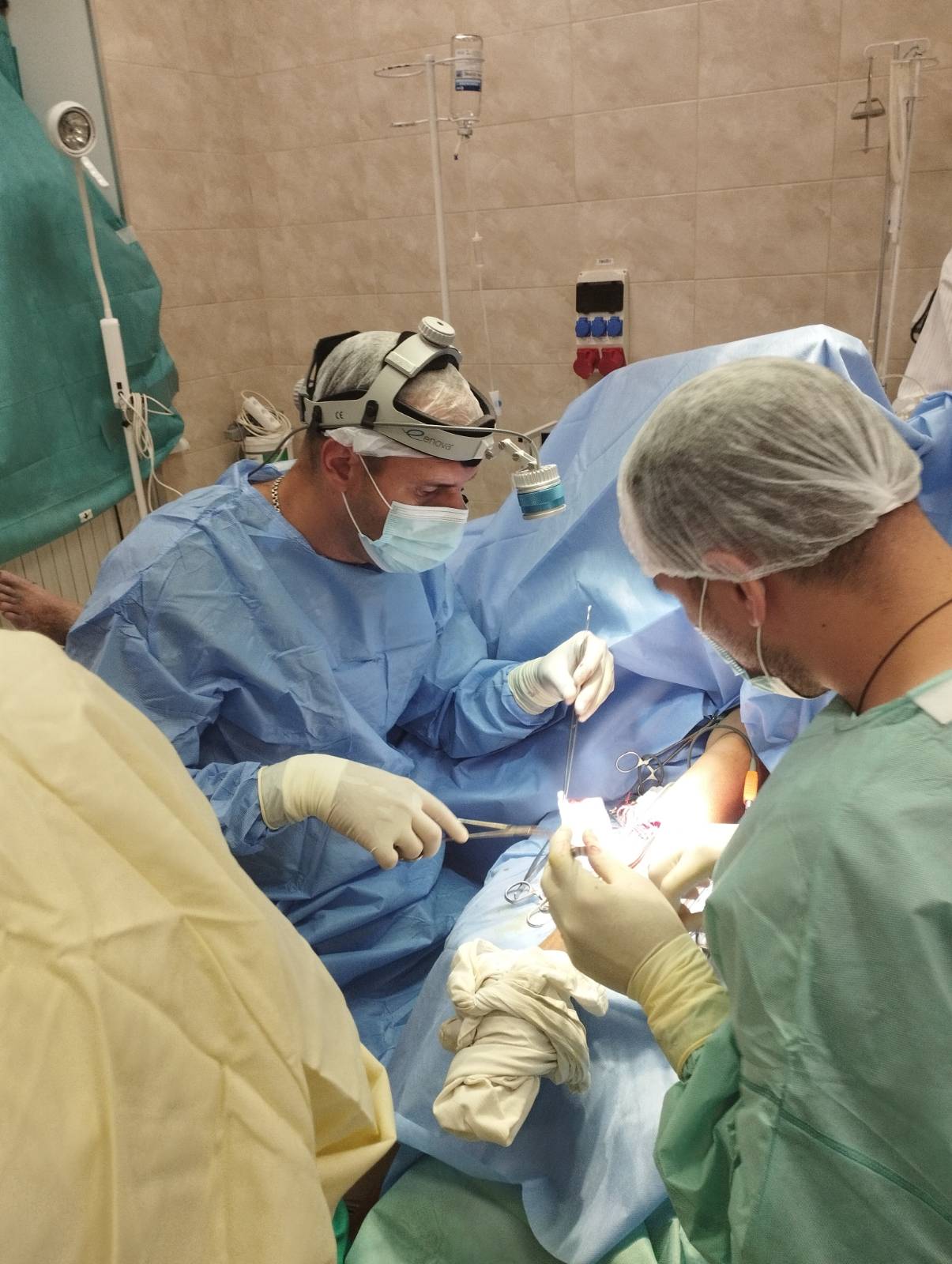
Military surgeons operating in a hospital.
Picture from a local volunteer
In Kramatorsk, the hospital system is under strain due to strikes by Russian forces. The hospital infrastructures in Druzhkivka and Kostiantynivka, 13 and 25 kilometres south of the city, are out of commission. Vitalii describes the Russian strikes as deliberate and methodical.
“They hit minor targets first, like vehicles. Their aim is to paralyze logistics. Then, as they get closer, they target more significant sites and eventually destroy buildings,” explains the traumatologist.
All means are used to hit the hospital network: “rockets, artillery, Shaheds, and FPV drones when (the Russians) are close enough,” says the surgeon.
From Kramatorsk, the front line is approaching. You can hear it. Day and night, explosions rumble—dull and distant. The surgeons know they are prime targets for Russia. As a result, hospital staff prepare the building, placing wooden boards on windows and moving services to the basement. “But there isn’t enough space for everything, and some machines simply can’t be moved,” the surgeons explain; choices must be made.
FPV drones have begun to appear in the city. For now, it’s anecdotal, but their presence signals a new phase of operations in the Kramatorsk area. “We expect ambulances to be targeted, even inside the city,” deduce the two military surgeons.
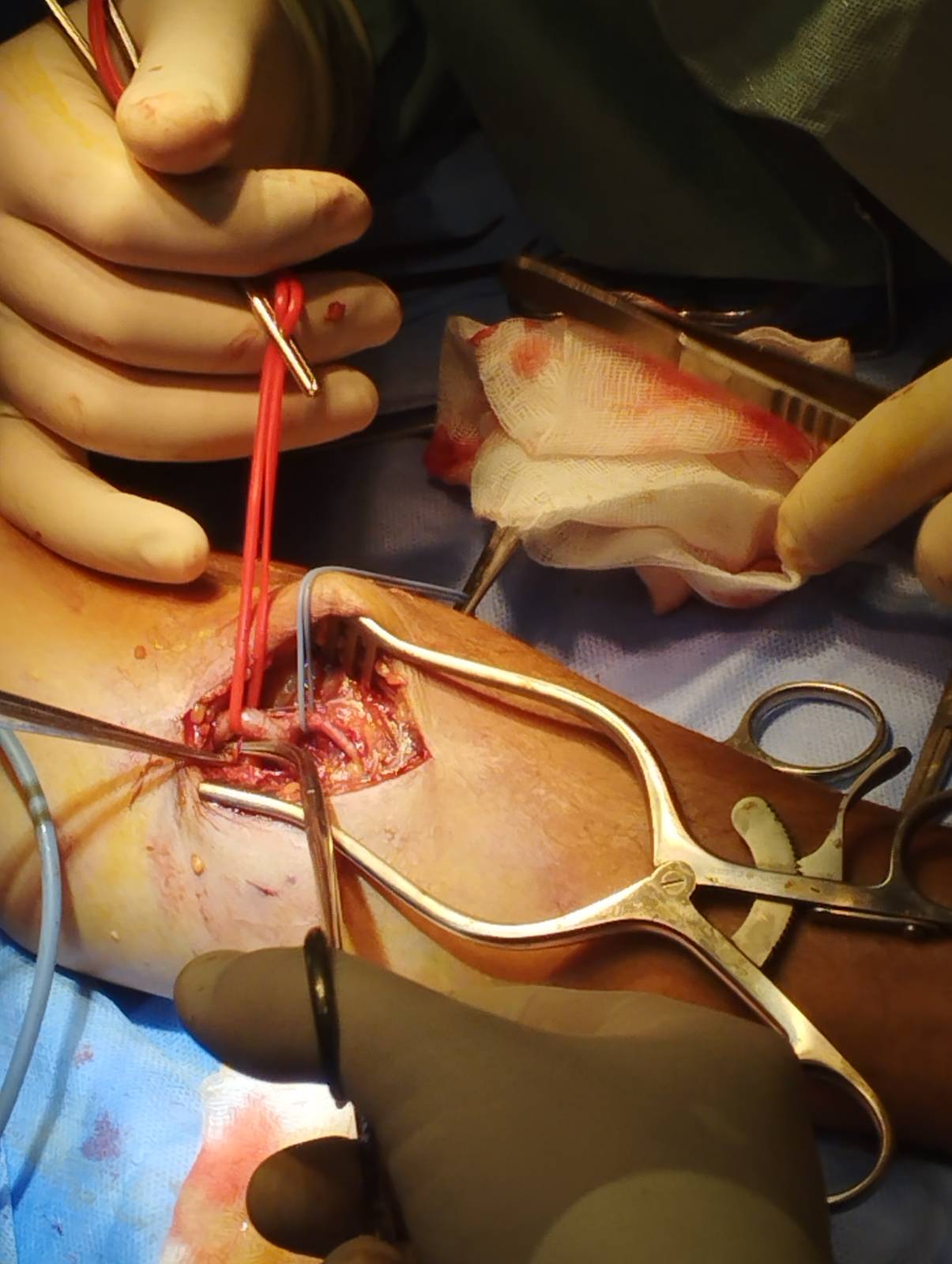
Surgeons operate on the forearm.
Picture from a local volunteer
For Vitalii and Viktor, surgery is an act for victory. “We don’t use our weapons, though we have them. But we act with the same goal,” they explain.
Viktor, the neurosurgeon, describes his work as unpredictable; cranial traumas are varied. “In civilian life, head injuries are often the result of car accidents. So they’re similar,” he notes. In war medicine, shrapnel causes random damage; the traumas are heavier to treat. Blows and foreign objects cause hematomas that compress the brain in the skull.
“Before decompressing the skull, you have to remove bits of shrapnel or bone,” Viktor describes. According to him, 30% to 50% of patients do not survive the month following surgery.
Vitalii, besides treating soldiers, also cares for civilians with war injuries. “All trauma and orthopedic cases are heavier and more complex to treat,” he explains.
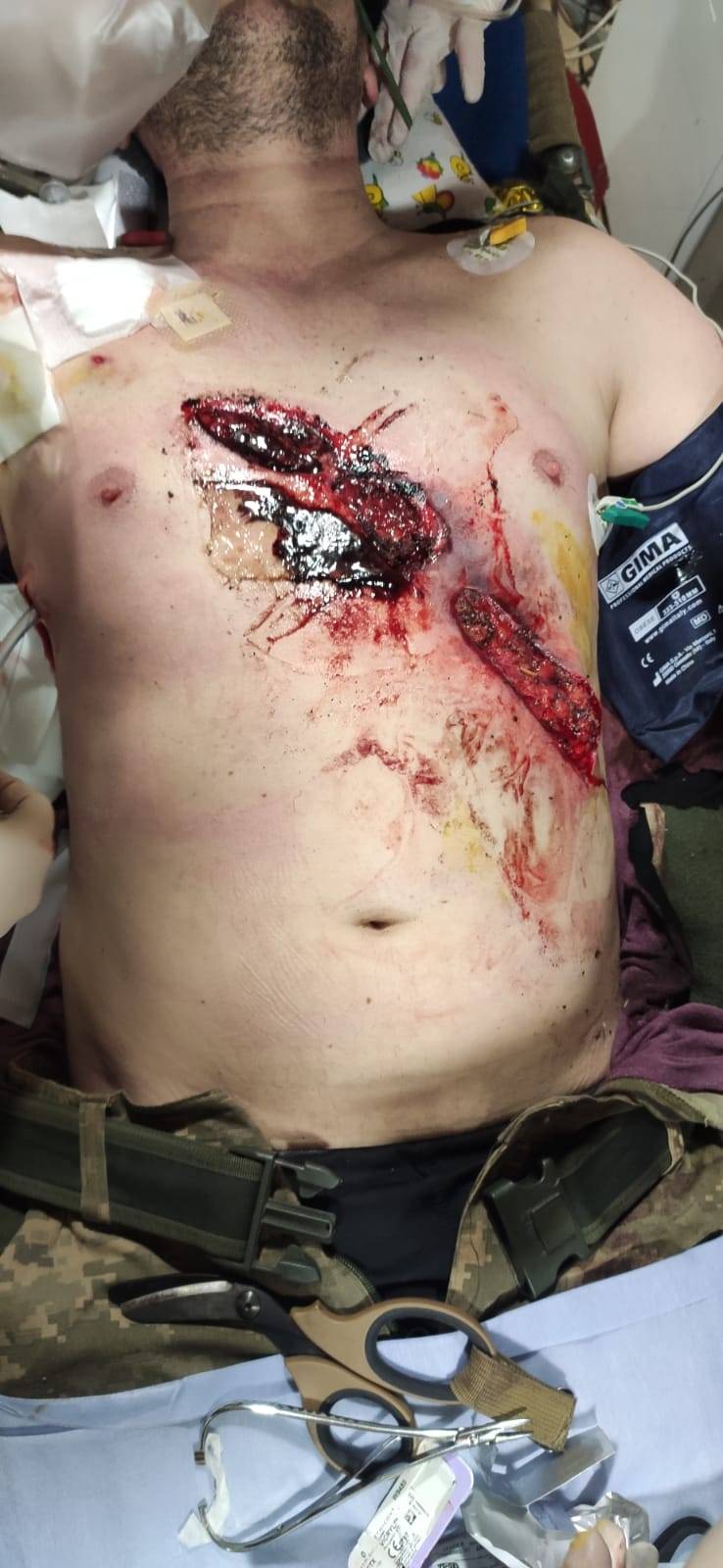
Open chest wound.
Picture from a local volunteer
Unlike a civilian surgeon, who can follow up with patients alongside their team, Vitalii and Viktor have no contact with the patients they operate on. “Patients come in, we operate, and they’re evacuated to Dnipro within an hour after surgery,” the two military surgeons describe.
Near the front, the patient flow prohibits keeping them for observation. “Our job is to stabilize them so they can continue the evacuation process,” Vitalii clarifies. The connection with the patient is therefore nonexistent.
“Sometimes, the next hospital may call for more information,” Viktor adds. “That way, we can know how the person’s condition evolves.” The surgeons explain they can follow their patients in chats dedicated to hospital staff. “We read the messages and recognize certain patients. Then I know how their situations evolve,” concludes the neurosurgeon.
“Our work is a bit like an ‘assembly line’,” Vitalii details. In 2022 and 2023, their services could have up to sixty or a hundred surgeries in 24 hours. “The situation has stabilized since. Now the flow is 1, 2, or 3 surgeries per day.” However, if the flow has stabilized, it remains subject to the front line’s uncertainties. “A month ago, remember? We had a tough period. 20 to 30 operations a day,” recalls Vitalii.
In short, the two surgeons describe work lived in fragments. “Because of FPV drones, it’s very difficult to evacuate the wounded. They can remain in position for days before being evacuated.” This reality affects the organization of the service. “We’re notified 30 minutes before the ambulance arrives. So we’re constantly ready, and we rest while waiting,” explains Vitalii, adding with a laugh, “but I still manage to go to the gym. So it’s all good!”
After surgery, the patient leaves for Dnipro, “four hours from here.” Naturally, transport is not by helicopter, as in Europe.
“So close to the front, it’s dangerous for everyone: the machine, the crew, the patient. No, we can’t,” justifies the young surgeons. The journey is made by ambulance.
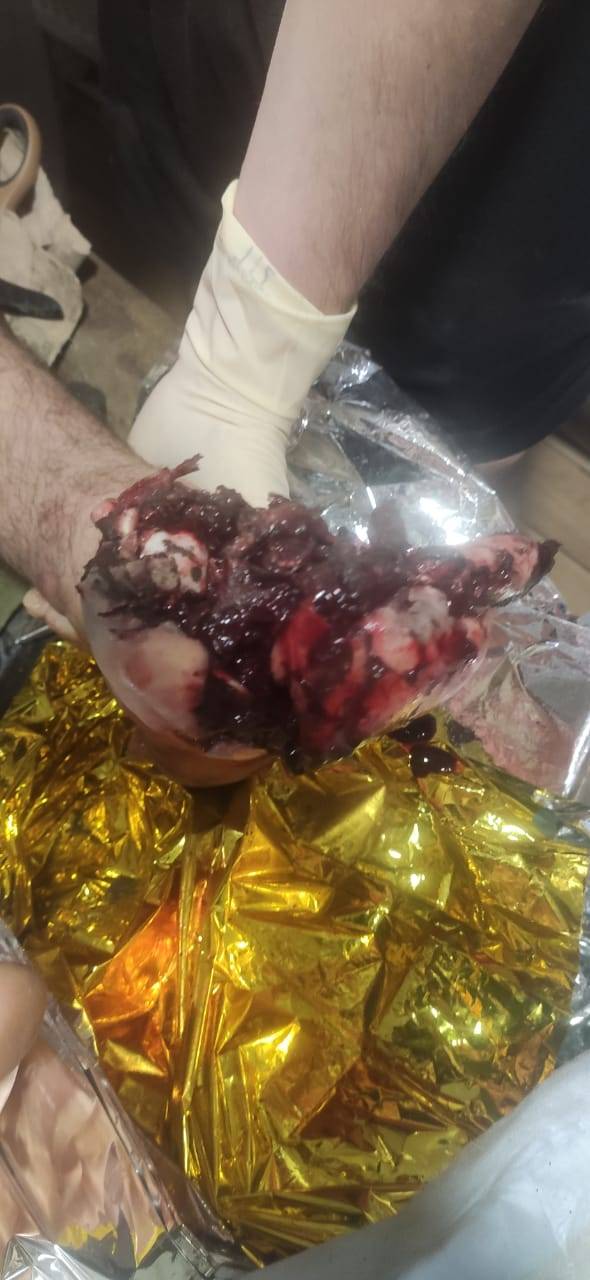
Apatient’s foot after the explosion of an anti-personnel mine.
Picture from a local volunteer
Winter is approaching, and night has already fallen outside; stepping outside allows for the rumbling of explosions to be again audible. Shut inside this hospital with sealed windows, it’s easy to forget the proximity to the zero line. That line, relentless, keeps approaching the city. For Vitalii and Viktor, it doesn’t matter. They will stay until ordered to leave. As they themselves said, “Our surgical actions are for victory.”
At man’s height, between the lines — Little Frenchy
Article's gallery
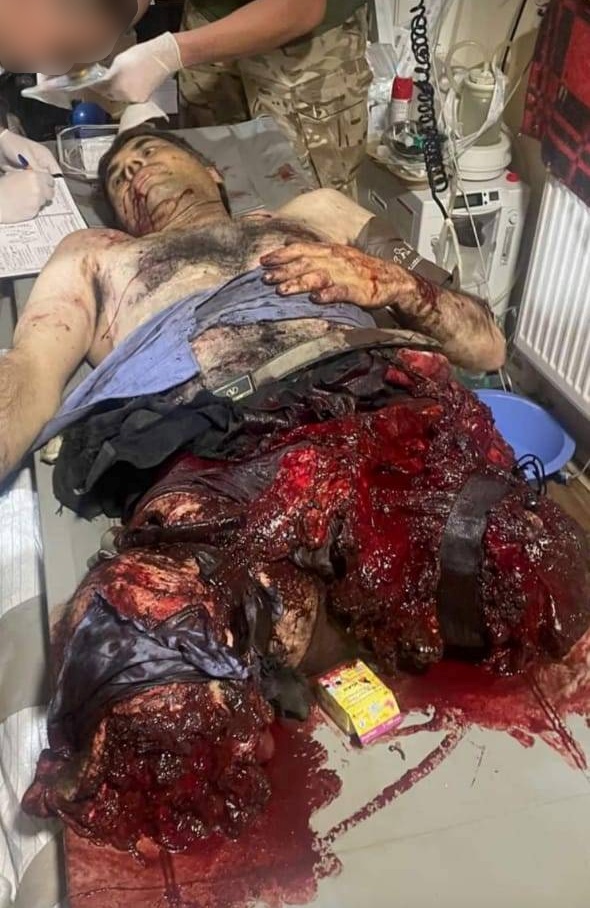
A dead soldier after two traumatic amputations. The tourniquets on his severed limbs were not enough to stop the bleeding.
Picture from a local volunteer
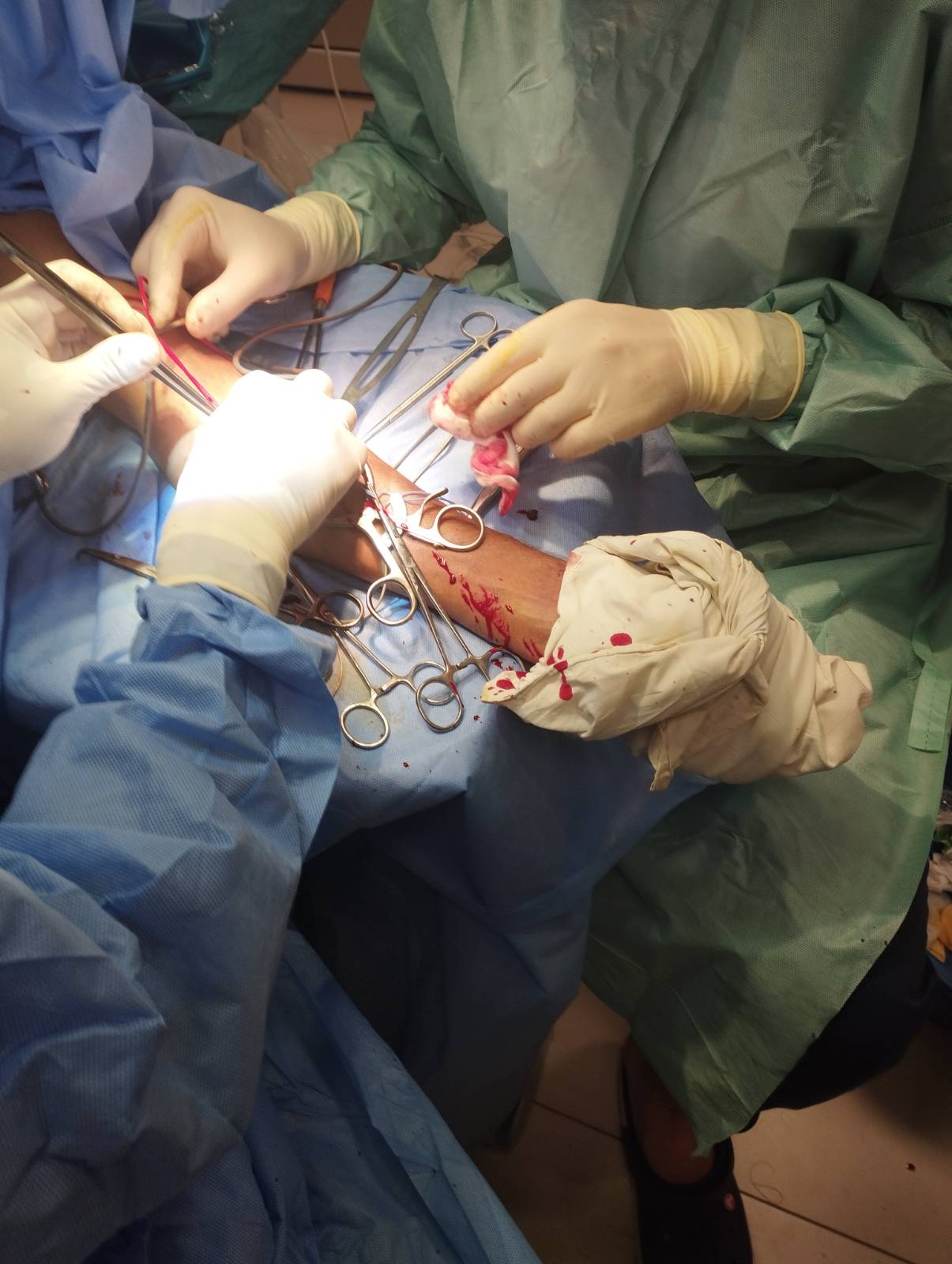
surgeons operate on the forearm.
Picture from a local volunteer
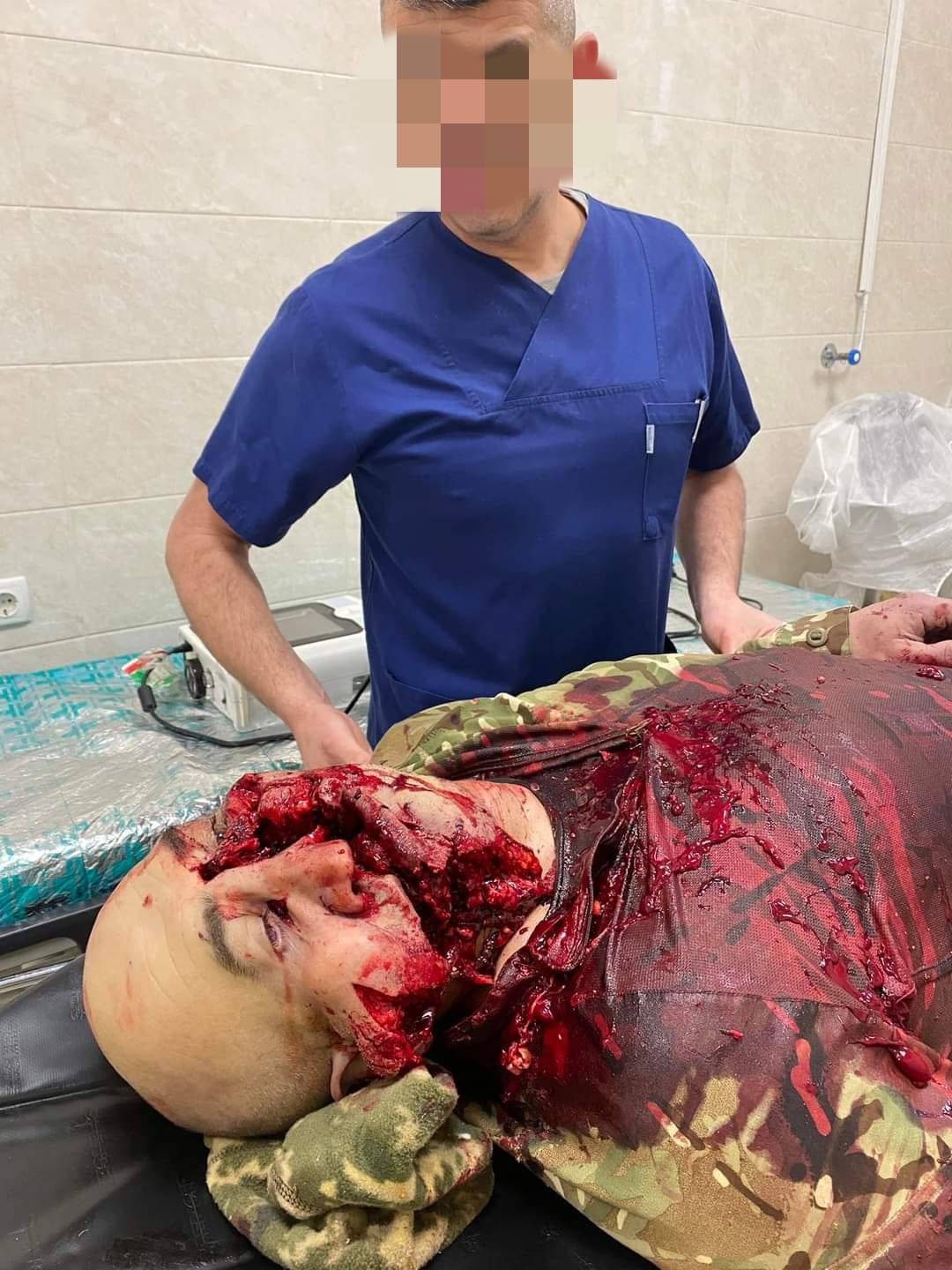
Traumatic facial injury.
Picture from a local volunteer
At man’s height, between the lines — Little Frenchy
19/01/2025