
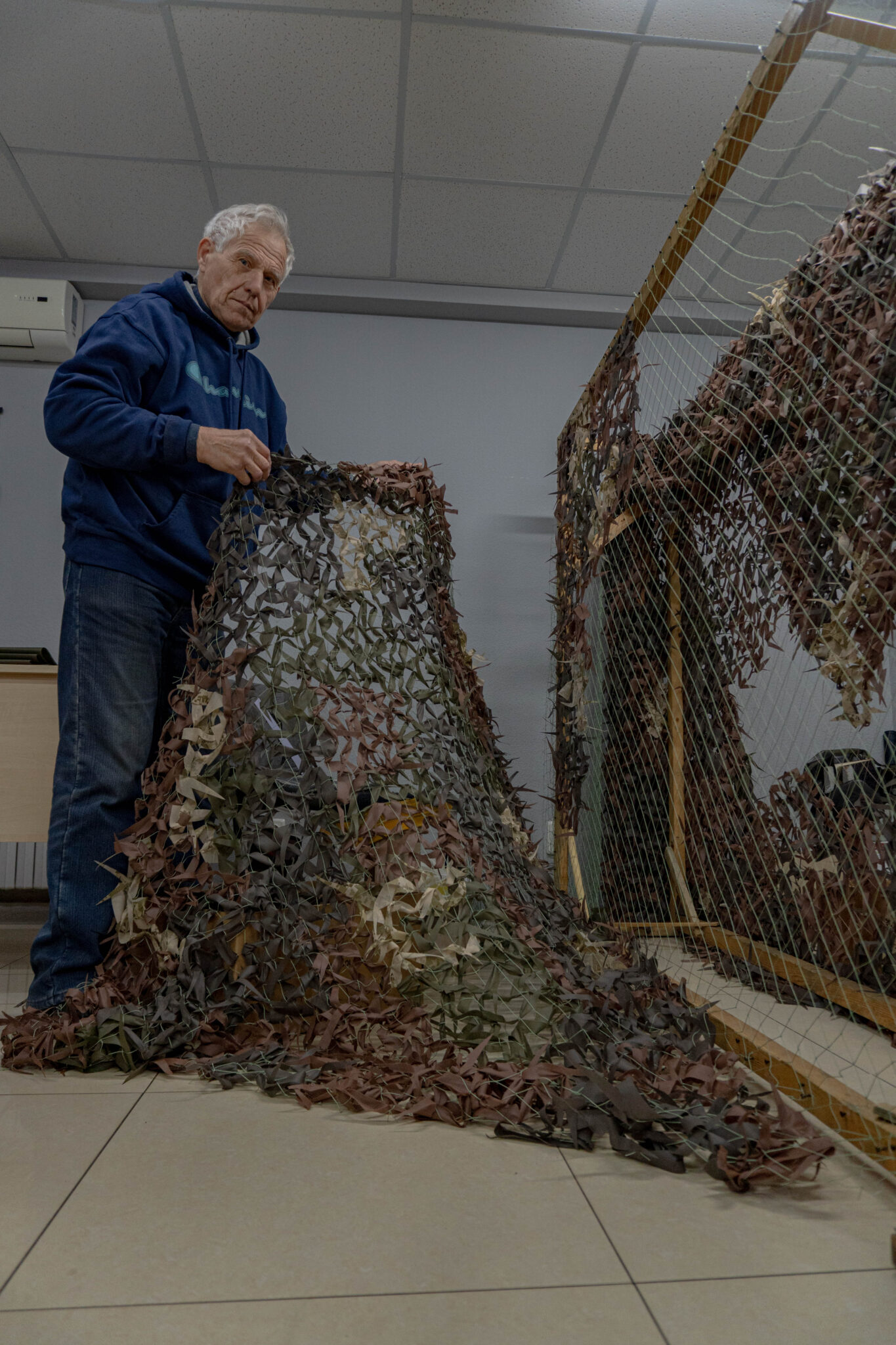
Iaroslav*, showing one of the hub’s nets
Battles at the Fingertips
Visit to a Camouflage Net Making Hub
For some, war has overtaken every aspect of daily life; it has become a reason to exist. Regardless of age, even elderly people contribute to the war effort. In Kramatorsk, some dedicate their time to making camouflage nets for soldiers.
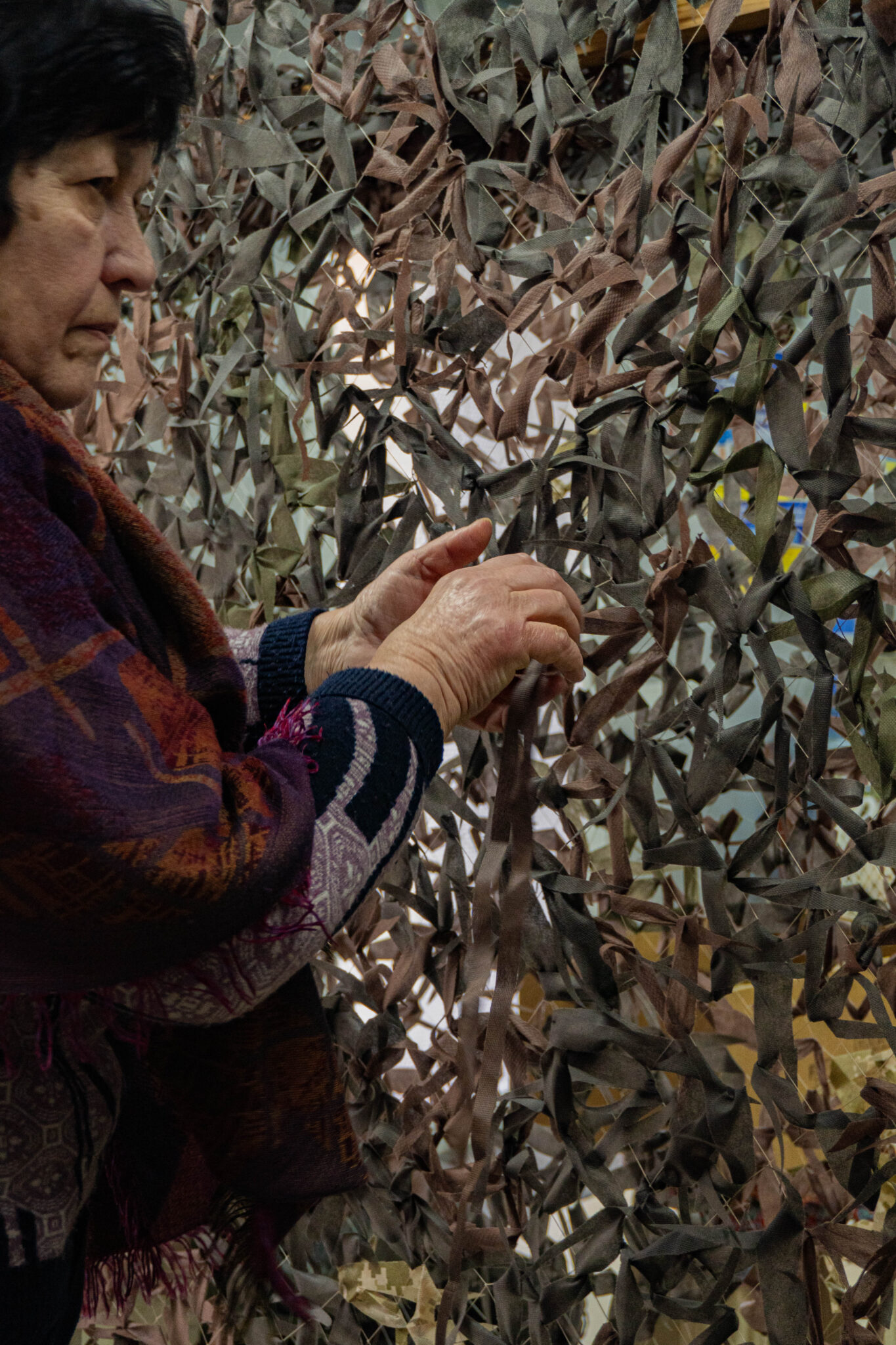
The entrance is on a quiet street in Kramatorsk, lined with Soviet-era perestroika buildings. A few steps lead up to the landing. Behind the front door, in a 30-square-meter room, five retirees are busy at large wooden frames. They have stretched nylon nets and are weaving strips of green, brown, or gray fabric between the meshes. “Here, we make camouflage nets for our soldiers.”
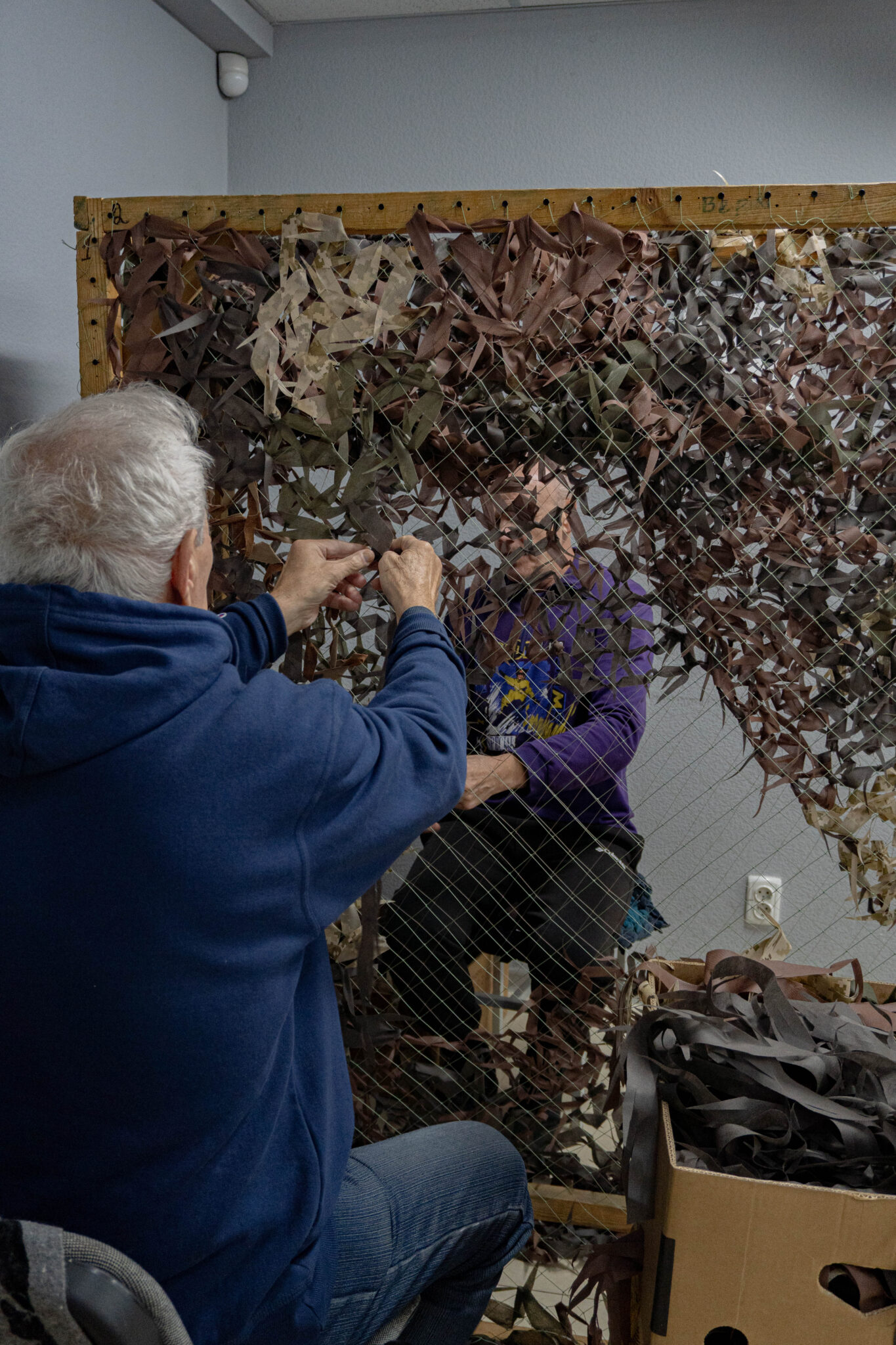
Hnat* and Iaroslav* weaving their nets
Hnat*, 73, is a tall, bald man who towers over the room, calmly in his black sweatpants and purple hoody. He founded this camouflage net-making hub in 2014 and explains his initiative: “I’m originally from Donetsk, which was taken by separatists in 2014.”
He speaks of militiamen entering homes, the explosion of Russian propaganda, and the pain of seeing his country occupied. For him, witnessing Ukrainians betray their country and fall for Kremlin propaganda “covered (his) soul with sadness and hatred,” he describes.
After six months of occupation, he decided, with his wife, to flee to Kramatorsk. Here, Hnat built a network, met soldiers, and started making camouflage nets. His hub became a place of support for soldiers.
But Hnat is not alone in this, he explains. “Here, there are people from many occupied regions, not just Kramatorsk. Some come from Mariupol or Bakhmut. And not everyone works here,” Hnat says. “Some work from home. They knit socks, hats, or even pants.”
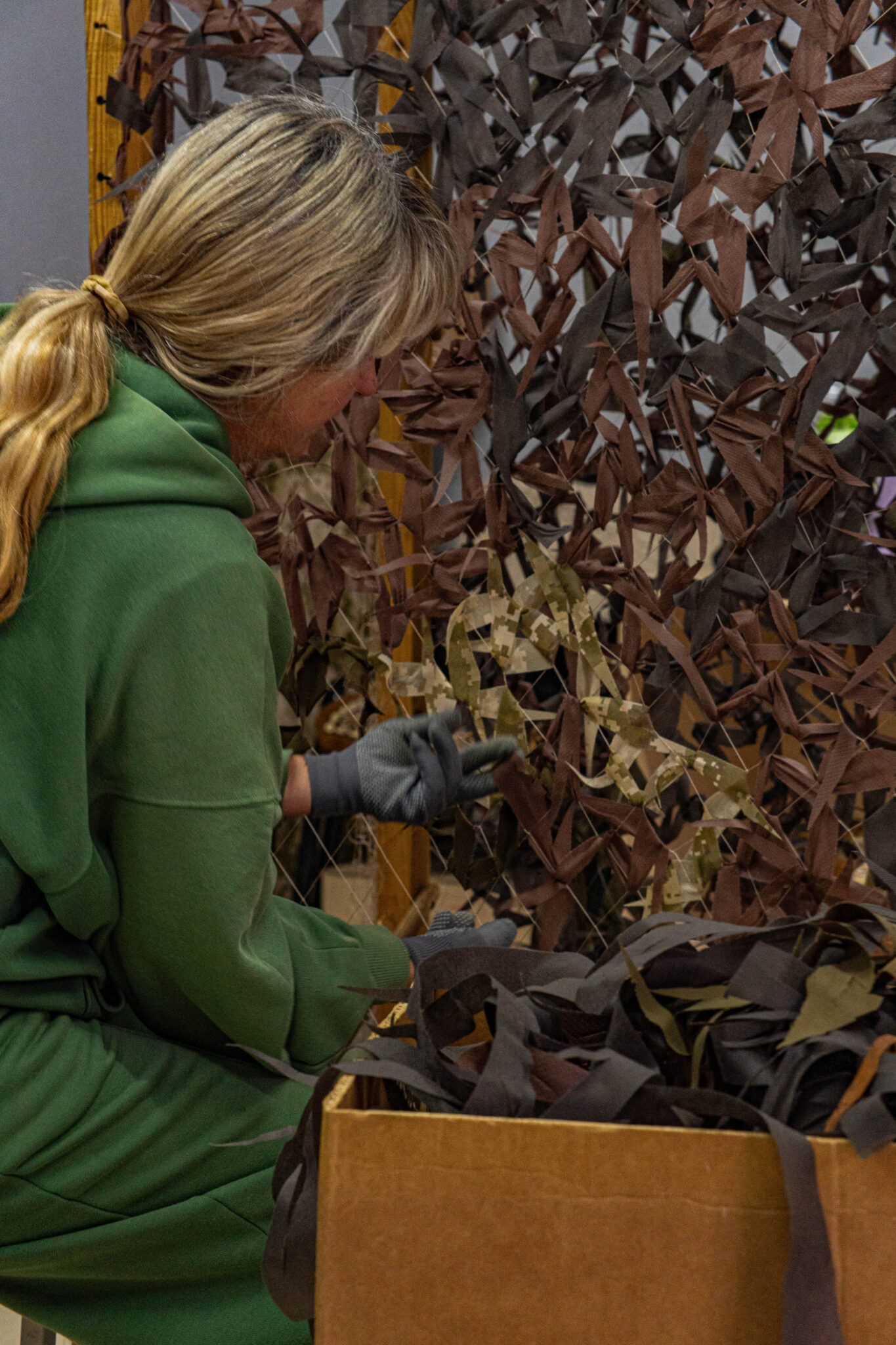
Ivanna*, weaving the ribbons prepared by Lioudmila*
Asked about the hub’s organization, Hnat explains that the premises were lent to them by the local branch of a political party. “I don’t want to say which one. It’s a national party, that’s all.”
With the intensification of the war in 2022, political life in Kramatorsk reportedly froze. “We are under martial law throughout the oblast, there is war. Everything stopped here,” the retiree continues, thus defusing any political affiliation.
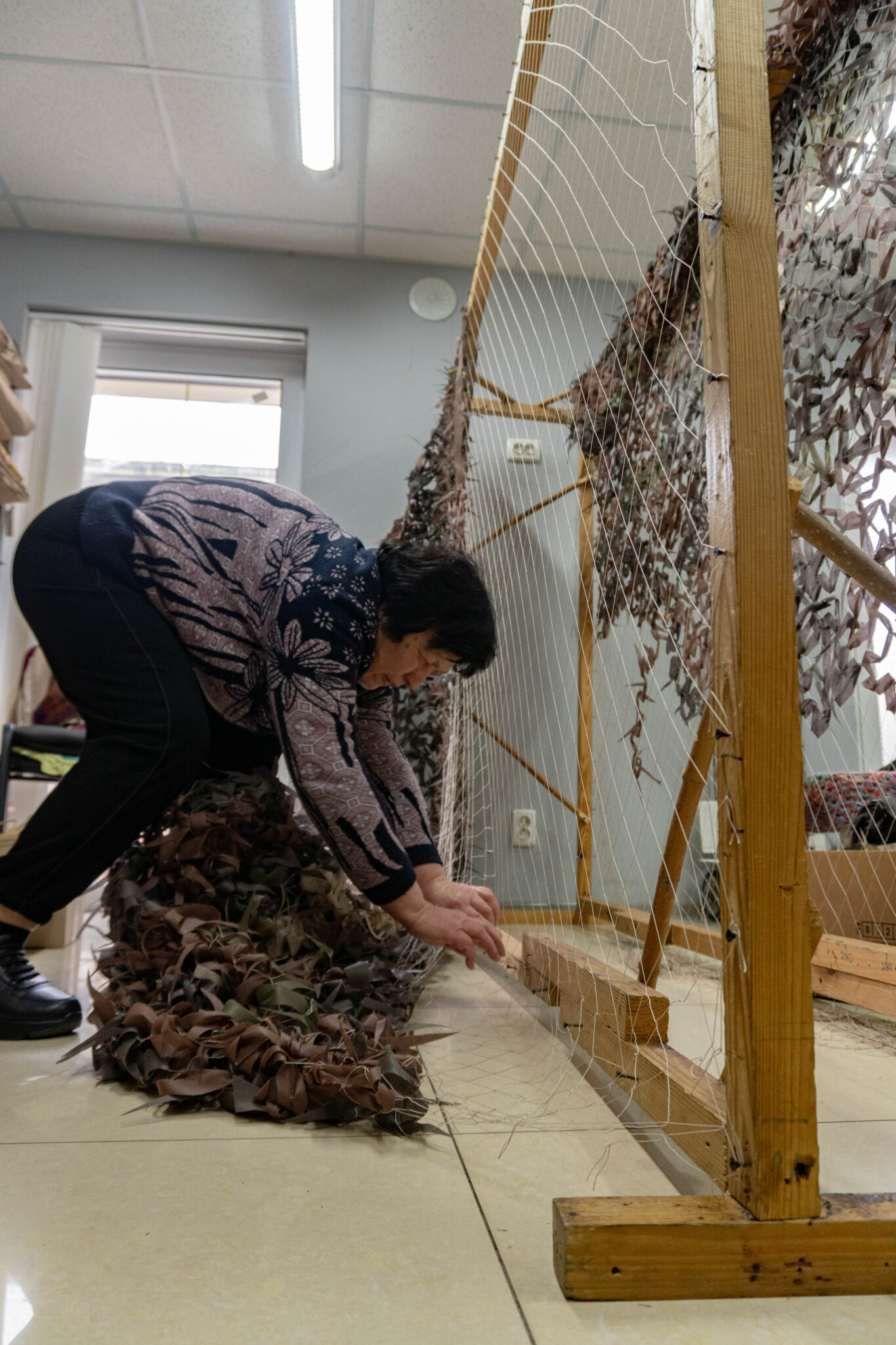
Another retire making nets
To make their nets, the volunteers first unroll the fabric rolls. Depending on the season, they choose the colour. “Green is for summer. We add brown and geay for autumn. And then we mostly use the white and grey ‘camouflage’ pattern for winter,” Hnat explains.
Liudmila*, an 87-year-old woman, 1.40 meters tall and slightly stooped, cuts the fabric into strips. She has also volunteered at this hub since 2014, and despite her age, she keeps up. “I do exercise every morning, I’m not lazy! When there’s music, I dance,” she says to introduce herself.
Her movements are quick and precise, the strips quickly piling up in a box on her cutting table. “I cut slits in the strips. That way, it gives them volume to fill the net,” the elderly woman shows.
Liudmila gets up, grabs her full box, and energetically crosses the room to hand them to Ivanna*. Sitting at a frame, the 73-year-old retiree weaves the strips between the stretched net’s meshes. Gradually, the net becomes mottled with green, brown, and grey.
“Our motivation is simple: to help those who protect us from war,” Liudmila concludes.
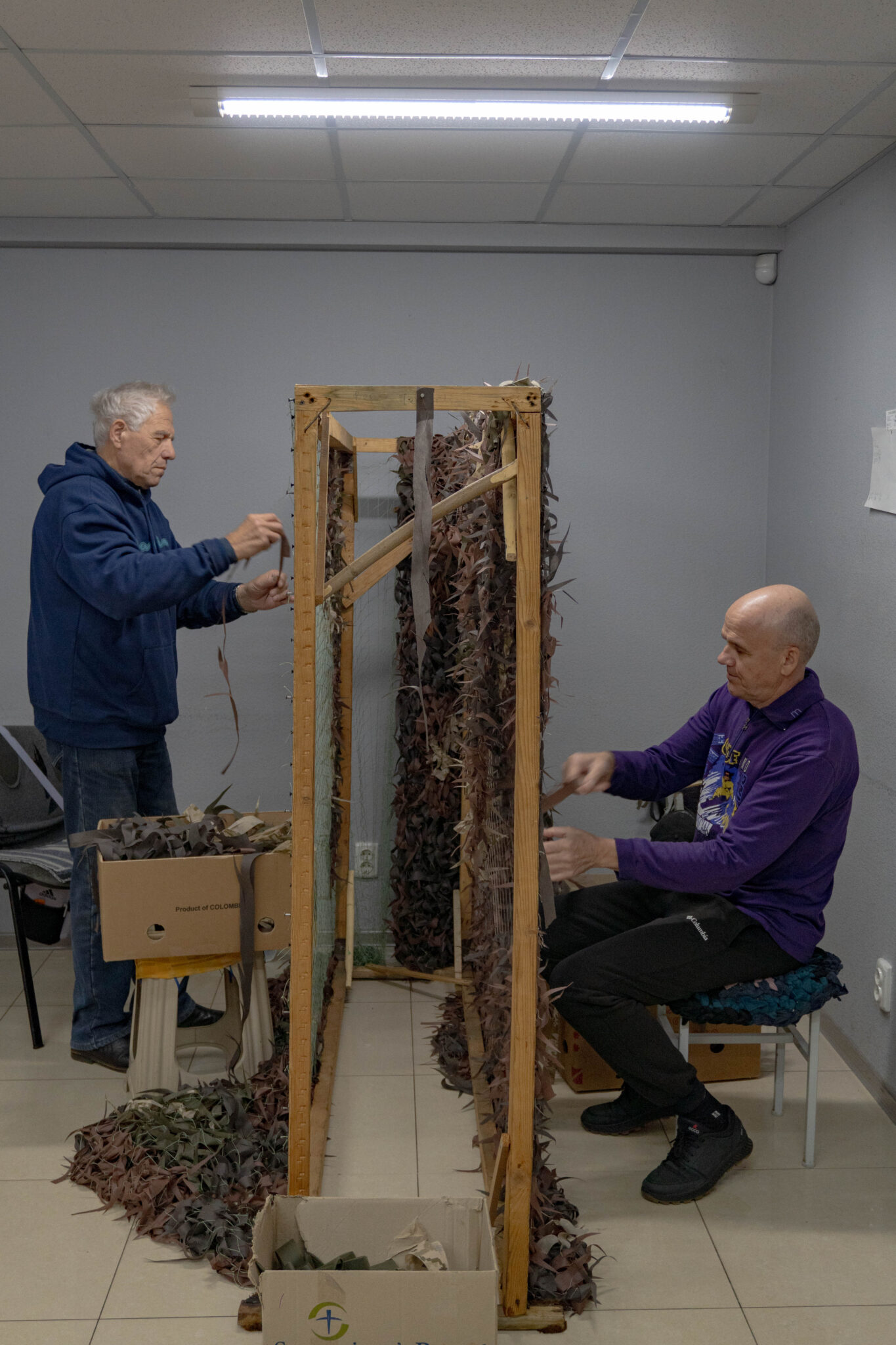
Iaroslav and Hnat, working opposite one another
Sitting at another frame, Iaroslav*, 73, is busy with his net. With his wife, he fled the siege of Bakhmut in 2023. Leaving the city by car, “we saw the Russians use white phosphorus as we left.” The siege marked the couple, “especially my wife. It had a big psychological effect,” Iaroslav explains.
In Kramatorsk, Iaroslav and his wife found housing and began volunteering. “I found this centre and came to make nets,” Iaroslav simply describes. “But today, my wife isn’t here. She’s not feeling well at the moment,” he finishes, referring to the events of 2023.
Far from commenting on the front lines nor talking of leaving the city, Hnat and his group continue weaving their nets calmly. Though they are past the age of mobilization, their determined commitment keeps them close to the front—close to the soldiers who are the age of their children and grandchildren.
At man’s height, between the lines — Little Frenchy
Article's gallery
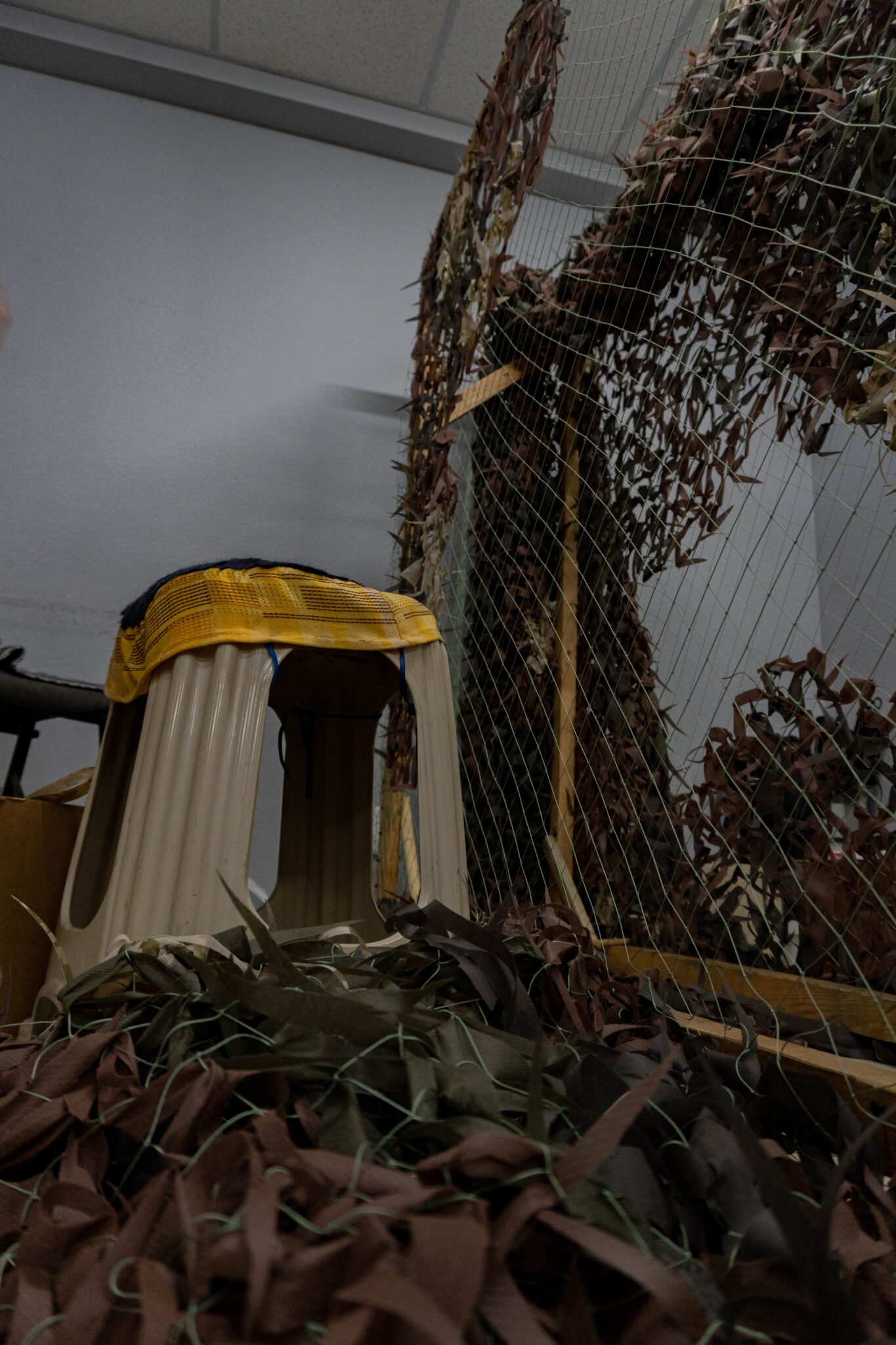
« They have stretched nylon nets and are weaving strips of green, brown, or gray fabric between the meshes. »
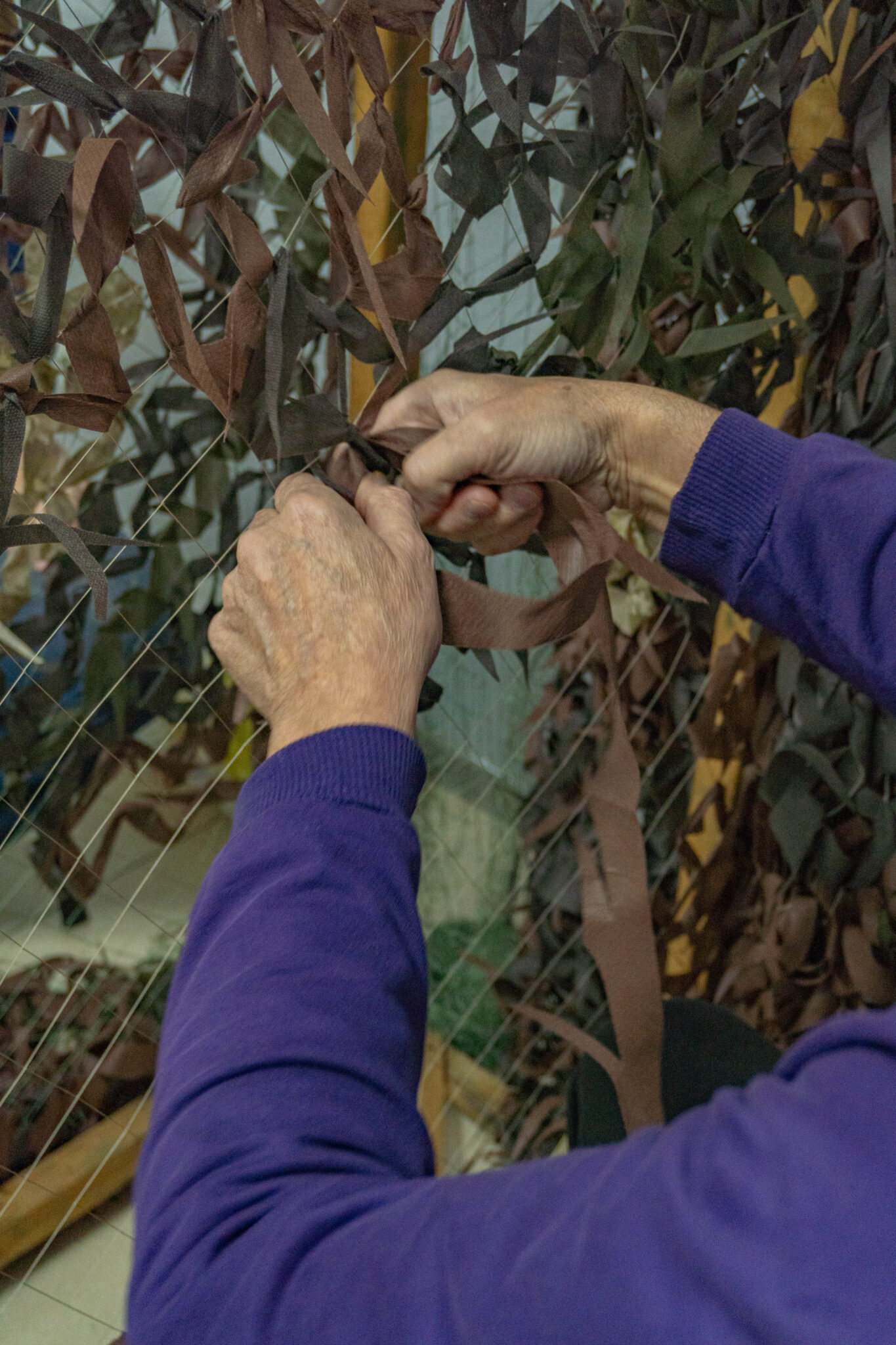
Hnat, in his purple hoody, weaving the ribbons onto the net
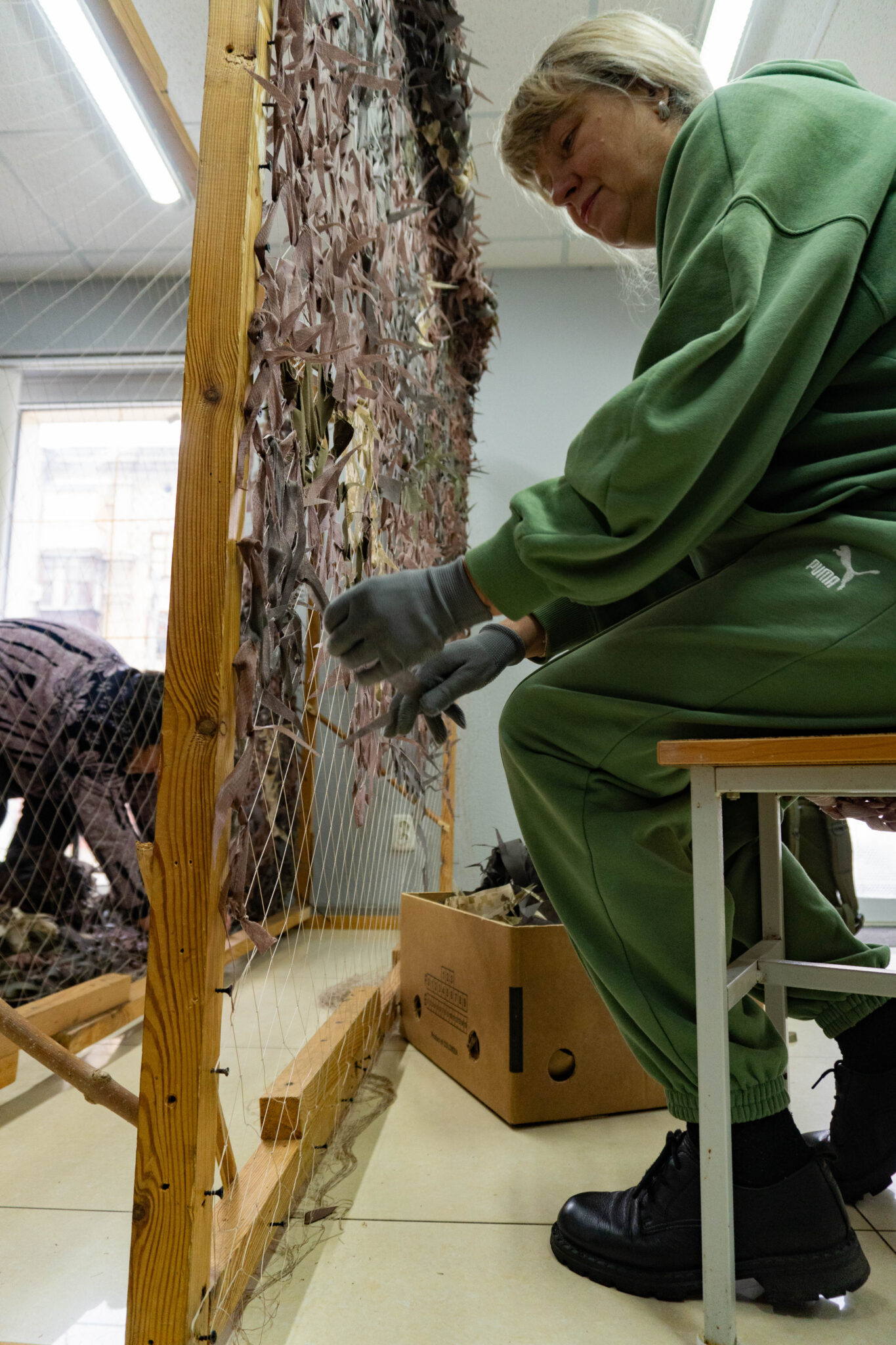
Ivanna is working at her station, opposite another volunteer
« Though they are past the age of mobilization, their determined commitment keeps them close to the front—close to the soldiers who are the age of their children and grandchildren. »
At man’s height, between the lines — Little Frenchy
11/05/2025