
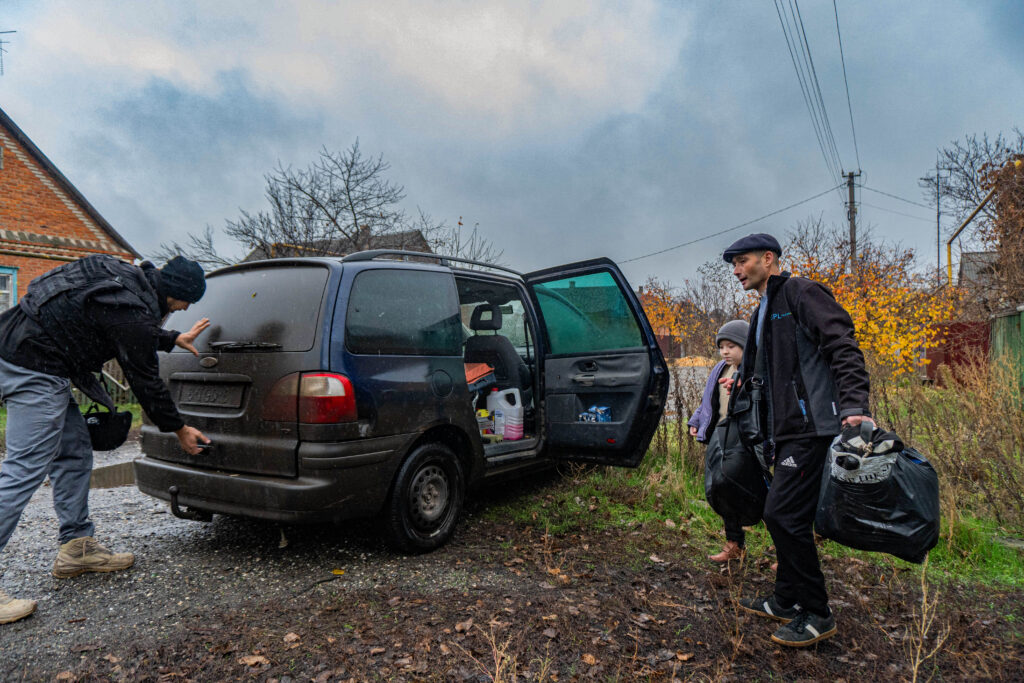
Bogdan opens the boot of his car to load the evacuees’ bags.
Evacuating Under Duress
When Fear Delays Civilian Departure
Close to the front line, many civilians wait until conditions become unbearable before agreeing to leave. Evacuations reveal fears that are often stronger than the dangers of war.
Bogdan, 25, began evacuations in 2022. Together with Edward, they evacuate civilians from areas other NGOs refuse to enter. While these zones are considered too dangerous and inaccessible, Bogdan and Edward believe the need is greatest there. After an initial meeting, Bogdan agreed to share their work.
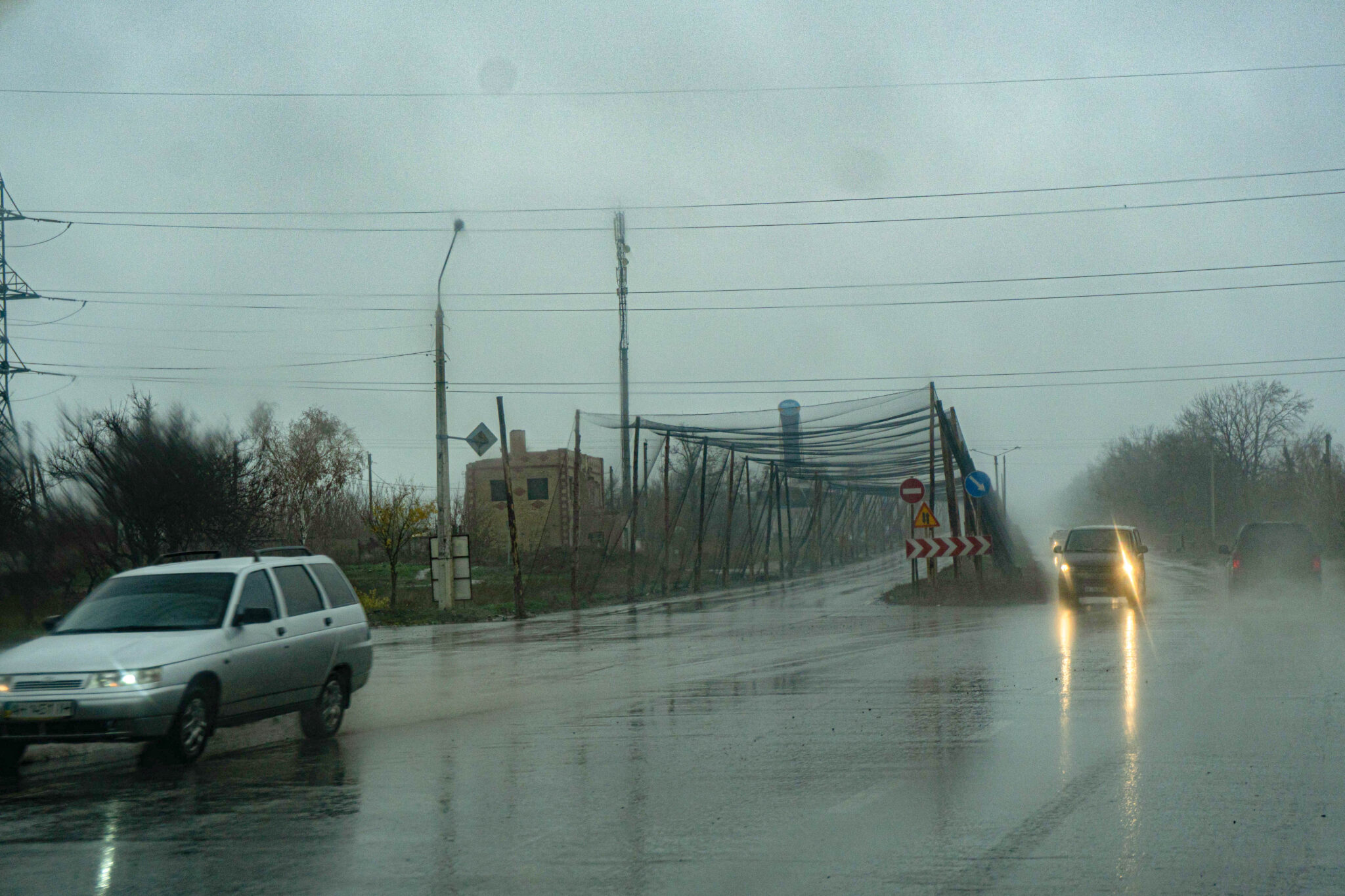
Exiting Kramatorsk, one half of the road is covered by anti-drone nets.
Oleksijevo-Druzhkivka was a rural commune of about 7,000 residents, before 2022. In early November 2025, the locality is less than 10 km from the nearest Russian salient. The operational area is subject to a large-scale encirclement manoeuvre. It was from this locality that Bogdan received the evacuation request.
“This weather is perfect for evacuation,” the young man comments. “In this weather, there is less drone danger.”
Bogdan drives along the main roads of Kramatorsk under gloomy skies; thick grey clouds blanket the sky, and a light drizzle falls. After the city’s last checkpoint, the highway cuts through the Ukrainian countryside, heading southeast toward the front. One lane is covered by an anti-drone net. However, the net being damaged, the covered lane is closed to vehicles
Despite the wet road, Bogdan speeds ahead. “This is kill zone, where we are right now,” he explains, referring to FPV drones.
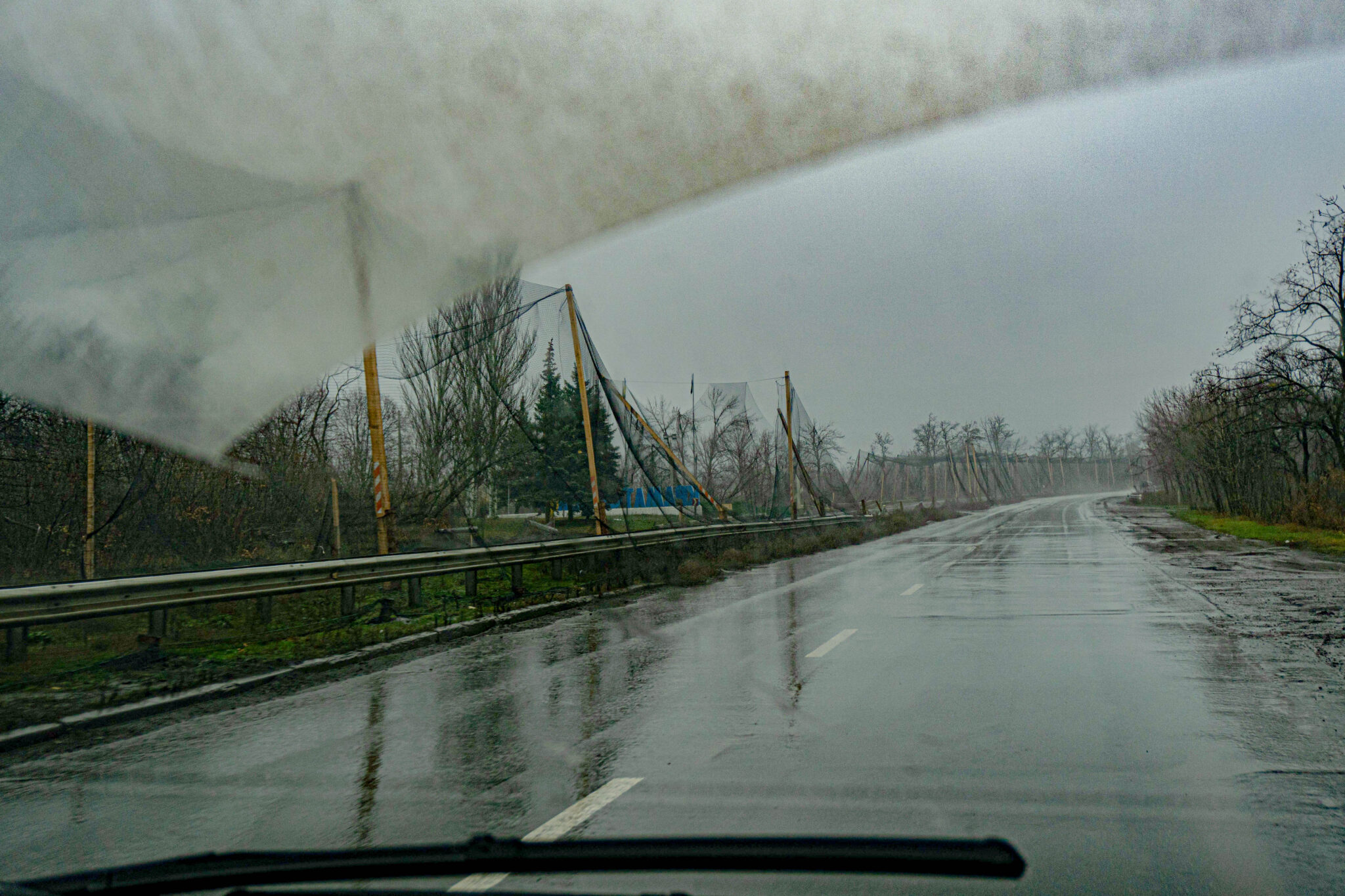
We were enabled to use the covered part of the road on that day; a section had been heavily hit by the russians.
Bogdan turns off the highway and enters the small town. Civilians move through the streets, on foot or by bicycle—almost all elderly.
“It’s stupid that these people stay. They hope the war will stop before their house,” Bogdan comments. “The order to evacuation was given 6 months ago.”
Indeed, many refuse to evacuate because the unknown terrifies them. “At home, at least, they know what is coming for them,” the young man explains.
Often, homes and apartments are the result of generations of labour; they carry history. To evacuate is to abandon what has been a lifetime’s anchor, especially for the elderly. Frequently, it is a family member who calls Bogdan and Edward to evacuate their parents or grandparents.
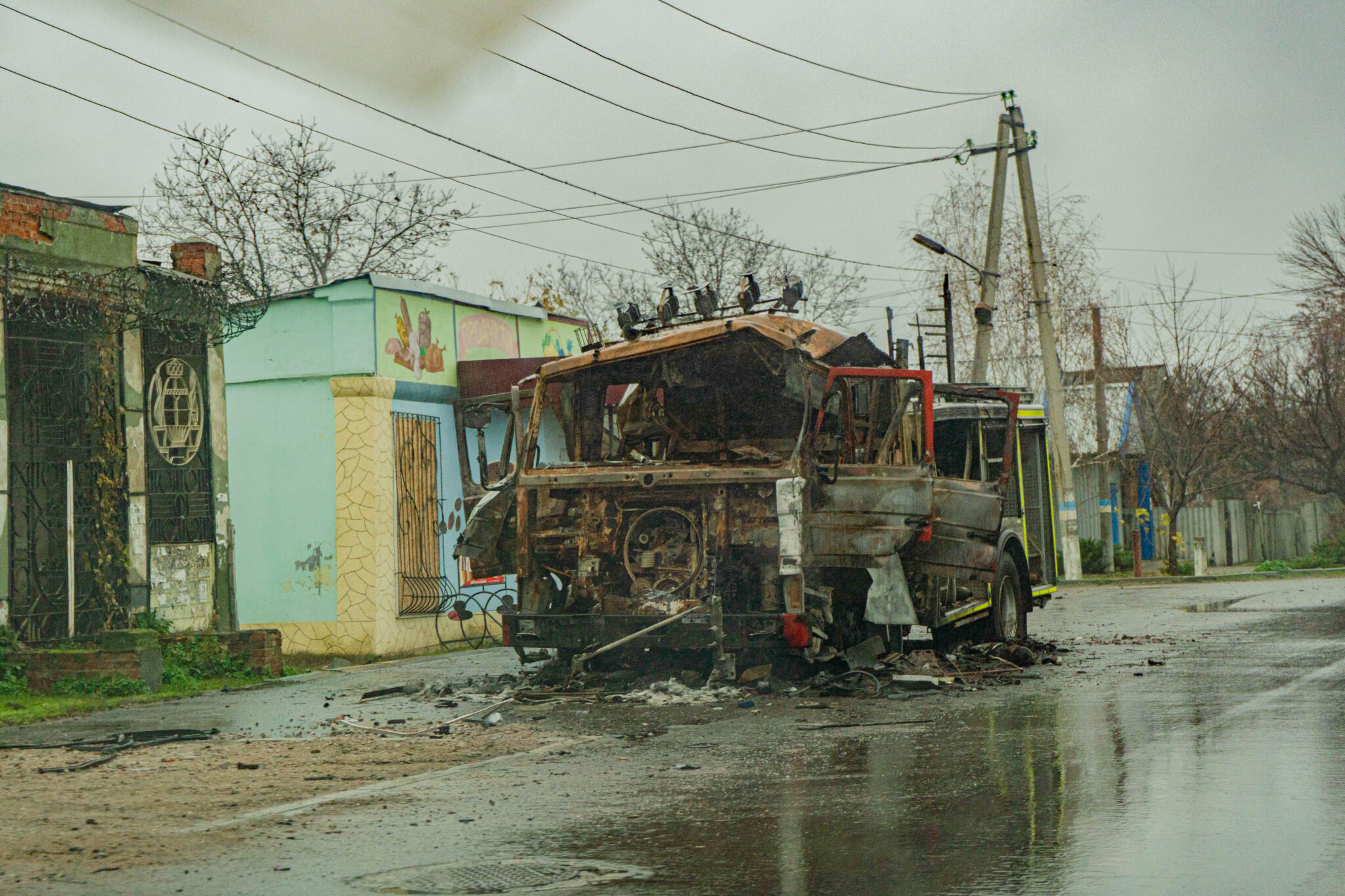
Fire truck that appears to have suffered a front strike – usually the work of an FPV drone operator.
“Ok, now it is number 22,” Bogdan says, manoeuvring the vehicle through potholes of a dirt road. “OK, it is this one.” From behind a blue gate, a father and his son—no older than ten—emerge. After loading their few bags and suitcases into the boot, Bogdan resumes the journey.
For this father, evacuation is a forced decision: “For one week, no electricity and no gas,” Bogdan translates. “Only running water.” The child’s mother is said to have died, and the evacuees have no other family elsewhere in the country.
After a pause, Bogdan tries to explain why the man stayed despite the danger to his child: “Maybe it is because of fear of mobilisation, men can be mobilised at IDP shelters.”
On the way back, Bogdan avoids the highway to return to Kramatorsk, taking instead country roads. Soldiers are everywhere—logistics vehicles, pickups, and armoured vehicles pass by. Under a bus shelter, two soldiers fully equipped “to go on the positions”, wait.
At regular intervals, charred vehicle carcasses lie by the roadside. In front of houses are overflowing trash bins, some smouldering; Bogdan offers a possible explanation: “I think they try to remove trash, service does not come here anymore.”
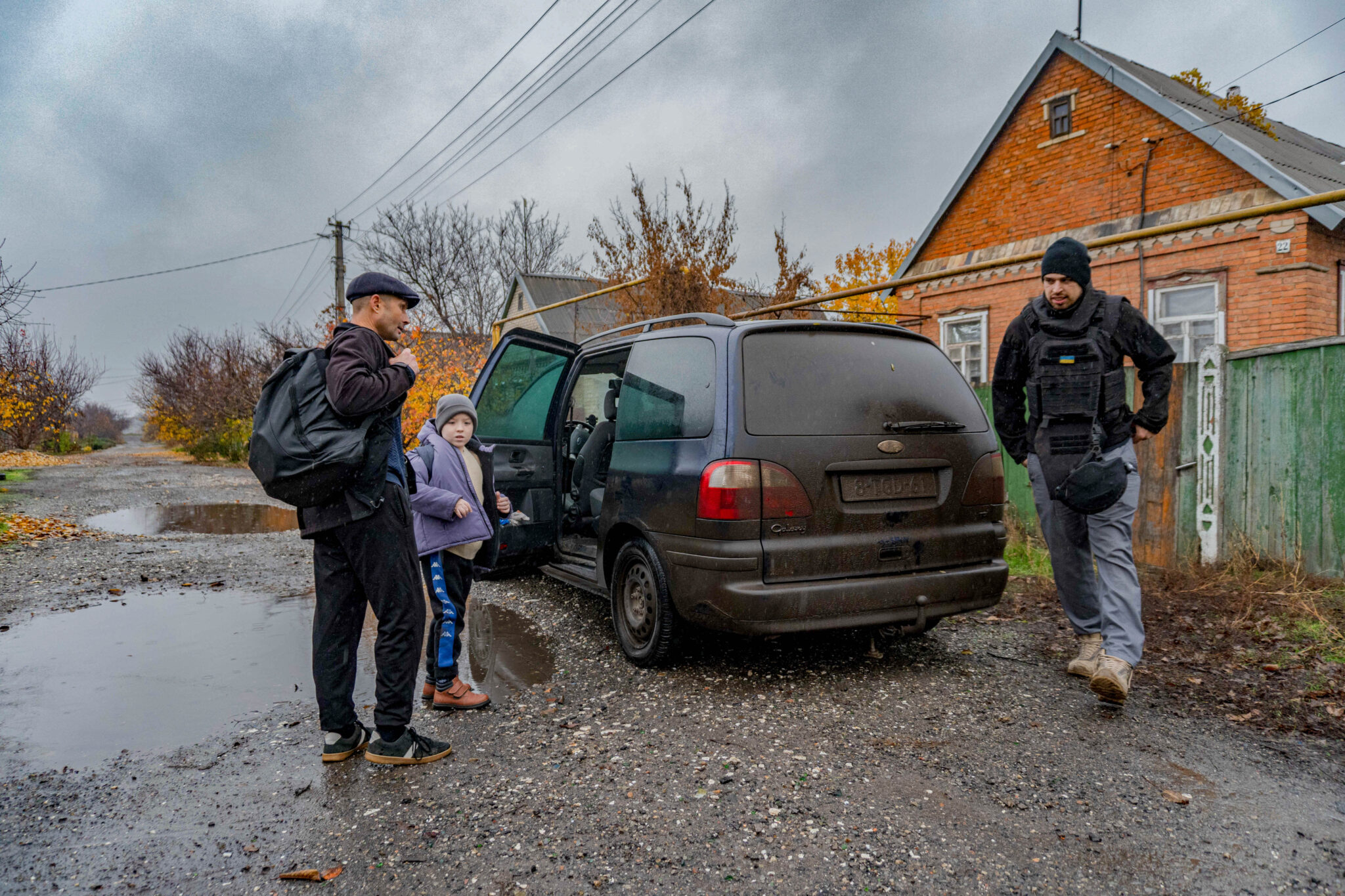
A father has called Bogdan to evacuate his son and himself.
After some time back on the highway, Bogdan reaches a checkpoint marking the end of the front zone and the return to the city. Bogdan stops and presents his documents. Seeing the child and father in the back seat, the soldier orders the vehicle to halt. Under the anti-drone nets, the evacuees get out; a police officer begins an identity check.
The check drags on, tempers rise; Bogdan is agitated but does not lose his composure. Outside the vehicle, soldiers and policemen take turns speaking with Bogdan and the father.
A young officer eventually emerges from a guard hut—calm, neatly dressed. Unable to communicate with Bogdan, he disappears and returns with caltrops, which he places in front of the vehicle’s wheels, then resumes his exchange with the volunteer.
The personnels persist, and Bogdan finally gives in. He opens the trunk to retrieve the luggage, while the father helps his son out of the passenger seat. Bogdan assists them in carrying their bags into the checkpoint hut. The child following.
Alone, the volunteer returns to his vehicle. Bogdan kicks the caltrops away and gets behind the wheel. “OK, we go now.” The vehicle leaves the checkpoint.
“This is fucked up. Really fucked up.” Bogdan fumes. Calmly, he explains: “I tried to defend him, but this is messed up. I told them I was doing evacuation.” The soldiers apparently cited a law recognizing evacuation only if the civilian is on foot. But Kramatorsk is too far, with all their bags, not to mention the threat of FPV drones. “This is stupid.”
The weather clears over Kramatorsk. Despite his composure, Bogdan is disconcerted and shows a feeling of failure. Having left that morning for an evacuation, he returns to his hometown with a father conscripted and a child’s future in limbo.
At man’s height, between the lines — Little Frenchy
Article's gallery
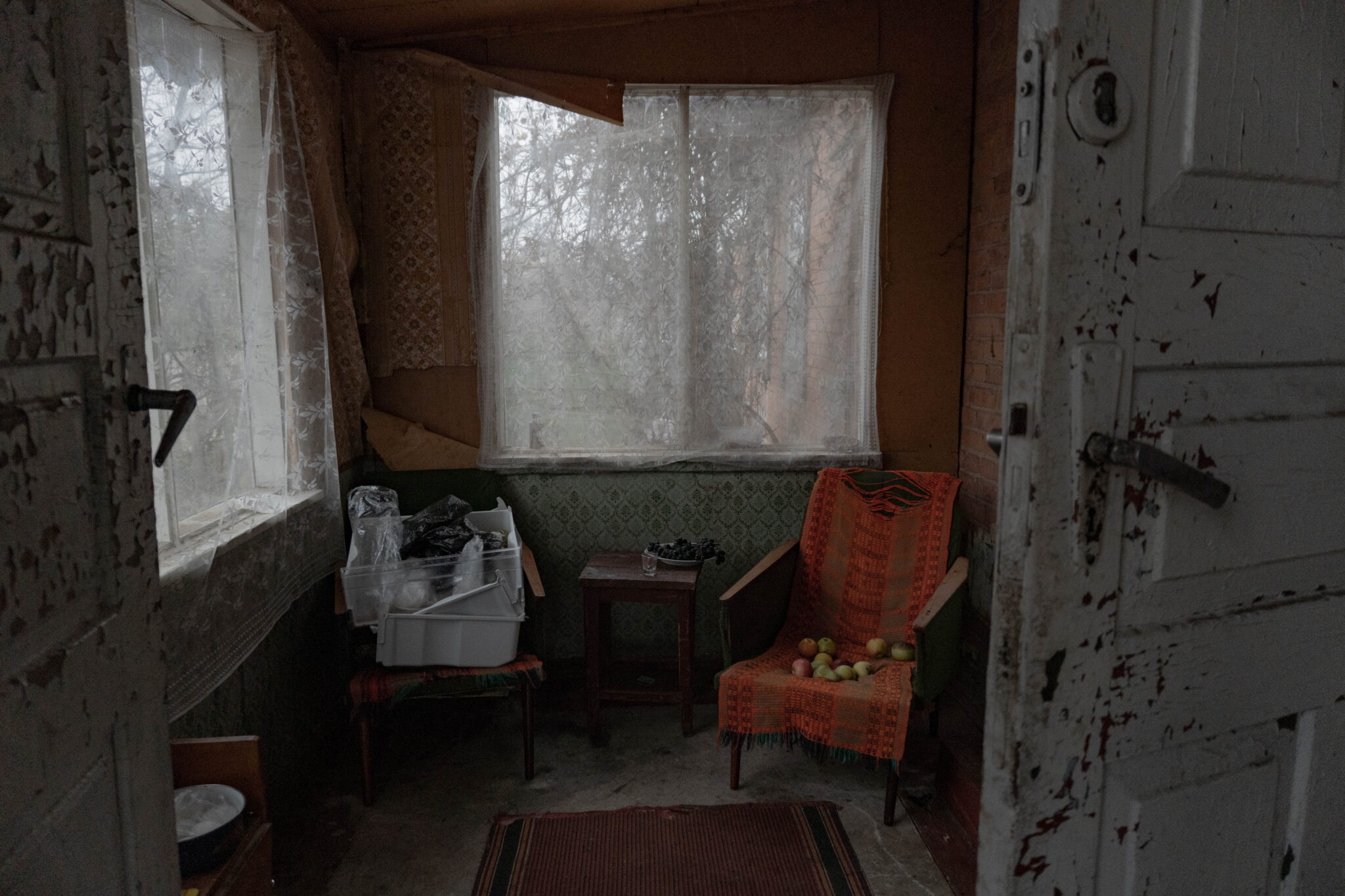
Behind is left an empty – full of furniture and personal belongings.
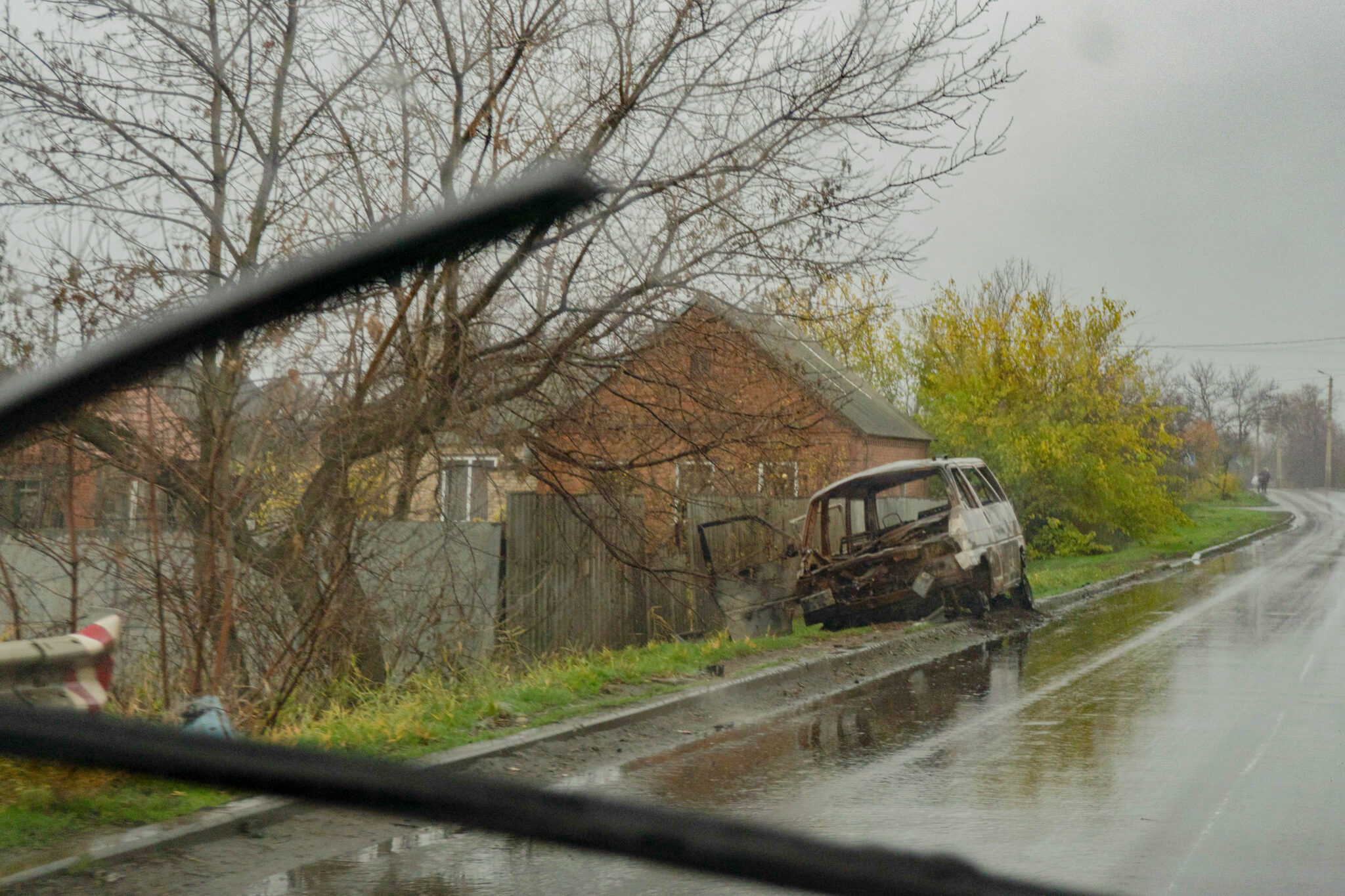
Destroyed car on the side of the road.
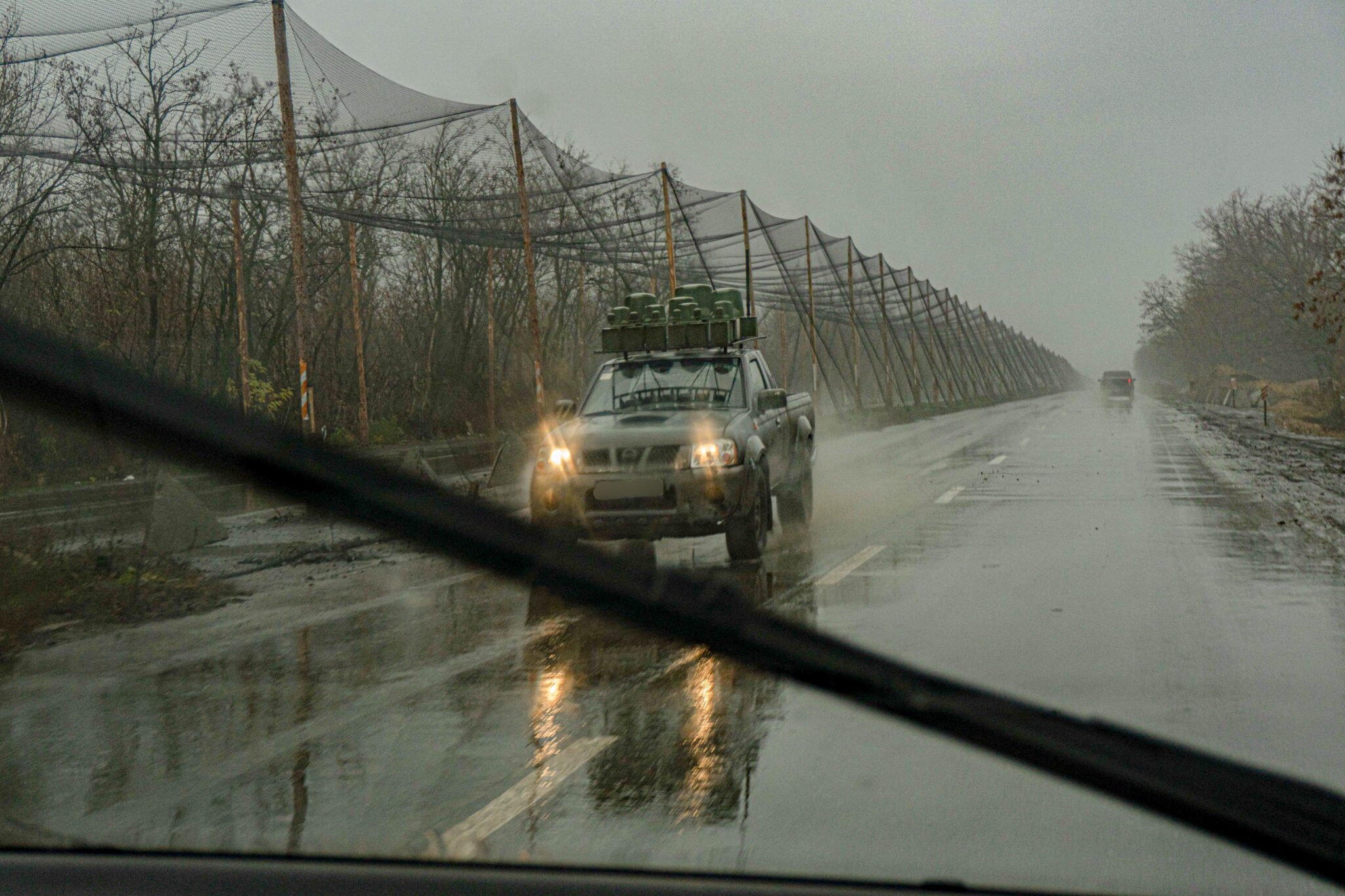
On the highway, only military vehicles can be passed.
At man’s height, between the lines — Little Frenchy
21/06/2026