
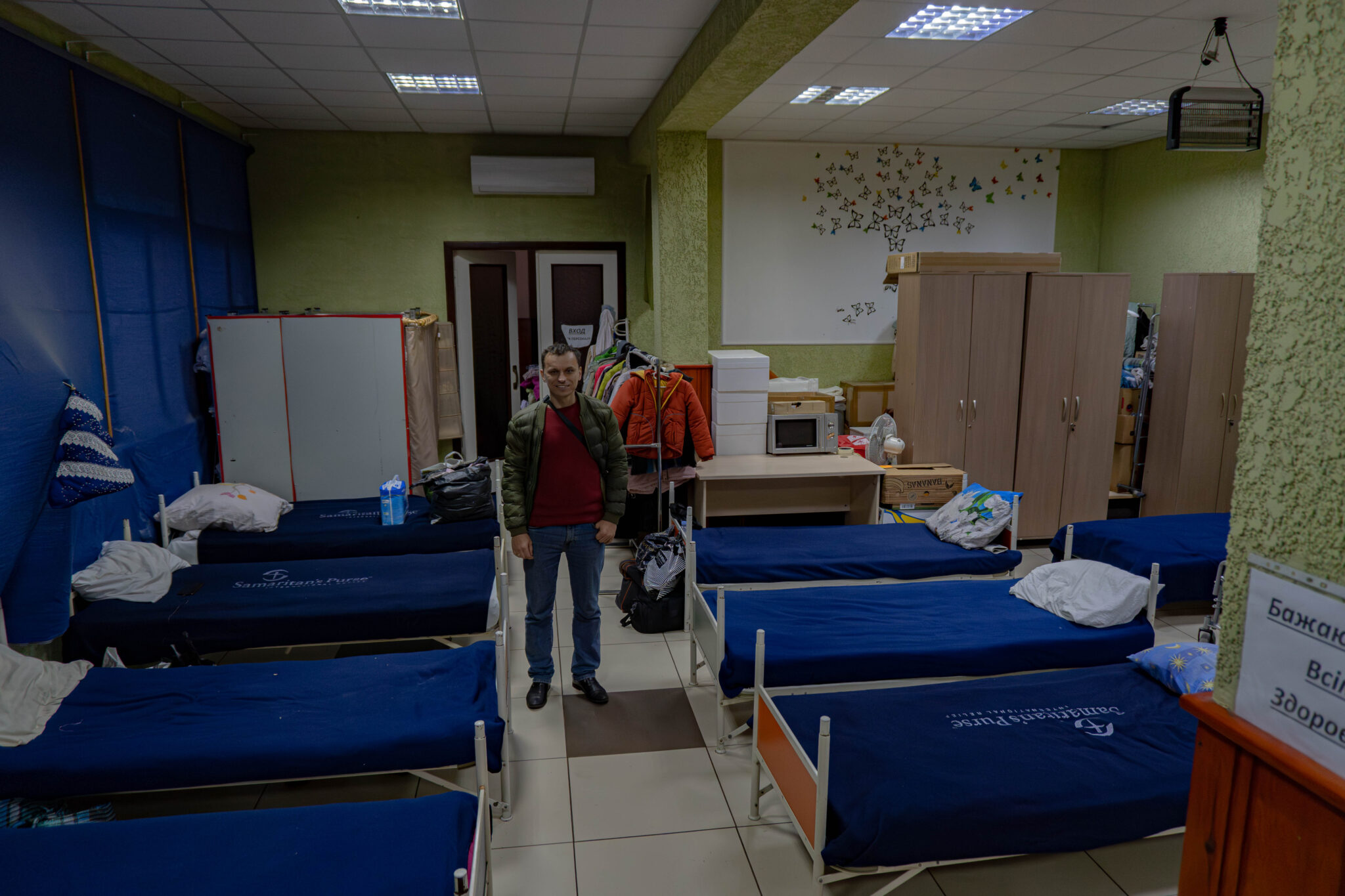
Using furniture, a part of the entry hall of the church has been isolated so as to create a dorm for IDPs.
A Pastor Confronted with War
Between Humanitarian Aid and Spiritual Ordeal, a Meeting with a Man of Faith
The front line continues to creep closer to Kramatorsk, meter by meter, relentlessly. In his church, Pavenka, a Protestant pastor, sees the war as both a humanitarian struggle and a spiritual trial.
Pavenka’s Protestant church is in the city centre of Kramatorsk. “It was founded by my grandfather when he returned from the Ostarbeiter labour camp after the Second World War,” he explains. Since then, the church has continued to grow. Today, it plays an essential humanitarian role in this city in eastern Ukraine, just 15 kilometres from the front line.
This commitment has already come at the price of blood, as Pavenka illustrates. “In 2014, two of my brothers were imprisoned by Russia and killed by Donbas separatists.” Today, the Protestant church serves as an IDP centre for civilians evacuating from the front. They can rest there before continuing their journey or settling in Kramatorsk.
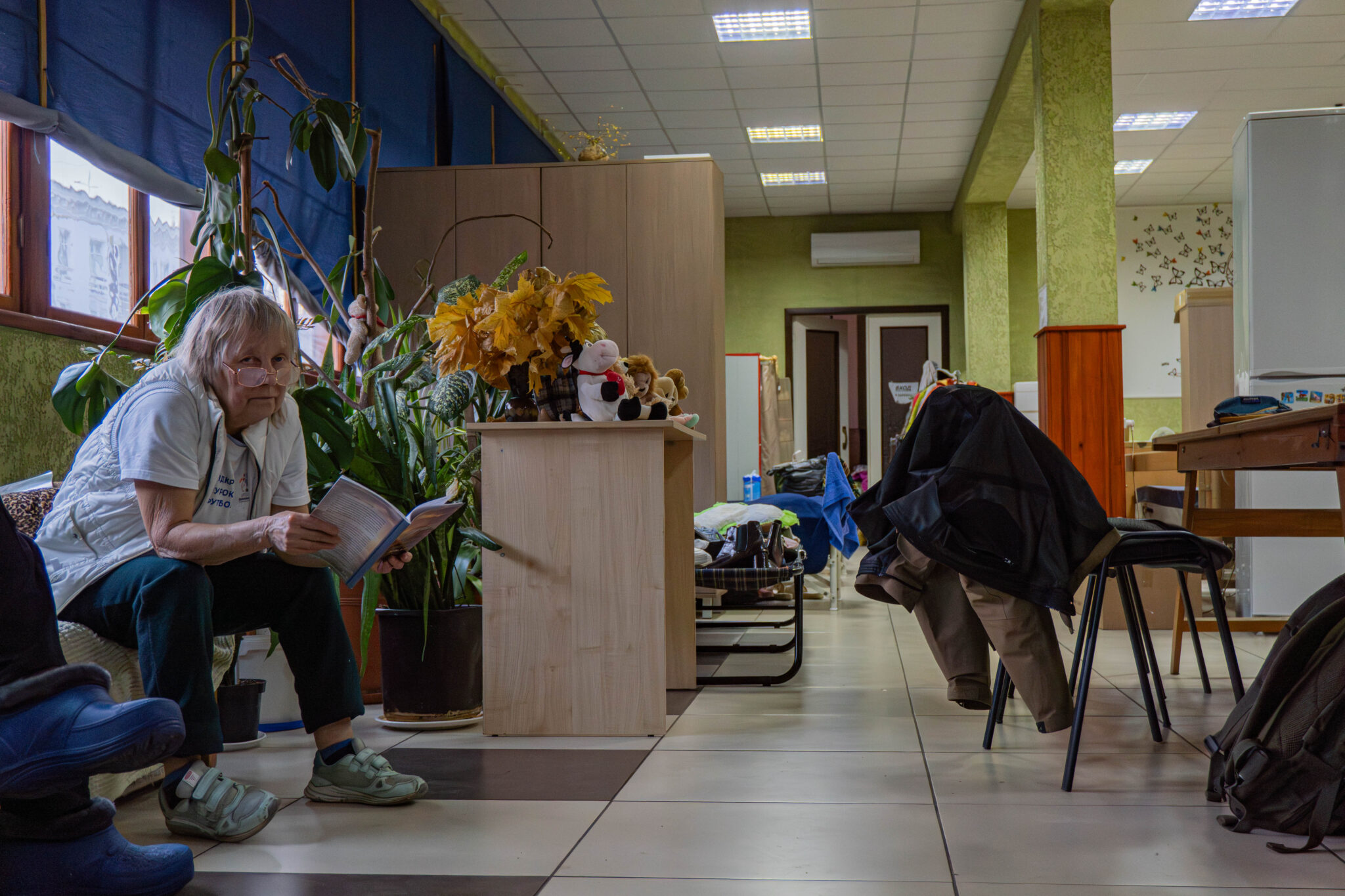
An internally displaced person is reading in the hall of the church.
With the outbreak of high-intensity war in 2024, Pavenka’s church has become a central hub for part of the volunteer organization in Kramatorsk. “Here, people share a sense of belonging,” explains the pastor, “and they began to make donations.”
Since then, volunteer groups have formed to assist the local population; some of them have organized around the church. “An entire ecosystem has grown around our church. With religious volunteers, or not, Ukrainians as well as foreigners,” Pavenka explains.
As the church has become a centre for internally displaced persons (IDPs), civilian evacuation groups from areas close to the front drop them off there, while other groups organize their transport to Lozova, a city 100 kilometres from the front.
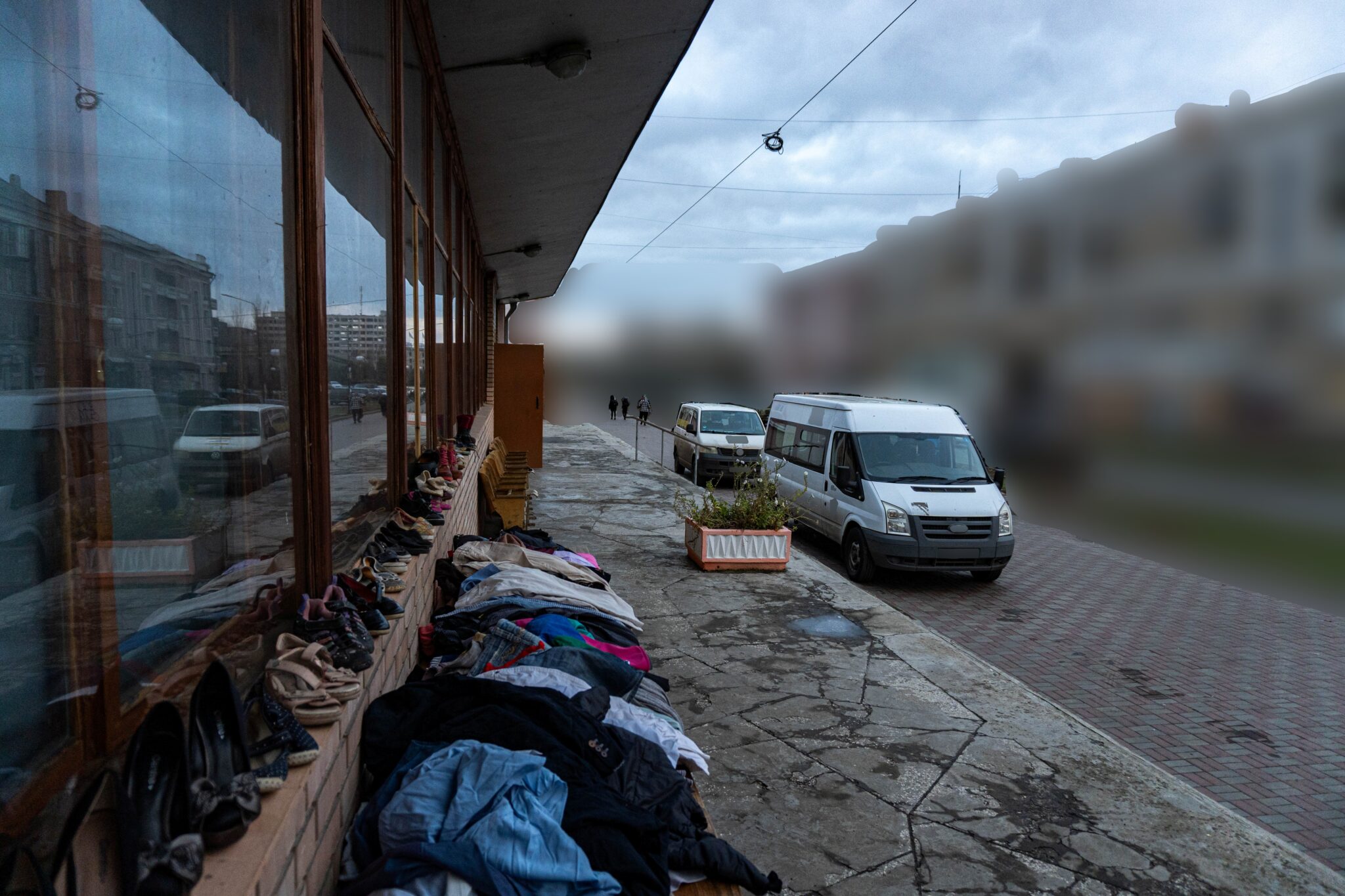
Sets of clothes and pairs of shoes at the disposition of the people in need.
“Since the start of the large-scale invasion, I have changed a lot internally,” the pastor explains. Indeed, many aspects of Pavenka’s life have evolved. “I began working with large sums of money, figures that go beyond my scope,” he describes.
His connection with God has also evolved. Having taken refuge for a time in the city’s basements in early 2022, Pavenka describes a strengthened spiritual bond. “I understood that the concrete slabs above me were not barriers, that nothing could hinder my link to God.” Through his commitment to the civilian population, Pavenka feels he is in his rightful place. “I am at the centre of God’s will; I feel like a soldier of Jesus Christ.”
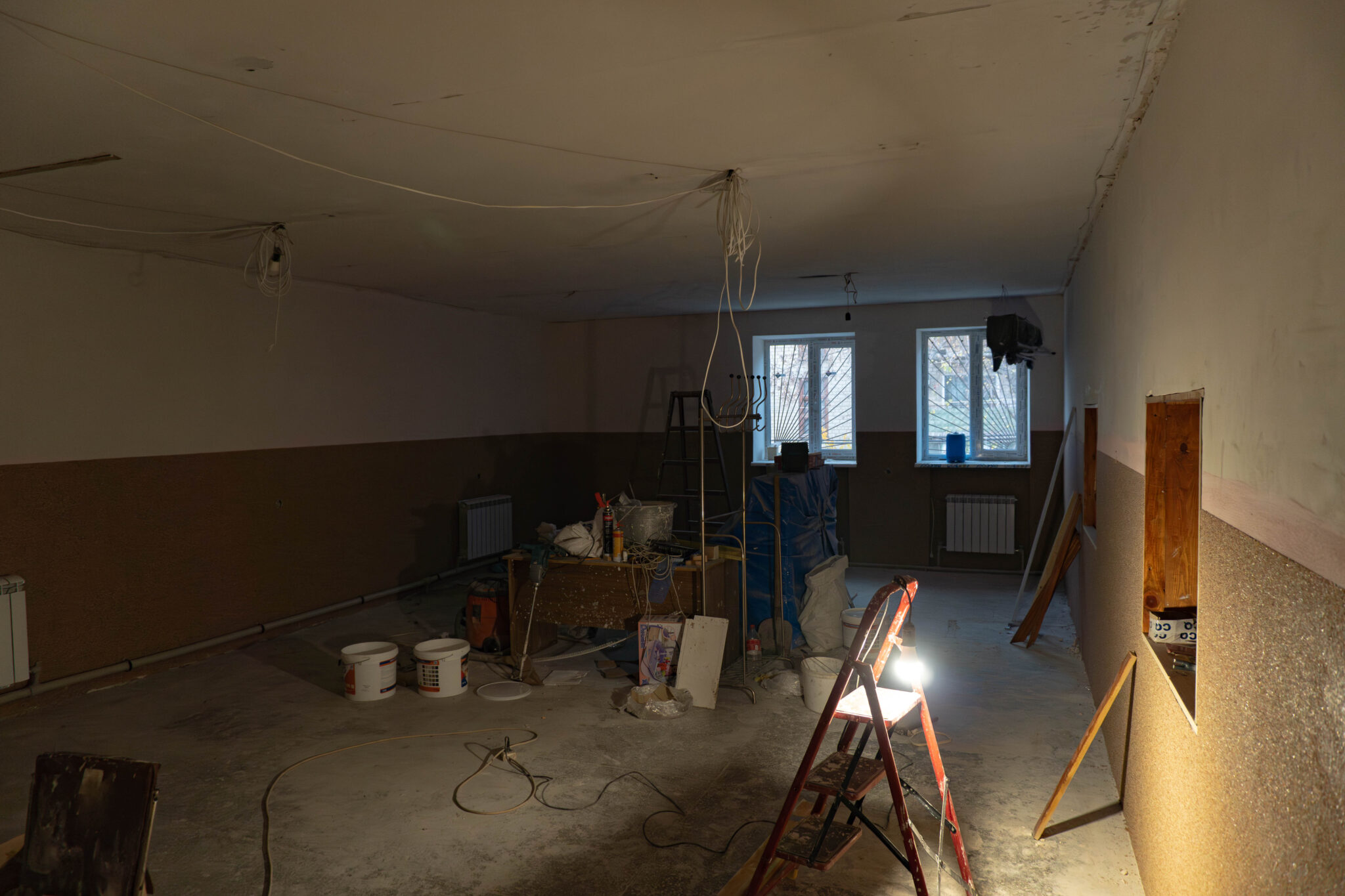
Amidst war and needs, the church is still growing. « We want to create a space for the children », shows Pavenka.
Since September 2024, Pavenka has noticed major changes in the civilian evacuation chain along the front. “Before, the main rallying point was Pokrovsk (60 km southwest of Kramatorsk), but in recent months it has shifted to Dnipro,” more than 150 kilometres away. This implies a much longer route for volunteers, affecting their evacuation capacity.
“The city of Dobropillia (between Kramatorsk and Pokrovsk) is very difficult to access now that the Russians control the highway with FPV drones,” the pastor continues. “It is hard to accept, given how important this highway was to maintain the connection with Pokrovsk and Dnipro.” Overall, Pavenka depicts a difficult operational situation in his region.
In Kramatorsk as well, the pastor does not hide that the local situation is deteriorating. “There is not much left to seize for Putin to consider that he has achieved his objectives,” Pavenka estimates, referring to the occupation rate of Donbas territories. “The war began in Sloviansk, where the separatists emerged in 2014; it will end in Sloviansk…” some 15 kilometres north of Kramatorsk.
Pavenka’s stance toward danger is ambivalent. “If my soul denies that the war could reach me, my mind is resilient and ready to fight,” he explains. The pastor harbours no illusions about the fate of his city. He believes “the military situation is untenable; we would need a miracle. I do not know which one. The fall of the Kremlin? A revolution in Russia?” he ponders.
Nevertheless, for Pavenka, God remains on the side of the Ukrainians. “Our soul is different from the Russian soul,” he argues. “We are a good and honest nation. And God will protect us.” Pavenka supports his claim with personal experience. “I saw a bomb fall just a few meters from a church, and it did not explode. It was God who saved this parish.” However, the pastor tempers his words: “Now that the Russians are at the gates of the city, I am not unaware of the risks.”
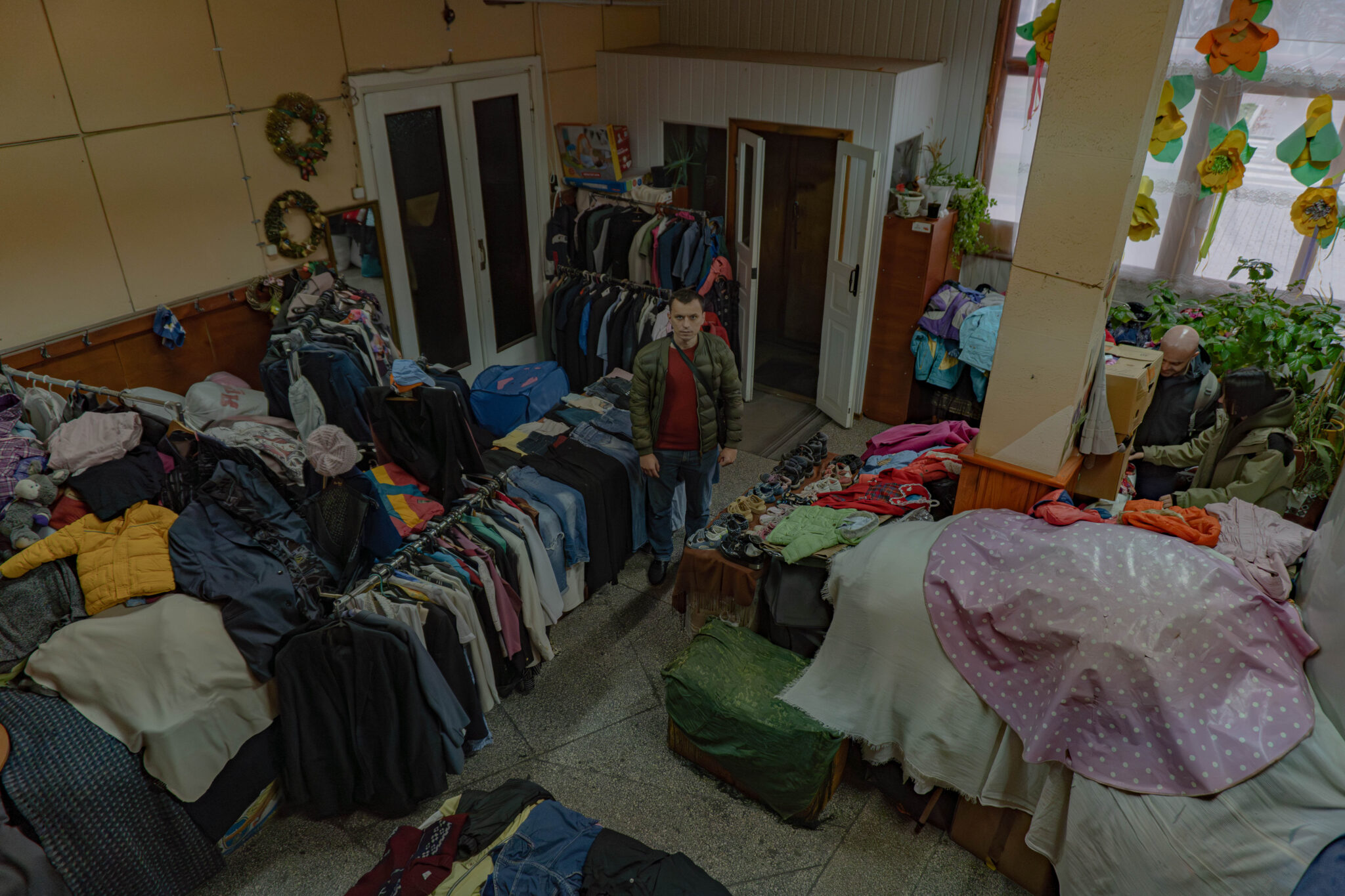
Pavenka showed the storage room of the church, filled with clothes for adults and children.
Taking a step back from the war, Pavenka considers it “like another war in History. There is nothing special about it.” For him, its origins lie beyond geopolitical tensions, in deeper causes. The source of these events is, in the pastor’s view, spiritual: “There are many sins in Ukrainian society,” he develops. “There is corruption at every level of society.”
Pavenka cites as an example the buses of civilians leaving Kramatorsk for Lozova. “Eighty percent of people leave because they know the government provides an allowance to IDPs,” he explains. In a country marked by the poverty of the lower classes, financial incentives carry weight. “They do it only for the money.”
Perhaps the miracle Pavenka is waiting for would be the end of corruption, at which the pastor bursts out laughing. “Yes, maybe that is it, actually. Getting rid of corruption and drawing closer to God.” Yet, while awaiting grace, the front line continues to advance toward Kramatorsk; and Pavenka, as a faithful shepherd, continues to watch over his flock.
At man’s height, between the lines — Little Frenchy
27/05/2025